
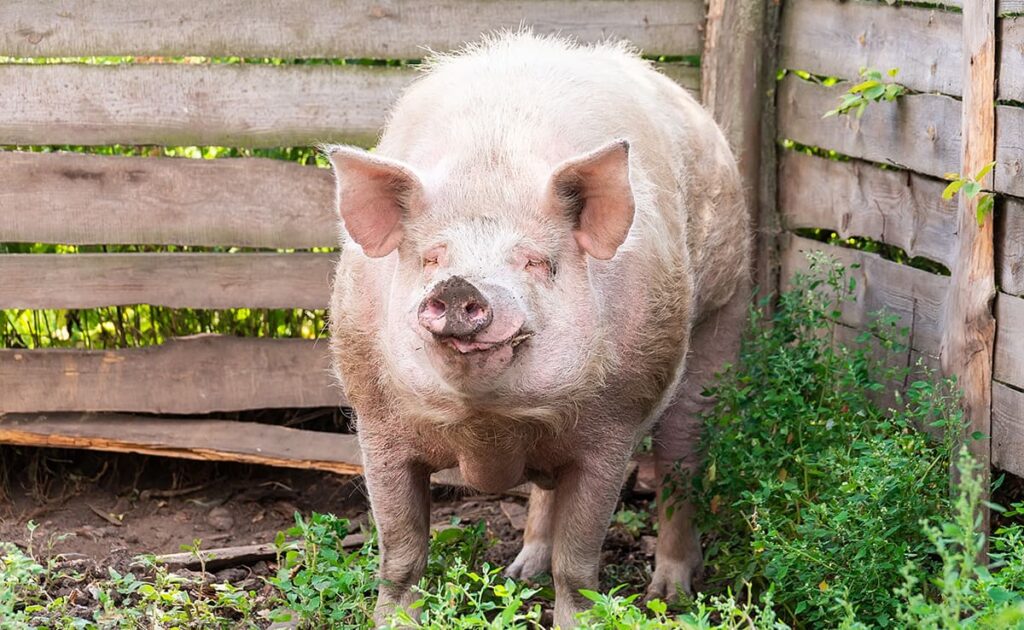
If you’ve ever wandered through a farm, it’s hard to miss a pig. Their robust stature grabs your attention, but it’s their distinctive sounds that truly define their presence. However, few of us pause to consider a simple question: what exactly does a pig sound like—and why do they make those noises? Beneath those familiar farmyard grunts lies a surprisingly intricate and emotional language that scientists are just beginning to unravel.
Pigs Speak: Much More Than Just Grunts
Cows might “moo” and horses “neigh,” but pigs? They grunt, squeal, and oink—and that’s only the beginning. Researchers from France’s INRAE have identified over twenty unique vocalizations, each connected to specific emotions or situations. For example, a distressed pig lets out sharp, elongated screams, while one feeling at ease will produce short, rhythmic grunts.
And don’t be misled by their stout frame—pigs can be quite loud. Their sounds can hit a staggering 115 decibels, comparable to a rock concert. It’s no wonder they’re impossible to overlook.
What Gives Pigs Their Distinct Voice?
When we mimic pigs, we often snort while pinching our throats—a humorous take, but far from accurate. Anatomically, pigs share a larynx and vocal cords similar to ours, but what really sets them apart is their pharynx shape and the robust chest cavity that generates a deep, resonant sound.
In essence, their vocal abilities are far more intricate than the playful “oink” we grew up hearing. It’s a comprehensive acoustic system designed for communication.
A Language Rich in Emotion
The sounds pigs produce are intricately linked to their emotional states. Feelings of fear or pain prompt long, piercing calls. In contrast, contentment, curiosity, or casual social interaction results in softer sounds—gentle grunts, low chuffs, or brief barks. These vocalizations often work in tandem with body language: ears perked forward, tails wagging, and heads nudging for attention.
The classic pig “voice”—grunting—tends to surface during positive moments: mealtime, social bonding, or exploring their surroundings. This vocal interaction acts almost like conversation, serving to maintain social harmony within the group.
An Intelligent Animal Behind the Noises
Those vocalizations belong to one of the most intelligent farm animals in existence. Multiple studies have demonstrated that pigs are capable of problem-solving, navigating complex routes, using mirrors, and even learning to manipulate a joystick to move a cursor. Their cognitive skills rank alongside dogs and dolphins, a level of intelligence that many people fail to connect with a barnyard animal.
Science Is Unpacking Pig Communication
In 2022, researchers launched the SOUNDWEL project, developing an algorithm to analyze pig vocalizations. The program utilized 7,414 recordings from 411 pigs, mapping specific sounds to emotional states throughout the animal’s life—from birth to slaughter.
This research goes beyond mere curiosity; understanding pig vocal cues facilitates early detection of illness, stress, or injury long before symptoms become visible.
Advancements in Animal Welfare Monitoring
Some modern farms have begun implementing continuous audio monitoring systems. By recognizing unusual breathing patterns, squeals, or signs of agitation, farmers can act swiftly—preventing disease outbreaks, enhancing feeding strategies, and alleviating suffering. What seems like mere noise transforms into a vital early-warning system.
This technique aligns with an expanding body of international research on welfare indicators, demonstrating how technology can bolster more humane farming practices.
Pig Voices and Their Role in Human Medicine
Given the similarities between pig and human vocal anatomy, they are proving invaluable in medical research. Scientists study pig vocal cords to gain insights into human speech disorders, breathing irregularities, and even testing experimental larynx transplants. The loud, resonant grunts of pigs may one day help restore voices lost to illness.
Pigs as Behavioral Models Beyond Farming
Cognitive scientists are increasingly turning to pigs as models for behavior. Experiments reveal that they can recognize individuals, collaborate to achieve objectives, and in some instances, exhibit empathy—responding to the distress of other pigs. These findings are reshaping ethical discussions regarding farming and animal welfare on a global scale.
Pigs as Pets? It’s on the Rise — With Considerations
Miniature breeds like the Vietnamese pot-bellied pig or Göttingen mini pig have gained popularity as companions. Owners often describe them as affectionate, clever, and surprisingly tidy. They can be taught their names, perform tricks, and forge meaningful bonds.
However, pet pigs are not suitable for everyone. Even the smaller breeds require ample space, mental stimulation, training, and appropriate diets. Their high intelligence is both a blessing and a responsibility.
Pigs may be noisy creatures, but every grunt and squeal carries significance. Their vocalizations convey emotion, intention, and unexpected complexity. Whether on a farm, in research facilities, or nestled at home, pigs prove to be far more expressive—and impressive—than most people ever realized.





