
In the competitive landscape of semiconductor manufacturing, controlling the technology needed to produce cutting-edge chips is crucial. Recently, the Netherlands has emerged as a key player in a contentious global standoff, aligning with the US to restrict China’s access to advanced chip-making equipment. This strategic move is a significant setback for China’s technological aspirations, especially in the semiconductor sector, which is pivotal for both military strength and economic superiority.
The Engine of Modern Chip Production: ASML
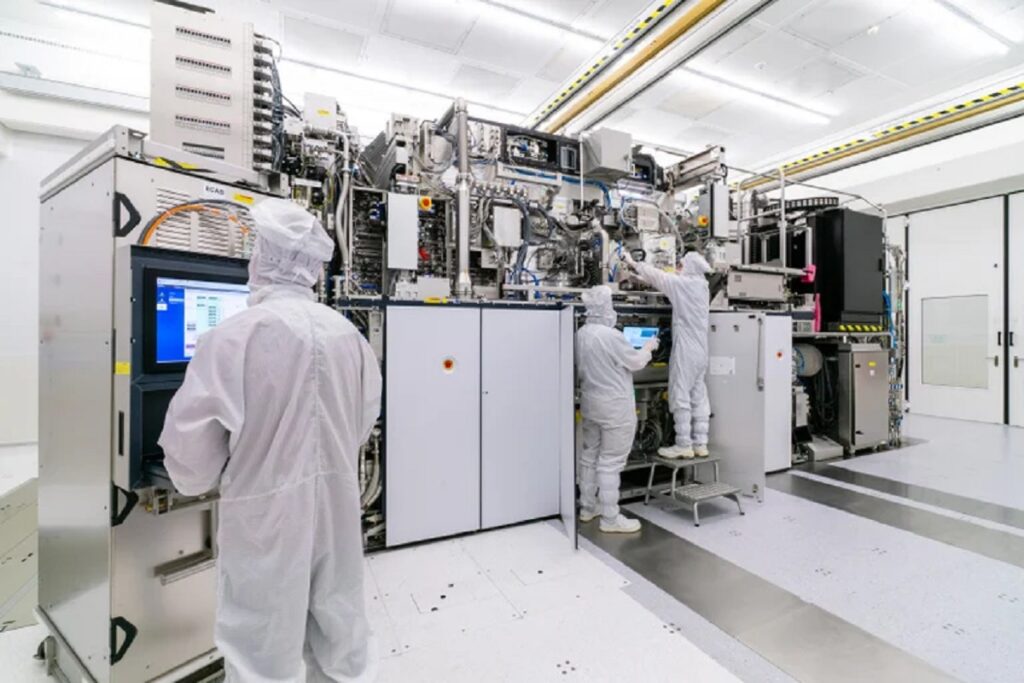
The unsung champion in this technical upheaval is ASML, a Dutch firm that possesses the most advanced semiconductor manufacturing technology in the world. If you’ve ever considered how companies such as Intel, TSMC, or GlobalFoundries manage to create the latest microchips, the answer lies in ASML’s groundbreaking machinery.
ASML’s extreme ultraviolet (EUV) lithography machines are the only devices capable of producing the tiny, complex circuits required for contemporary semiconductors. While rivals like Nikon and Canon have attempted to develop similar technology, the immense investment and intricate scaling challenges have hampered their efforts, leaving ASML as the undisputed frontrunner. Today, no other entity comes close to monopolising ASML’s level of expertise and technology.
Consequences for China’s Semiconductor Sector
The circumstances are particularly troubling for China. ASML has consistently refrained from selling its cutting-edge EUV machines to Chinese firms, but it has supplied older models that still confer notable manufacturing advantages. However, this is set to change, as these older machines will be off-limits to Chinese companies starting next summer. This decision is part of a broader initiative led by the US to curtail China’s technological progress in areas deemed vital to national security, including artificial intelligence and military applications.
The rationale behind these export restrictions cites the critical role of advanced chips in military operations. While this holds some truth, the hidden aim is to significantly hinder China’s capacity to compete in the global technology arena. The ban effectively stalls China’s efforts in high-performance computing and AI, placing its entire technology sector at a disadvantage.
US Initiatives and Escalating Tensions
The US has historically wielded its global influence to uphold its technological preeminence, exerting pressure on the Netherlands and other nations that could potentially aid China in enhancing its semiconductor manufacturing capabilities. ASML’s machinery becoming the focal point of these restrictions underscores the US’s deep involvement in the global semiconductor supply chain.
Chinese officials have openly voiced their displeasure with these tactics. In a recent statement, Mao Ning, spokesperson for China’s Ministry of Foreign Affairs, expressed hope that the Netherlands would adopt a more impartial approach instead of capitulating to US directives. These comments reflect a rising sentiment of grievance and impatience in China as it strives for technological independence amidst international interference.
China’s Overcoming Challenges in Chipmaking
Nonetheless, China is not idly waiting. The nation is investing heavily in developing its own semiconductor technologies, evident in its efforts to produce new graphics cards like the BR104 and the Moore Threads MTT S80. While these products are still in nascent stages and grapple with compatibility challenges, they exemplify China’s resolute commitment to achieving self-sufficiency in the chip sector.
The emergence of the 3D5000 processor, boasting up to 32 cores at 2.2 GHz, further illustrates the nation’s advancing capabilities. Although these innovations may not yet rival the performance of the US or Taiwan, China’s significant investments and a national strategy aimed at strengthening its semiconductor domain suggest that it is poised to eventually lessen its dependency on foreign technologies.
The Semiconductor Landscape Ahead
The rising tensions among the US, Netherlands, and China highlight the geopolitical significance of semiconductors. These integral components power everything from smartphones to military drones, and the race to innovate has become a crucial facet of international rivalries. As China intensifies its pursuit of semiconductor autonomy, the global community is observing with heightened interest.
While the US and its allies may view their strategies as a means to limit China’s influence in pivotal sectors, the truth is that China’s road to independence appears increasingly achievable. Given the scale of investment in semiconductor research and development, it may not be long before China matches or even outpaces the US in chip production, potentially rendering these geopolitical tactics ineffective.
Ultimately, the conflict over chip technology transcends mere economic contention; it’s about ensuring future technological progress and military advantage. Whether China can liberate itself from these technological limitations remains uncertain, but one fact stands true: semiconductors are at the core of the global power struggle, and the US’s dominion over the industry is beginning to experience notable challenges.