
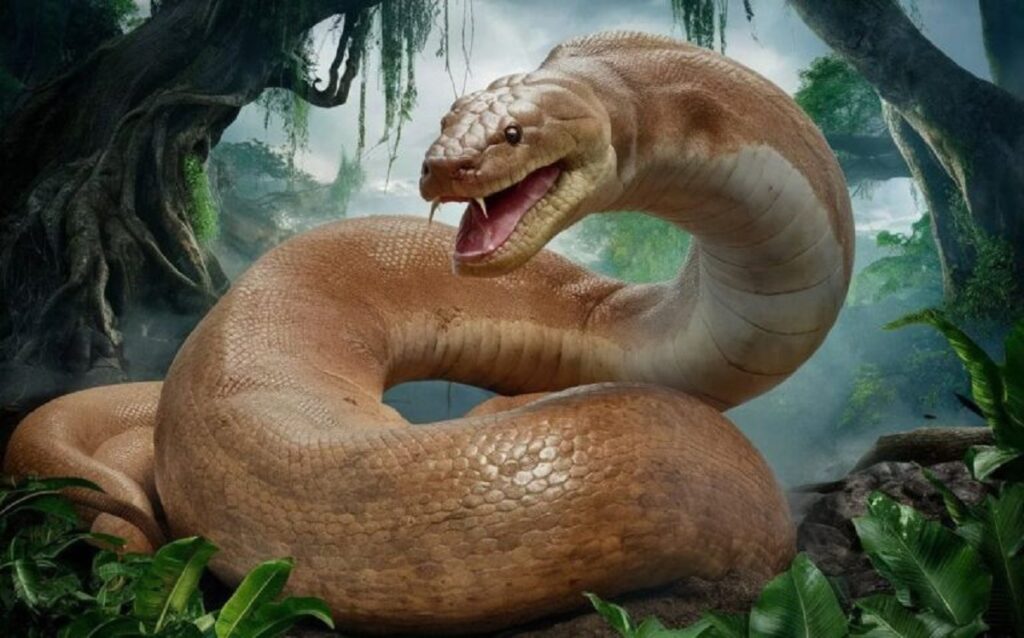
A remarkable discovery in India has astonished the scientific community: the fossilized remains of what may be the largest snake ever unearthed. This newly identified serpent, dubbed Vasuki Indicus, is estimated to have reached an astonishing length of up to 15 meters—a scale that dwarfs any living snake we see today.
Uncovering a Prehistoric Colossal
The astonishing find occurred at the Panandhro lignite mine in Gujarat, India. During routine excavation work, a team of paleontologists came across 27 vertebrae belonging to an ancient snake, igniting substantial excitement among researchers. These fossils, dating back to the Eocene epoch—around 47 million years ago—offer a rare and invaluable glimpse into a long-lost world.
This discovery isn’t just another fossil find; it’s a portal to an era when titanic creatures roamed the planet. The size and antiquity of these remains have turned this discovery into a groundbreaking moment, reshaping how we view prehistoric reptiles.
Determining the Size of the Ancient Giant
To gauge the snake’s size, scientists meticulously examined the width of the vertebrae they uncovered. From these measurements, they deduced that Vasuki Indicus likely spanned between 11 and 15 meters. While there’s some margin for error in this estimation, the figures themselves are impressive, making this serpent one of the largest ever recorded. The findings were documented in the esteemed journal Scientific Reports, contributing significantly to our understanding of ancient fauna.
The Physique and Habitat of Vasuki Indicus
Vasuki Indicus is classified within the Madtsoiidae family, an extinct lineage of snakes related to today’s pythons and anacondas. This gigantic serpent possessed a thick, cylindrical body, suggesting it was likely a land-dwelling predator rather than an aquatic one. Unlike flatter-bodied aquatic snakes, this characteristic implies that Vasuki Indicus thrived on solid ground, allowing it to ambush prey akin to modern anacondas.
Experts speculate it may have relied on similar hunting strategies as contemporary large constrictors—lying in wait to pounce and squeeze its victims. Its sheer size and power would have rendered it a daunting predator of its time.
Exploring the Environment and Climate
The Eocene period, during which Vasuki Indicus thrived, was characterized by warm climates averaging around 28°C, fostering lush forests ideal for such a massive predator. This balmy environment supported a vibrant ecosystem in which the giant snake not only survived but flourished.
Mysteries That Remain
Although this discovery has illuminated several aspects of Vasuki Indicus, numerous questions linger. Scientists are still uncertain about the snake’s musculature, its precise diet, and how it navigated its environment. Future inquiries, including detailed carbon and oxygen analyses of the fossils, will aim to shed light on the life patterns of this colossal reptile.
As researchers continue to probe the remnants, the story of Vasuki Indicus remains a source of fascination for both the scientific community and the public. This find not only challenges our understanding of prehistoric species but also sparks new inquiries into the evolution of snakes and other reptiles. The tale of Vasuki Indicus serves as a reminder that the Earth still guards many secrets of its ancient past, just waiting to be unveiled by those committed to seeking the truth.
In this era of constant discoveries, Vasuki Indicus epitomizes the hidden wonders that lie below the surface, poised to astound us all.