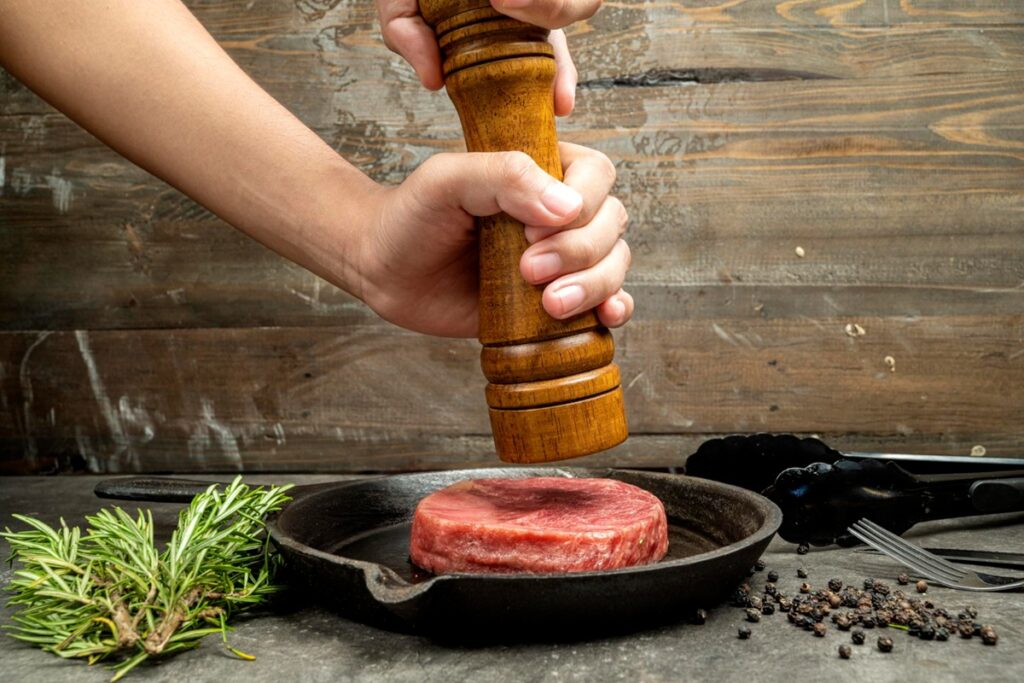
You have likely been told that a good steak starts with salt and pepper generously rubbed into both sides. This reflex is so ingrained it seems obvious, especially if you love the bold taste of black pepper.
However, when searing meat over high heat, this habit ruins the pepper, crushes its aromas, and can leave a bitter aftertaste far from the result you wanted.
When you are looking for that beautiful brown crust created by the Maillard reaction, your pan or grill rises well above 400°F. But pepper begins to suffer long before that. The question is not how much pepper you like, but rather when to add it so it keeps its fragrance without burning.
Peppering meat before cooking: what the heat destroys
To get a tasty crust, the surface of the meat must reach about 285°F to 355°F, this is the Maillard reaction that browns and concentrates the juices.
During this time, black pepper starts to degrade at around 265°F, and its most fragile compounds cannot survive beyond 400°F. In a hot cast-iron skillet or on grill grates reaching 500°F to 600°F, pepper is well out of its comfort zone.
As soon as the surface exceeds these temperatures, the piperine, responsible for the heat, and the terpenes, which give pepper its citrus or woody notes, evaporate and then carbonize. The result is no longer a clean peppery scent, but an acrid, bitter note that masks the flavor of the meat.
By adding pepper before searing, you expose these delicate molecules to a thermal shock they simply cannot handle.
Salt, pepper, and meat: the right timing
Salt and pepper behave very differently on a piece of meat. Salt dissolves in surface moisture and then moves inward through osmosis. If you salt the meat about 45 minutes before cooking, it has time to distribute and season the flesh deeply. Even if added just before the pan, salt handles heat very well and helps form a golden crust.
Pepper, however, stays stuck on the surface. Its aromatic molecules are too large and not soluble enough to travel through the muscle fibers, so peppering before cooking does not make the center more peppery.
What you get instead is a thin layer of pepper scorched to the brink. With finely ground pepper, the exposed surface area is huge; it burns faster and can lose up to 90% of its aroma in just a few minutes on a hot pan.
How to season without burning the pepper
To truly enjoy the fragrance of the pepper, simply reverse the order of your steps and protect it from direct heat. This simple routine works for ribeye, New York strip, or even pork chops:
- Dry and salt: Take the meat out of the fridge, pat it dry with paper towels, then salt it—ideally at least 45 minutes in advance.
- Cook: Sear over high heat in an oil with a high smoke point (like avocado or canola oil) until you get the desired crust.
- Pepper: Let the meat rest for a few minutes off the heat, then add freshly ground or cracked pepper.
There are a few exceptions, like steak au poivre, where cracked peppercorns are seared and then quickly deglazed with cognac or cream, which tempers the bitterness. For everything else, put the pepper in the sauce or on the meat at the very last moment, and avoid pre-made rubs full of pepper dust meant for high-heat grilling.