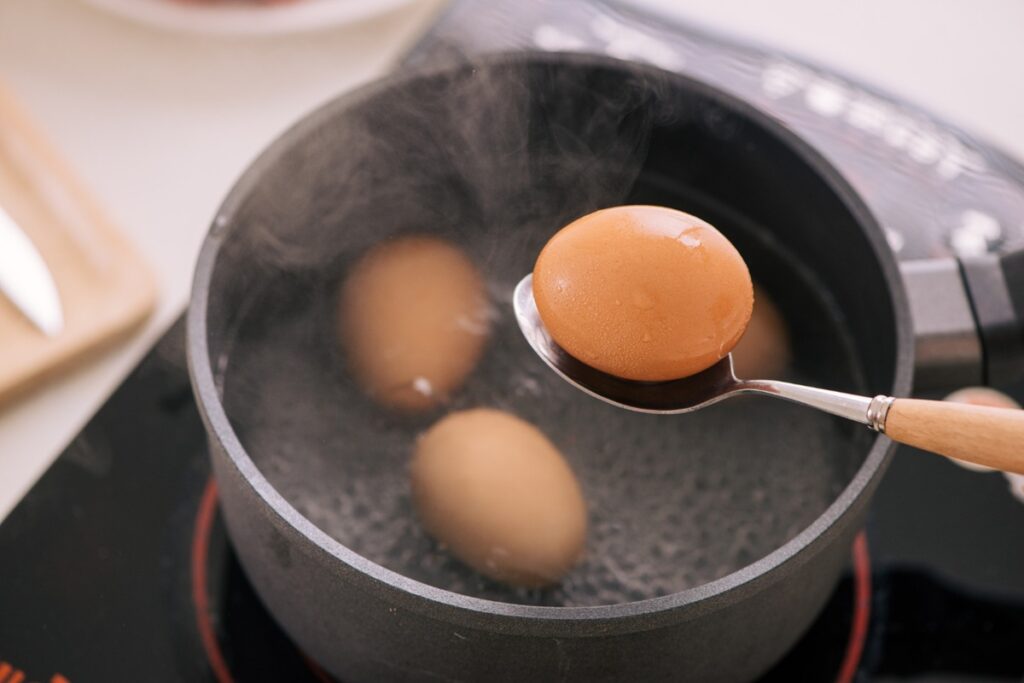
Sticking shells and crumbled whites can turn peeling hard-boiled eggs into a total nightmare. However, adding a simple spoonful of vinegar to the water changes everything, provided you use it at the right moment.
Do you love neat devilled eggs, but find that everything falls apart when it is time to peel them? Between shells that won’t budge and torn whites, many people give up on this practical cooking method.
A single spoonful of white vinegar in the water changes the story, without any special equipment or acrobatic techniques.
The idea is simple, act during the cooking process to ensure the shell practically slides off later. By adjusting the acidity of the water, you help the shell pull away from the white, making peeling a breeze. The gesture is quick, and you will see the results from the very first egg.
Why vinegar helps you peel hard-boiled eggs
An eggshell is primarily made of calcium carbonate, and it protects a thin membrane attached to the protein-rich white. When an egg is ultra-fresh, this membrane sticks firmly, making peeling difficult. Simply salting the water doesn’t really change this bond between the shell, membrane, and white.
Vinegar, lemon juice, or even bicarbonate of soda can modify the pH levels of the cooking water. Slightly more acidic water helps to very lightly dissolve the shell and loosen the membrane.
By adding one tablespoon of white vinegar per litre of water, or even a splash of lemon juice, you make the shell more fragile without affecting the taste of the eggs once they have cooled.
Step-by-step method with a spoonful of vinegar
For this trick to work every time, just follow this simple routine. You will need a saucepan, water, salt, white vinegar, and optionally some ice cubes for a cold bath.
- Fill the saucepan with about 1 litre of water for 4 to 6 eggs.
- Add 1 tablespoon of salt and 1 tablespoon of white vinegar (you can also use lemon juice).
- Bring to the boil, then gently lower the eggs into the water.
- Cook for 9 to 10 minutes for perfect hard-boiled eggs.
- Drain immediately and plunge the eggs into a large bowl of iced water for a few minutes.
Once the eggs are cold, tap them on the benchtop and roll them gently to crack the entire shell. Start peeling from the wider end, where the air pocket is located.
Finishing the job under a stream of cold water helps wash away tiny fragments. The whole process takes very little time and prevents the whites from being torn away.
Extra tips for stress-free peeling
Eggs that are about a week old often peel better than farm-fresh eggs, as the internal membrane sticks less to the shell. Taking eggs out of the fridge a little ahead of time can also prevent them from cracking when they hit the hot water.
The thermal shock of the ice bath causes the egg white to shrink slightly, which further enhances the effect of the vinegar. White vinegar remains the easiest and most neutral-tasting solution.
Once your eggs are perfectly peeled, you can keep them in the fridge for two or three days in an airtight container, ready for a salad, a quick sandwich, or a high-protein snack.