
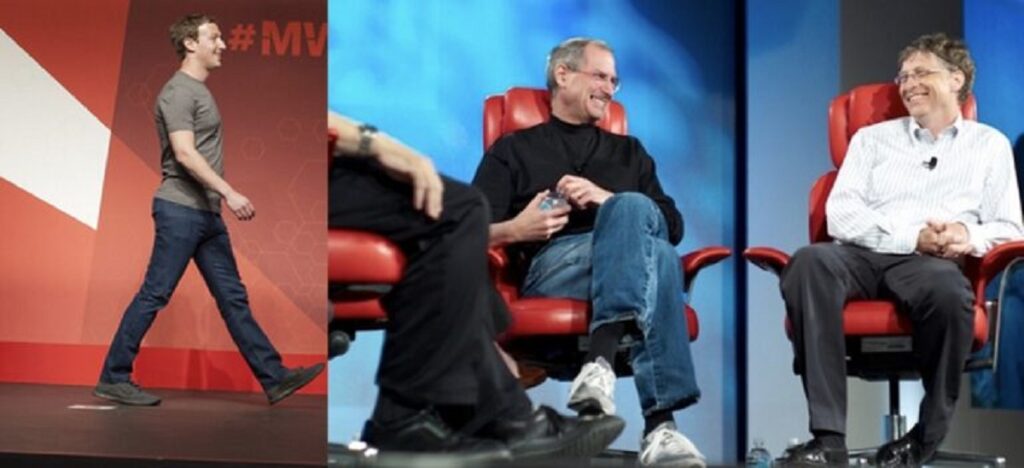
Have you ever noticed how some of the world’s most successful thinkers seem to wear the same outfit day in and day out? Take Steve Jobs with his signature black turtleneck or Mark Zuckerberg in his ever-present gray hoodie. These seemingly repetitive clothing choices are more than just personal style—they’re backed by science. The reason behind it? It all ties back to decision-making and its influence on mental energy.
The Psychological Weight of Everyday Decisions
It might seem trivial, but deciding what to wear can actually be more taxing than you’d think. Each morning, alongside countless other decisions, we face this choice. Bob Pozen, a lecturer at MIT and author of Extreme Productivity, points out that we make anywhere from 10,000 to 40,000 decisions every day. These can range from minor choices like which shirt to don to significant decisions about our careers and personal lives. The more energy we expend on less important matters, the less we have for those pivotal choices that can determine our success.
Understanding Decision Fatigue in Wardrobe Choices
What we’re experiencing is known as decision fatigue. It’s a term that relates to the mental exhaustion we feel from the relentless stream of choices we face. As social psychologist Roy F. Baumeister asserts, the more decisions we make, the more our mental resources dwindle. It’s akin to pushing a muscle to its limit. As our brains tire from overwork, their capacity for thoughtful decision-making diminishes.
Research, including a 2016 study published in the Proceedings of the National Academy of Sciences, illustrates this concept. The study found that after lengthy periods of decision-making, individuals tend to make poorer choices, with brain scans revealing decreased activity in the lateral prefrontal cortex, which is crucial for decision-making. This signals a decline in cognitive capacity.
Noteworthy Figures and Their Uniforms: Einstein, Obama, Jobs, and Zuckerberg
How do some of the most accomplished individuals handle this mental drain? By reducing the number of decisions they make, particularly regarding their attire. Consider Steve Jobs: his choice to wear a consistent outfit of a black turtleneck and jeans each day helped him conserve mental energy for the significant challenges of leading Apple and innovating remarkable products. In his biography by Walter Isaacson, Jobs explicates, “I don’t want to make decisions about what I’m wearing. I have multiple same jeans and black turtlenecks.”
Similarly, Albert Einstein adopted a simple wardrobe of a gray suit, white shirt, and slip-on shoes that became emblematic of his persona. Both Mark Zuckerberg and Barack Obama have also embraced this concept of a uniform wardrobe. Obama noted that he limited himself to “blue or gray suits” to minimise time spent on clothing choices.
Applying Insights from Decision Fatigue Theory
The theory of decision fatigue suggests that clarity and productivity can be augmented by simplifying our daily choices. For many creative leaders, sporting the same outfits daily is a deliberate strategy to stave off mental fatigue and dedicate brainpower to more consequential tasks.
The next time you find yourself grappling with your wardrobe, consider how simplifying that choice could enhance your day. Wearing a uniform style might not just be a fashion statement—it could be the key to unlocking a more productive and focused life. Who knows, narrowing down your clothing options could set you on the path to achieving your most ambitious goals!





