
The Nobel Prize in Physics often shines a spotlight on discoveries that may seem abstract or disconnected from our daily lives. However, every now and then, a breakthrough comes along that fundamentally alters the fabric of future technologies. This year’s prize exemplifies that sentiment. The research recognized delves into some of the most peculiar phenomena within quantum mechanics—phenomena that can astonishingly be observed in everyday devices.
Bringing Quantum Concepts to Life
This year, the Royal Swedish Academy of Sciences has bestowed the 2025 Nobel Prize in Physics upon three remarkable researchers: British physicist John Clarke, French scientist Michel H. Devoret, and American researcher John Martinis. Their innovative work on macroscopic quantum tunnelling and the quantization of energy in electrical circuits does sound complex, yet it’s far more comprehensible than it appears.
The essence of their research revolves around a fundamental inquiry: Just how large can an object be while still adhering to the uncanny laws of quantum physics? Typically, quantum mechanics pertains to minuscule particles. However, in the 1980s, these pioneers conducted experiments that demonstrated how quantum behaviours manifest in larger systems, observable without the aid of high-powered microscopes.
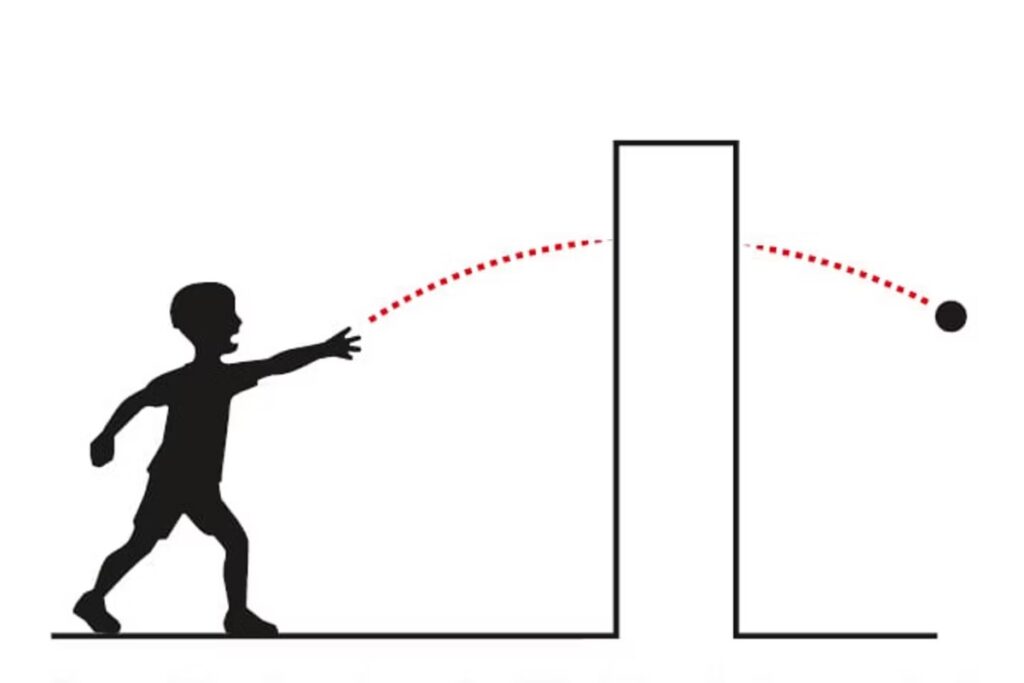
Take, for instance, quantum tunnelling. In the macroscopic world, if you throw a ball at a wall, you won’t expect it to magically appear on the other side. Yet in the quantum realm, particles can occasionally accomplish just that—slipping through barriers as if bypassing them entirely. Clarke, Devoret, and Martinis revealed that such behaviours can also occur within specifically designed electrical circuits, unlocking pathways to entirely new technologies.
The Implications for Future Technologies
The Nobel committee highlighted that these findings are not merely scientific oddities but are vital foundational elements of modern quantum technology. Devices that harness the unique properties of quantum states—ranging from sensors to cryptographic systems—are built upon the very phenomena that Clarke and his colleagues investigated.
For example:
- Quantum computers: They utilise quantized energy levels to approach information processing in unprecedented ways.
- Quantum cryptography: It relies on the delicate nature of quantum states, which collapse upon interception, ensuring secure communications.
- Quantum sensors: They capitalise on the remarkable sensitivity of quantum particles to their environment.
Their groundbreaking work has transformed these concepts from mere theories into viable engineering prospects. The Nobel committee noted that their discoveries have effectively “laid the groundwork for the next generation of quantum technologies.”
A Prize Following a Rich Tradition
This year’s award aligns with a significant trend. Recent years have seen the Nobel Prize in Physics celebrate research that bridges disparate realms: the microscopic and macroscopic, theoretical and applied. Last year’s prize honoured Geoffrey Hinton and John Hopfield for their foundational work on artificial neural networks, which are integral to the functioning of contemporary AI systems. Their innovations, originating decades ago, currently empower applications in medicine, translation, climate science, and more.
Clarke, Devoret, and Martinis’s research follows a similar trajectory—research that commenced in the 1980s and presently underpins a burgeoning quantum industry.
What the Laureates Receive
As is customary, the prize includes a diploma, a gold medal, and a monetary award of 11 million Swedish kronor, which equates to about one million euros. However, beyond the financial reward, it carries the profound recognition that their experiments have fundamentally reshaped our understanding and application of the quantum realm.
Why This Nobel is Significant
This year’s award serves as a reminder that significant scientific advancements aren’t always loud spectacles. Frequently, they arise from meticulous, often subtle measurements in quiet labs, unveiling behaviours that challenge our intuition and gradually reshape the future. As quantum technologies progress, we may soon be relying on devices constructed upon the principles that Clarke, Devoret, and Martinis first demonstrated could operate on a scale visible to us. In this regard, the 2025 Nobel Prize in Physics not only honours past achievements—it illuminates the possibilities that lie ahead.





