
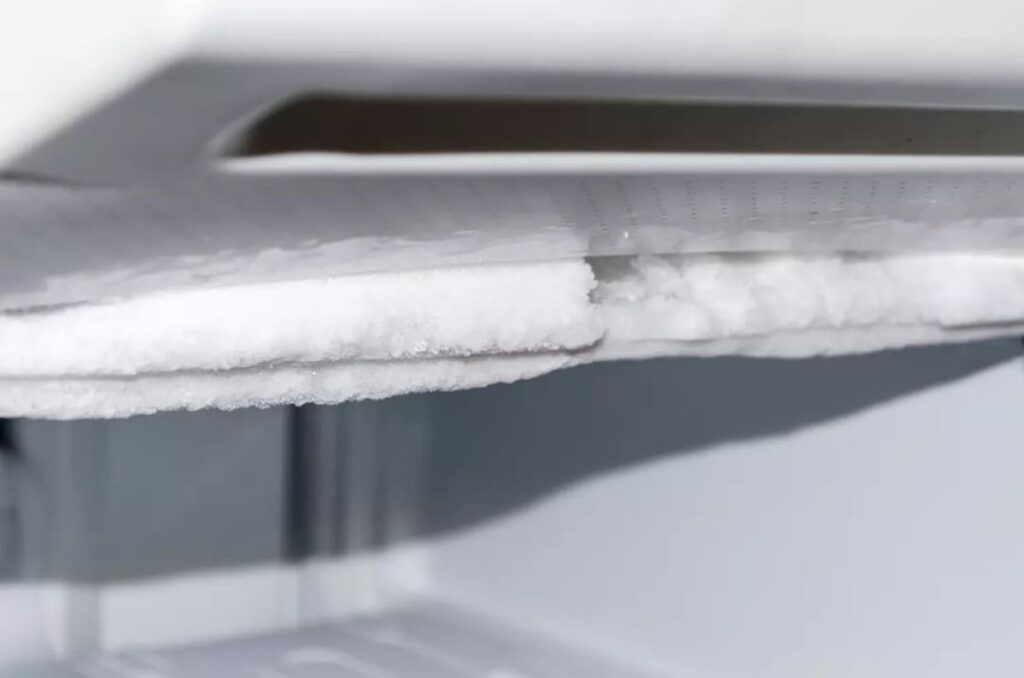
If you’ve ever attempted to cram in another bag of frozen peas into a frost-laden freezer, you know how quickly a bit of frost can escalate from a minor annoyance to a major headache. What begins as a thin layer can swiftly invade your precious storage space, inflate your energy costs, and turn routine maintenance into a daunting task. Fortunately, there’s an unexpectedly simple technique that can make the process of defrosting quicker, cleaner, and remarkably less tedious.
Why Do Freezers Accumulate Ice So Rapidly?
The notion of a completely frost-free freezer is more fantasy than reality. Over time, moisture in the air inevitably condenses and freezes on the interior walls. Each time the door swings open, additional humidity enters, leading to a formidable layer of ice.
This accumulation isn’t just for show. According to appliance manufacturers and energy advocates, excessive ice forces the motor to work harder, which reduces energy efficiency and ramps up electricity bills. Plus, it encroaches on valuable storage space—a familiar frustration for anyone with a family-sized freezer.
Experts advise defrosting at least twice a year, or sooner if the ice buildup exceeds a few millimetres. However, many of us procrastinate due to the typical defrosting method being a slow, messy ordeal.
The Traditional Defrosting Dilemma
The conventional approach is straightforward yet laborious: empty the freezer, unplug it, and then wait. Sometimes for hours. Food must find a temporary home elsewhere, towels accumulate on the floor, and your progress hinges on the room’s temperature.
I recall attempting this on a Sunday afternoon, convinced it would only take an hour. Three hours later, armed with a wooden spoon and a dwindling supply of patience, I promised myself I’d seek out a better method next time.
It turns out that alternative method involves an item most of us have lurking in our kitchen drawers.
The Aluminum Foil Technique Uncovered
The concept is remarkably simple. Start by lining the icy walls of the freezer with sheets of aluminum foil, ensuring full coverage of the ice. Next, heat water in a saucepan that retains heat but snugly fits inside the freezer.
Once the water reaches a rolling boil, place the saucepan inside the freezer and close the door. After a few minutes, reopen it. The ice should now be loosened and easily scraped away with minimal effort using a spatula.
For those particularly stubborn patches, a cloth dipped in hot water, pressed gently against the foil, usually does the trick. Once you’ve cleared the ice, a quick wipe with white vinegar will leave the freezer spotless and fresh.
The science behind this method is straightforward. Aluminum foil is an excellent conductor of heat, distributing warmth evenly across the frozen surfaces. When combined with steam, it significantly accelerates defrosting without harming your appliance.
Why This Technique Works
Experts in consumer appliances often highlight that controlled heat is safer than scraping or chipping away at the ice. The foil aids in even heat distribution, mitigating the risks of cracks or internal damage.
This technique is time-efficient as well; what typically takes hours can now often be accomplished in minutes. This makes regular maintenance far more feasible, ultimately benefitting your long-term appliance care.
Energy-focused organisations routinely remind us that a well-maintained freezer not only consumes less power but also operates more reliably over time.
A Simple Habit with Long-Term Gains
Beyond the convenience of easy maintenance, this method has practical financial benefits. An efficiently running freezer is cheaper to operate and generally has a longer lifespan. Over a year, those small savings can add up significantly on your energy bills.
Additionally, reduced ice means increased space, better organisation, and fewer frustrations when dealing with frozen drawers.
In a world awash with intricate household hacks, this technique shines for its straightforwardness. Armed with a roll of foil, a pot of hot water, and a few spare moments, you can enhance your freezer maintenance, enhance energy efficiency, and reclaim much-needed storage space.
Sometimes, the best solutions are hidden right in front of us.





