Behind the hole in your cutting board, which many believe is for storage, lies a much cleverer function than you might imagine
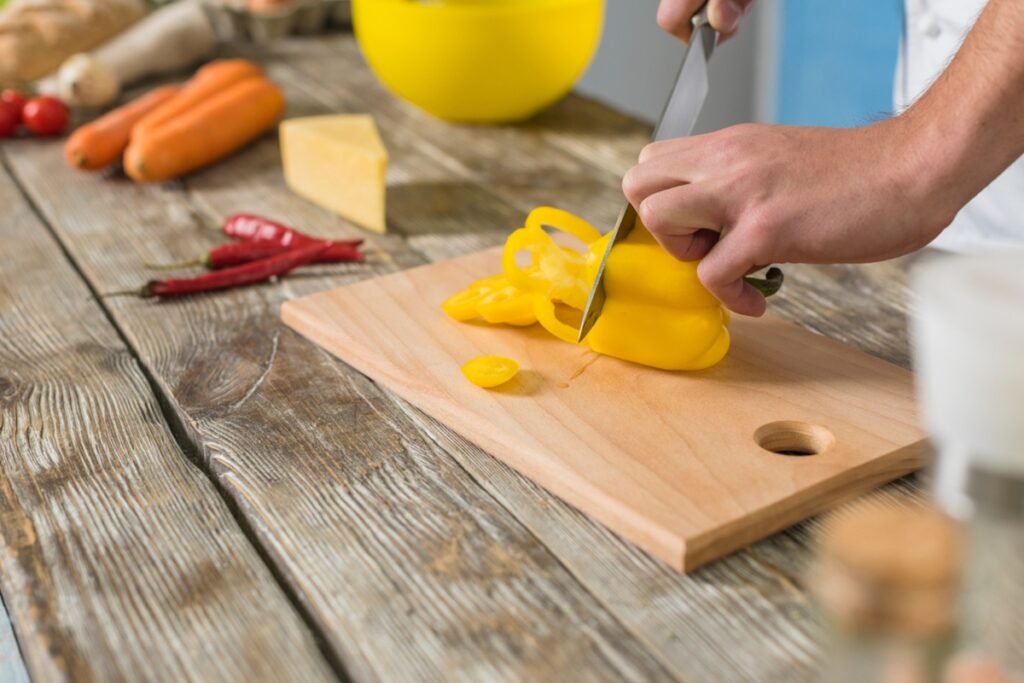
A daily object and faithful companion for all preparations, the cutting board comes in a thousand versions, from colorful plastic to solid wood. Those featuring a pierced handle seem to obey only a practical logic, as if this hole were solely intended for hanging them within reach.
However, behind this seemingly trivial detail lies a much more clever function, inherited from a traditional use that goes far beyond the simple question of storage.
A hole designed to guide your movements
The opening cut into certain boards is not just a design whim: it proves to be an ideal passage for cleanly transferring chopped food.
When fresh herbs, shallots, or small vegetables slide too easily off the workspace and miss the pan, you simply need to position the hole over the container and slide everything toward the opening.
The movement becomes more precise, the trajectory is better controlled, and you avoid those small losses that too often end up on the stovetop or the floor. Not all models offer this additional function, and for some, the hole remains limited to its hanging use.
But when it is wide enough, it transforms into an ingenious funnel designed to streamline preparation and allow for cleaner work without altering the simplicity of the cooking process.
Proper habits for keeping a healthy board
Whether made of wood or plastic, a cutting board requires rigorous attention, as it alternately hosts vegetables, meat, and fish, along with the array of bacteria that this diversity can bring.
The anses (french agency for food, environmental and occupational health & safety) actually recommends using two distinct boards: one reserved for raw products like meat and fish, and the other for vegetables and cooked foods. Regardless of the material, cleaning must be immediate.
A wash with hot water, a brush, and dish soap is enough to eliminate residue, and plastic models can even go in the dishwasher without risk.
Wooden boards, being more sensitive, require different care. Rubbing with coarse salt before a short soak in soapy boiling water allows for deep sanitizing, provided they are rinsed well and, above all, dried thoroughly with a clean towel.