
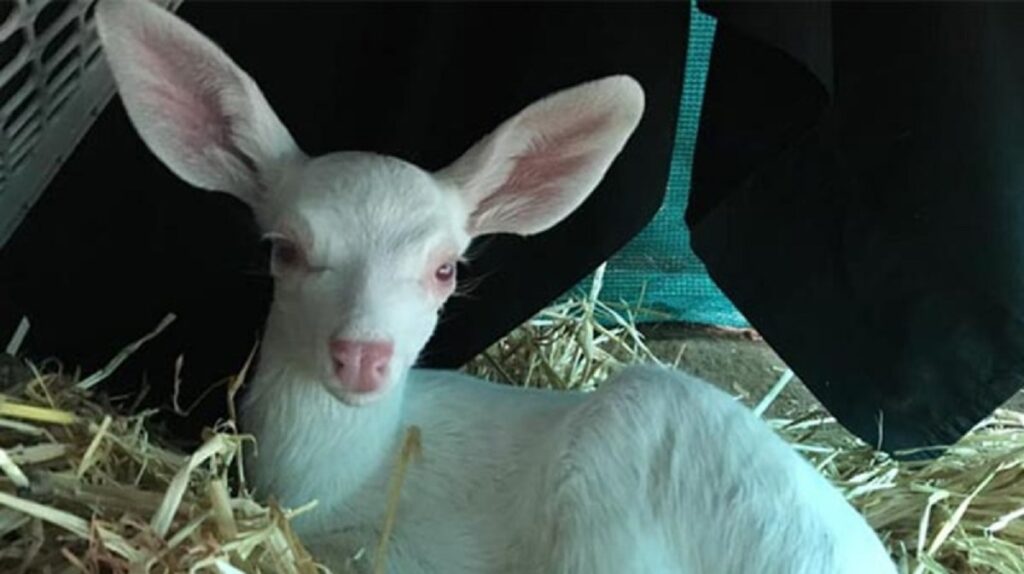
What started as a simple drive through the tranquil countryside quickly morphed into an unforgettable experience. John Becker slowed his vehicle as a flash of white caught his eye by the roadside. Initially, he assumed it was a stray sheep, but what he discovered would transform an ordinary day into a lifelong story.
A Roadside Encounter That Changed Everything
While navigating a secluded rural road in Texas, John Becker noticed a small white creature resting close to the roadside. Stray livestock is a familiar sight in these parts, so he did what most would do and pulled over. At first glance, its shape and colour seemed unmistakable: a sheep—fluffy and compact, and barely moving.
However, as he approached, uncertainty crept in. The legs looked too slender, and the head shape was off. “I thought I was seeing things,” he recalled. It soon became evident that this was not a sheep at all.
An Uncommon and Surprising Find
What John had stumbled upon was a young deer, entirely white from nose to tail. The fawn was not injured but appeared vulnerable and isolated. Wildlife experts later confirmed it was an albino fawn, an incredibly rare genetic condition caused by a complete lack of pigmentation. According to the National Wildlife Federation, albinism in deer is exceptionally rare, occurring in only a tiny percentage of births.
From afar, it was an understandable misjudgment. Up close, however, the animal appeared almost surreal, its pale coat contrasting sharply against the green grass. Anyone familiar with the countryside knows that assumptions can quickly fill in the gaps before reality catches up.
Recognising When to Intervene
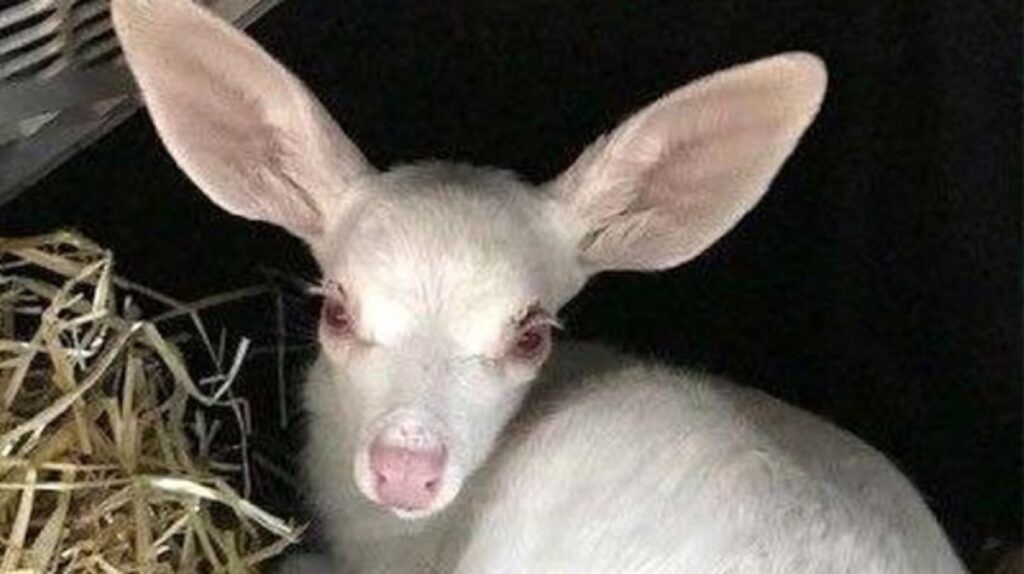
It’s common for young deer to be left on their own while their mothers forage, and experts, including those from the Texas Parks and Wildlife Department, often caution against immediate intervention. John hesitated momentarily. Yet something felt amiss—the fawn was positioned near the road and showed no signs of a mother nearby.
After observing for a while, he made up his mind. Gently lifting the fawn into his car, he took it to a nearby wildlife rehabilitation centre. “It was surreal to think I stopped for a sheep and ended up with a deer,” he remarked.
Confirmation from the Vet
Upon arrival at the centre, staff conducted a thorough examination of the fawn and confirmed two key facts. Firstly, it was indeed albino. Secondly, it likely had been abandoned—a rarity but not unheard of. A veterinary ultrasound confirmed there were no internal injuries, and the fawn appeared to be in perfect health.
Staff named the fawn Spirit, symbolising both its strength and striking appearance. “Albino deer face unique challenges in the wild,” explained one veterinarian. “Their lack of pigmentation makes camouflage nearly impossible, drastically affecting their chances of survival.”
The Journey to Wildness
Spirit’s rehabilitation became a delicate balancing act. Centres strive to prepare animals for life in the wild without fostering dependence on humans. This involved structured feeding schedules, minimal human contact, and gradual socialisation with other deer.
The presence of a few other pale-coated deer at the centre proved beneficial. Over time, Spirit began to exhibit traits typical of young deer—alertness, curiosity, and increasing confidence. Staff often describe watching this transformation as one of the most rewarding aspects of their work.
A Promising Future
The goal is for Spirit to return to the wild once it is sufficiently strong. Although its unusual colouring will always set it apart, experts remain cautiously hopeful. “Nature has a remarkable capacity for surprises,” one wildlife caregiver remarked. “With the proper preparation, even animals with extra challenges can flourish.”
A Hidden Reminder
For John, this encounter left a profound impact. He often chuckles about mistaking a deer for a sheep, but it also reshaped his perspective on the roadside and the landscape beyond. What may seem familiar upon first glance can sometimes reveal something completely unexpected.
Stories like this quietly underscore the importance of wildlife rehabilitation, informed decision-making, and trusting one’s instincts when something feels off. Sometimes, taking the time to help does more than just save an animal—it rekindles our connection to the mysterious and awe-inspiring wonders of the natural world.
It all started with a sheep that turned out not to be a sheep at all.





