
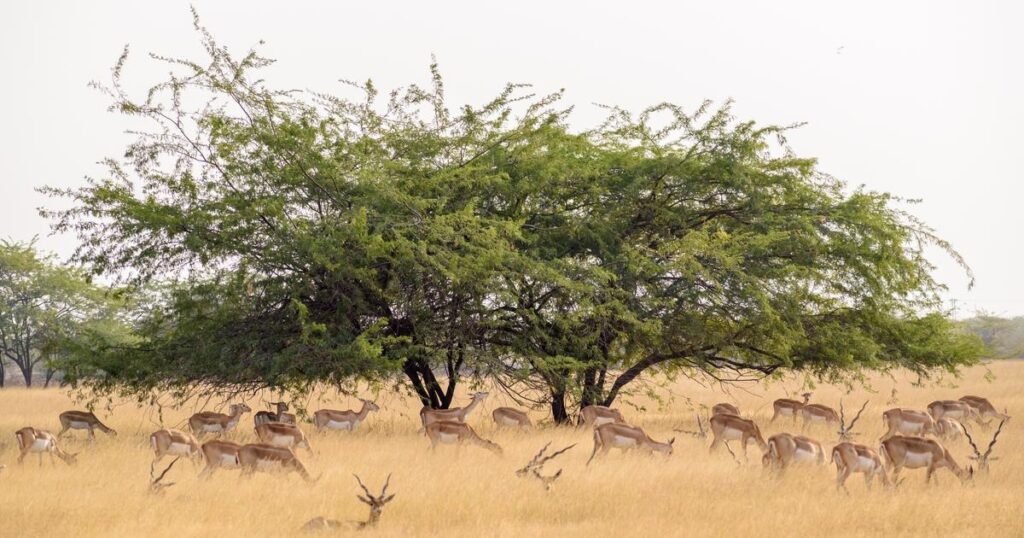
Initially planted to combat desertification, safeguard delicate soils, and aid struggling communities, the hardy prosopis tree has instead morphed into a troubling symbol of misjudged environmental interventions. In eastern Ethiopia, what was intended to rejuvenate the land has instead wrought significant changes to lives, livelihoods, and landscapes – and not for the better.
A misguided promise with noble origins
When the prosopis tree was introduced to eastern Ethiopia in the 1970s, it seemed like a panacea. Known for its resilience to drought and rapid growth, it appeared well-suited for arid areas facing severe desertification challenges. The vision was clear and optimistic: stabilise soils, provide shade, enhance local climates, and even create a source of wood for charcoal. For communities teetering on the edge of survival, it promised a crucial lifeline.
However, decades later, that promise has soured into a more unsettling reality.
A plant turned adversary
“Because of this plant, we became poor.” These stark words from Khadija Humed, a pastoralist from the Afar region, are hard to ignore. Surrounding her village near Awash, the landscape has morphed into impenetrable thickets of prosopis. Once open grazing lands have become virtually inaccessible.
Like many local families, Khadija relied on livestock, but she recalls a time when households could maintain five times the number of animals they have today. The decline isn’t solely due to drought; the pods of the prosopis can become lodged in animals’ mouths and stomachs, leading to illness and, often, death. For communities built around pastoralism, this impact has been catastrophic.
“Everything has changed”
Elder Yusuf Mohammed, a resident of the region for over seventy years, puts it simply: everything has changed. The dense canopy of the tree has not only transformed the vegetation but also attracted wild animals that now encroach on villages, bringing lions, hyenas, and other threats closer to herders and their weakened livestock.
The vicious thorns injure livestock, slowing them down and making long treks for pasture impossible. Over time, this leads to weaker animals, decreasing herd sizes, and families sinking deeper into poverty. What was intended to shield communities from climate stress has instead exacerbated it.
Experts share this sense of disbelief. Hailu Shiferaw from Ethiopia’s water and land resources research centre describes the spread of prosopis as an ecological blunder of unforeseen proportions. The tree’s deep roots can extract up to seven litres of water per day, exhausting already fragile soils and choking agricultural output. Instead of restoring equilibrium, it has thrown it off balance.
Global repercussions of an invasive species
Today, prosopis stands as one of the world’s most damaging invasive species. The Intergovernmental Science Policy Platform on Biodiversity and Ecosystem Services estimates that invasive flora and fauna inflict costs on the global economy in the hundreds of billions of dollars annually—a figure that is likely underestimated.
In Ethiopia specifically, environmental economists estimate that losses linked with prosopis in the Afar region have exceeded 600 million dollars over the past thirty years—a staggering amount that’s roughly quadruple the region’s annual budget. Scientific studies indicate the plant’s range is expanding rapidly, with projections suggesting it could cover more than 20% of the country’s land by 2060.
Out of control, but not without hope
Part of the challenge is surprisingly straightforward. Camels consume the tree’s pods and scatter its seeds over vast distances. In a region where camels are vital, this natural dispersal mechanism has allowed prosopis to spread almost uncontested.
Nonetheless, efforts are being made to mitigate the situation. Organisations such as CARE are exploring practical solutions: converting dried leaves into animal feed, utilising the wood for charcoal and construction, and replanting cleared areas with fruit crops for local sale. However, clearing even a handful of hectares can be a tedious process, highlighting the resource-intensive nature of the task.
A cautionary tale for climate solutions
The experience with prosopis in Ethiopia serves as a sobering warning. Environmental remedies that appear flawless in theory can unravel when they encounter intricate local ecosystems. In striving for resilience, humans often underestimate nature’s unpredictability.
As camels continue to roam the Afar plains, scattering seeds, the lesson remains painfully evident: good intentions alone aren’t enough. Sustainable solutions require patience, local insights, and a steadfast reverence for ecological balance.





