
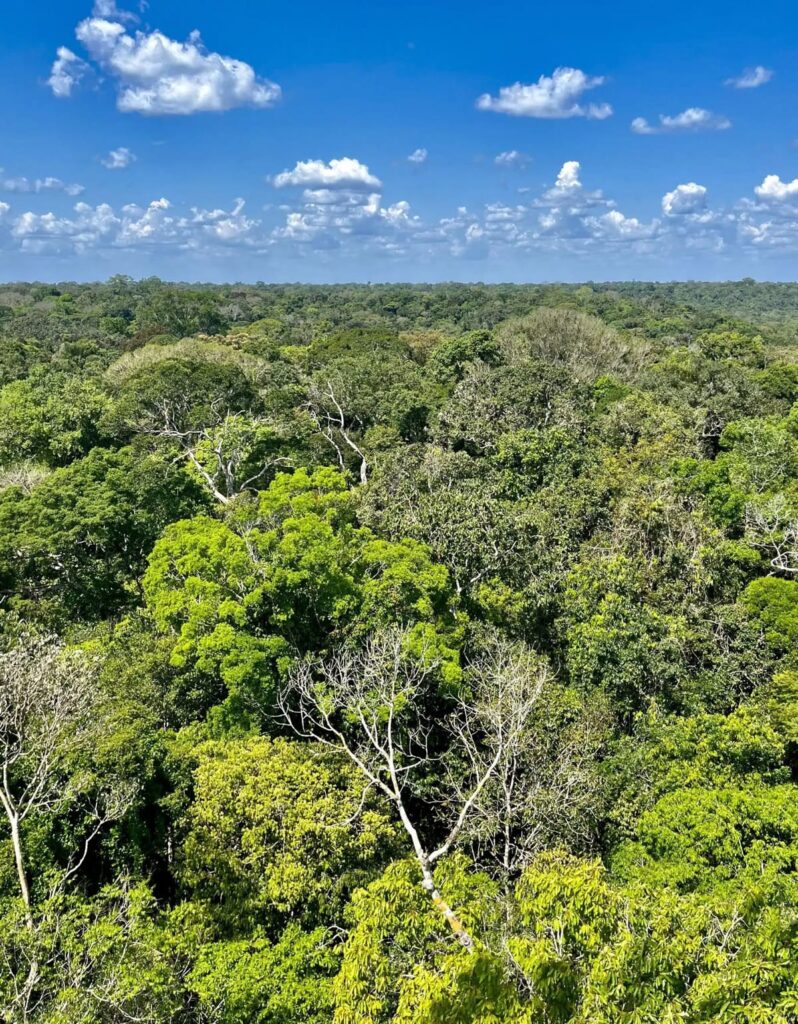
For years, the Amazon rainforest has been painted as a delicate behemoth teetering on the edge of collapse. With rising temperatures, unpredictable rainfall, and rampant deforestation, the narrative of its impending doom felt established. However, recent scientific discoveries unveil a more intricate and unexpectedly optimistic reality. Amidst the turmoil, the forest has been undergoing changes that few anticipated.
A forest we thought we knew
For many years, the tale of the Amazon has been rather dismal. I can recall sitting through geography classes where the future of the rainforest seemed already written—a saga of increasing temperatures, declining rainfall, and an unavoidable transition to savannah. This narrative shaped public discourse, guided policy decisions, and even permeated popular culture. Yet new longitudinal studies indicate that the forest has been quietly altering its narrative.
Rather than shrinking or losing mass, the Amazon is exhibiting surprising growth. Its trees aren’t just surviving; they are thriving. This trend isn’t limited to select areas—it’s a widespread phenomenon. Such findings prompt scientists to pause, scrutinize the data again, and then reconsider.
The most ambitious forest study ever undertaken
The scale of this research is nearly unimaginable. Commencing in the early 1970s, nearly a hundred researchers traversed South America, monitoring 188 forest plots over more than forty years. Some sites were revisited annually for three decades, culminating in an invaluable record of ecological change throughout time.
The researchers concentrated on the basal area of trees—essentially the surface area occupied by tree trunks at ground level. This measurement is a reliable indicator of biomass growth and overall forest health. By the completion of the study in 2015, the dataset evolved into one of the most comprehensive depictions of the Amazon ever compiled.
The results defied almost all previously established gloomy predictions.
Growth that defies ecological expectations
Since the 1970s, the average circumference of trees in the Amazon has surged by approximately 3.3 percent each decade. While that may sound modest, the sheer scale across millions of square kilometers is staggering. Even more remarkable is the universality of this trend.
Young saplings reaching for sunlight and towering trees already dominating the canopy—every type of tree is thriving. This counters traditional ecological theories that suggested only the largest, best-positioned trees would reap the benefits of a changing climate. Instead, the forest appears to be sharing the growth advantages.
For those who’ve nurtured a struggling houseplant that suddenly flourishes after moving closer to a window, this concept becomes relatable. The Amazon seems to have discovered a new lifeline.
Carbon dioxide as an unlikely ally
This newfound nourishment is derived from the atmosphere. Elevated levels of carbon dioxide are typically viewed as a threat—and justifiably so. However, for plants, CO2 serves as a fundamental resource. Trees utilize it to create wood, leaves, and roots, a process termed the CO2 fertilisation effect.
Scientists from prominent universities and research organisations have observed that tropical forests can transform this excess into growth more efficiently than anticipated. In this instance, the atmospheric surplus has acted like a global fertiliser, propelling growth more forcefully and for an extended period than climate models predicted.
This serves as a reminder that nature doesn’t always conform to linear patterns.
Three theories, one unlikely victor
Before the results rolled in, researchers proposed three potential scenarios. One envisioned a winner-takes-all situation where large trees would further dominate. Another hypothesized that smaller trees would see the quickest response. The third scenario was the most hopeful—growth benefits distributed across the entire forest.
Reality leaned towards optimism. Growth has been broadly and evenly distributed, indicating a harmonious ecological equilibrium that few dared dream of. This unanticipated boost in carbon storage has transformed the Amazon into a more efficient climate regulator, absorbing substantial amounts of atmospheric CO2.
No monitored plot exhibited an overall decline during the study period, despite the challenges posed by rising temperatures and drought periods.
Resilience, not invulnerability
It would be easy to view this as a triumphant conclusion, but scientists urge caution. This surge in growth might be temporary. Climate models continue to predict increasing drought intensity, heightened heat stress, and a greater risk of wildfires. Over time, these pressures could curtail growth and elevate tree mortality rates.
The key takeaway revolves around ecosystem resilience. Given the right conditions and protection, the Amazon has exhibited remarkable adaptability, even managing to turn a global challenge into a temporary advantage. However, resilience does not equate to immortality.
Currently, the forest is defying expectations, steadily growing stronger while global worries loom. Its ability to maintain this progress hinges less on chemical changes in the atmosphere and more on the decisions humanity will make in the coming years.





