
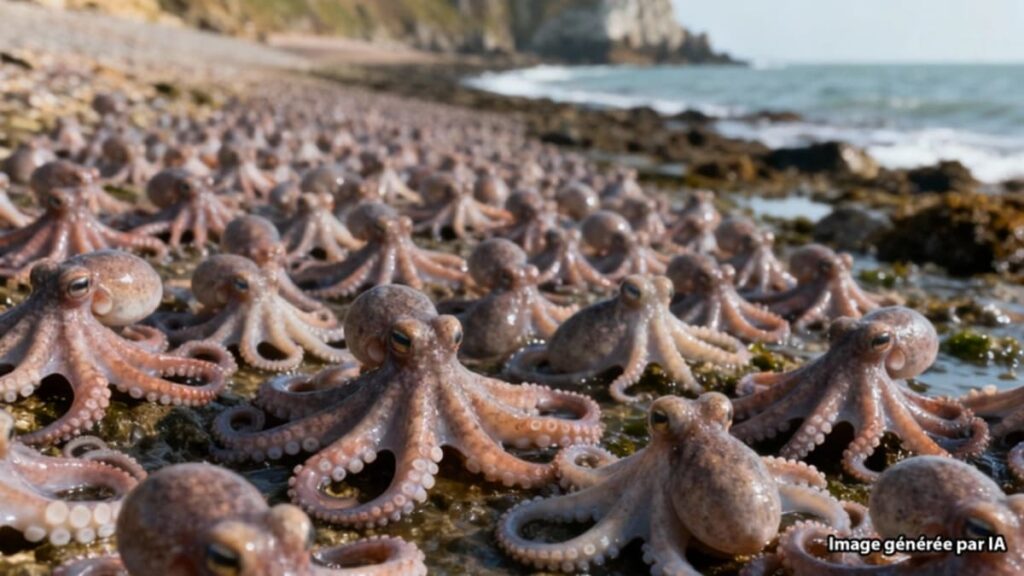
Once upon a time, sightings of octopuses along the south coast of England were merely stories divers exchanged over a pint. Now, these intriguing creatures are appearing on beaches in such high numbers that fishermen, conservationists, and chefs alike are left wondering: what on earth is happening in the Channel? A once-quiet ecosystem has transformed into a vibrant scene filled with these tentacled newcomers, which are voraciously feeding and altering the local marine environment.
When Octopuses Take Over
Just a short while ago, spotting an octopus in British waters was an extraordinary occurrence, one that left fishermen astonished. Now, that astonishment has shifted to concern. Particularly along the Sussex coast, octopus catches have soared to unprecedented levels. Some fishers report their hauls multiplying tenfold, or even a hundredfold, in a shift that feels both sudden and striking.
What was once a marine landscape dominated by prawns, langoustines, and familiar crustaceans has become the realm of these adaptable hunters. Anyone who has observed an octopus tackle a crab knows that describing them as voracious is understating the reality. One fisherman put it plainly: they consume almost everything in their path.
Why the Sudden Population Boom?
Marine biologists attribute this surge to several factors, with warming seas ranking high on the list. The UK’s Met Office has reported a consistent rise in sea temperatures in the Channel, which is critical for species like octopuses, as their eggs thrive better in warmer waters. Essentially, the Channel is evolving to have a more Mediterranean feel, providing these creatures with a welcoming new habitat.
Other environmental factors may also influence this phenomenon. A decrease in natural predators, pollution affecting habitats, and long-term overfishing all play a role in creating a chain reaction that favours species capable of quick adaptation. The Marine Conservation Society has consistently warned that disrupted food webs can lead to imbalances such as this one.
An Ecosystem Under Strain
While octopuses are evidently thriving, the rest of the ecosystem isn’t celebrating. By preying on crustaceans, molluscs, and fish at alarming rates, they directly compete with both local wildlife and the fishing industry. The Channel’s already delicate food chain is now under even greater strain. With few natural predators to keep octopus populations in check, their rapid rise threatens to reshape the biodiversity of the region.
The economic implications are equally stark. Traditional fisheries – already grappling with quotas, rising fuel costs, and changing consumer preferences – now face an unpredictable competitor with eight arms and an insatiable appetite.
Challenge or Opportunity?
However, some restaurateurs view this as an opportunity. Octopus is a prized ingredient in Mediterranean cuisine, and chefs in coastal towns are starting to explore dishes featuring local catches. For them, it’s a chance to diversify menus while alleviating pressure on overfished species. Yet sustainability advocates, including the World Wildlife Fund, caution that if interest grows too quickly, history could repeat itself: overfishing a species just as it becomes abundant.
Transforming this temporary surge into a sustainable long-term resource will require careful management – a lesson Britain’s fishing communities have learned the hard way with cod, scallops, and other once-plentiful stocks.
The Channel Meets Its Unexpected Resident
The sudden emergence of these cephalopods serves as a stark reminder of how rapidly nature can shift when environmental conditions exceed certain thresholds. The seas around Britain now host a fascinating, efficient, and sometimes disruptive resident. Whether this octopus boom will become a lasting characteristic of the marine landscape or just a fleeting moment in its history will depend on how the ecosystem adapts – and how humanity responds.
For the time being, the UK shares its waters with a creature renowned for its intelligence, stealth, and an appetite that knows no bounds. A powerful reminder that in the ongoing struggle between climate, wildlife, and economic sustainability, change seldom arrives quietly.





