
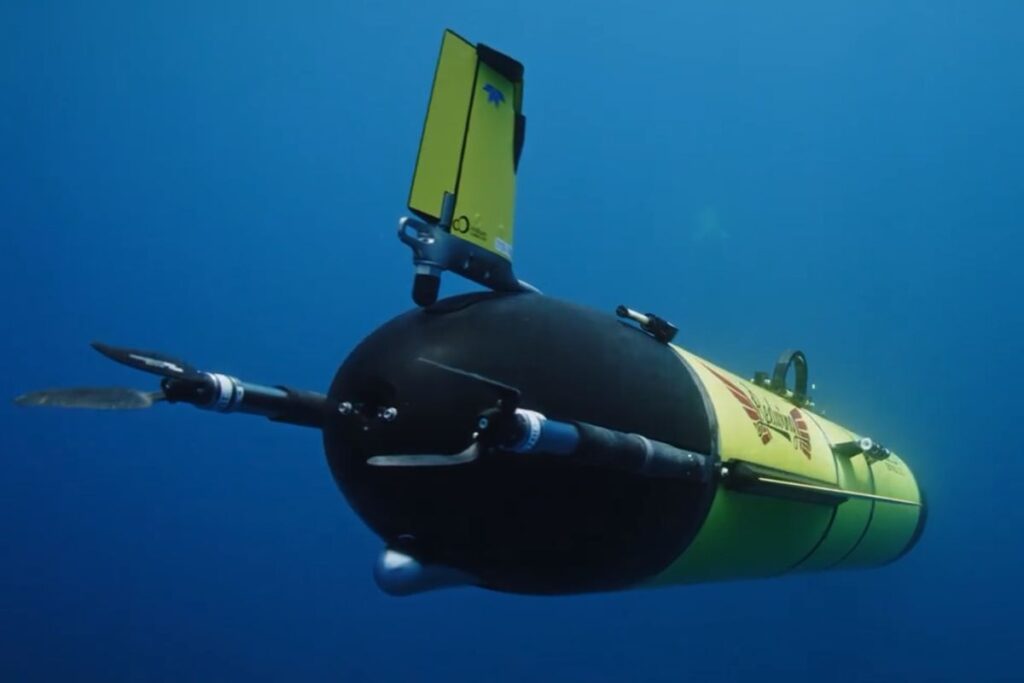
Five hundred years after Ferdinand Magellan’s crew completed the first journey around the globe, a new explorer is set to retrace those watery paths—but this time, beneath the ocean’s surface. Meet Redwing, an autonomous submarine no larger than a surfboard, poised to embark on a voyage that promises to change the face of ocean exploration.
Small Vessel, Monumental Task
Measuring just 2.57 metres in length and weighing 171 kilograms, Redwing may appear modest. However, this compact underwater drone is gearing up to achieve what no other vessel—be it piloted or robotic—has undertaken: a fully autonomous journey around the globe.
Created by Teledyne Marine in partnership with Rutgers University in New Jersey, this glider will set sail from Martha’s Vineyard, off Massachusetts’ coast, in October 2025. If all goes according to plan, it will cover more than 73,000 kilometres over a period of five years, while gathering crucial data on the world’s oceans.
Unlike traditional submarines, Redwing operates without a propeller. It cleverly navigates the deep blue by manipulating its buoyancy: growing heavier to descend and lighter to ascend. This gentle rise and fall enables it to glide forward at a pace of 1.3 km/h, almost like a sailboat navigating the depths.
Sustained by Patience, Not Fuel
The glider’s endurance is its standout feature. Equipped with oversized batteries and engineered to move silently through the ocean, Redwing can function continuously for nearly two years before requiring a recharge. Midway through its global expedition, it will make a planned pit stop for a battery swap, then resume its mission.
Twice a day, Redwing will surface to relay data to scientists via satellite and receive updated navigation instructions. As one Rutgers researcher humorously noted, “It’s like checking in with a very slow yet reliable colleague.” Throughout its travels, this glider will amass invaluable data on temperature, salinity, and ocean currents—critical information for understanding climate change.
Charting a Course Inspired by Magellan
Redwing’s journey somewhat mirrors Magellan’s historic expedition. It will depart the U.S. East Coast, heading towards the Canary Islands, before moving on to Cape Town, Western Australia, New Zealand, the Falkland Islands, and potentially Brazil, ultimately returning to Cape Cod.
This route carries more than symbolic value; it traverses remote and under-explored regions of the ocean where scientists still lack comprehensive long-term data. By gliding slowly and methodically, Redwing aims to compile the most extensive continuous oceanic dataset ever collected by a single vehicle.
“This mission is a marathon, not a sprint,” remarked Alexander Phillips from the UK’s National Oceanography Centre. “Every dive and ascent enhances our understanding of how our oceans are evolving beneath the surface.”
Navigating the Underwater Risks
While storms may not pose a direct threat to Redwing as it operates deep beneath the ocean surface, other dangers lurk in the deep. Fishing nets, large cargo ships, and even inquisitive sharks are significant risks for the glider.
The team is particularly concerned about biofouling—the accumulation of algae, barnacles, and microorganisms that can weigh down the glider and hinder its maneuverability. Previous missions have lost drones to this issue. Phillips noted, “A single patch of growth can undermine years of planning.”
Nevertheless, the team remains hopeful. Each additional day that the glider forges ahead is considered a small victory in their ambitious pursuit.
Sustainable Science with Minimal Impact
Beyond the technical challenges, Redwing’s initiative conveys a significant environmental narrative. Unlike conventional research vessels that burn copious amounts of fuel, a glider like Redwing operates in a silent, clean, and sustainable manner, harnessing the principles of physics and patience.
The data garnered will be disseminated to universities and educational institutions globally, aiding both students and researchers in gaining insights into how the oceans regulate global climate.
Inside Teledyne’s control room, researchers affectionately refer to Redwing as if it were part of the team. On their screens, a solitary blinking dot represents the tiny explorer as it inches forward across the globe—proof that groundbreaking exploration doesn’t always come with a bang; sometimes it hums softly beneath the surface.
A Legacy of Oceanic Innovation
The journey of Redwing is the latest episode in a narrative that has been unfolding for decades. Back in 2009, the Scarlet Knight RU27, another innovative creation from Rutgers, became the first autonomous glider to traverse the Atlantic. Two years later, Silbo, developed by Teledyne and the University of the Azores, achieved the same feat over a distance of 6,000 kilometres. In 2012, the PacX Wave Glider navigated its way from San Francisco to Australia, powered solely by solar and wave energy—a still-unbroken record for surface drones.
Now, Redwing stands poised to surpass all its predecessors, diving to depths of 1,000 metres and travelling farther and longer than any autonomous sub before it—a new milestone in robotic ocean exploration.
If successful, Redwing will earn a place among the ranks of the world’s legendary explorers, demonstrating that even in an era defined by satellites and artificial intelligence, countless mysteries of our planet still remain concealed beneath the waves, waiting to be unveiled by an unassuming little yellow glider with grand ambitions.





