
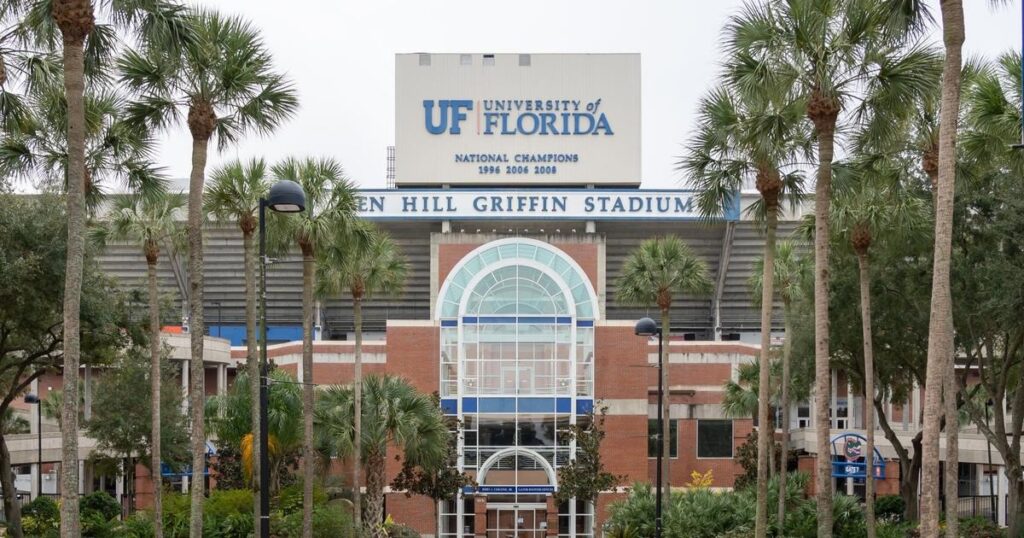
In a controversial move that has sparked discussions among academics and policymakers, Florida Governor Ron DeSantis has mandated that state universities cease hiring foreign workers on H-1B visas—an initiative typically employed to attract highly skilled international talent. This decision, announced in late October, reflects a growing trend towards protectionist hiring practices, a shift that many in the education sector warn could significantly alter Florida’s higher-education environment.
Emphasizing American Employment
During a speech at the University of South Florida, DeSantis framed his initiative as a demonstration of national loyalty, offering examples of foreign hires—including an assistant swimming coach from Spain and a public-policy professor from China—as positions he believes should be filled by U.S. citizens. “Are you kidding me?” he questioned incredulously. “We can’t train an assistant swim coach in this country?”
This stance aligns with a broader strategy initiated by former President Donald Trump, whose administration dramatically increased the cost of obtaining an H-1B visa—from around $2,000 to a staggering $100,000 per application—in an attempt to deter employers from seeking overseas talent. Trump officials contended that American companies should focus on “training American graduates” rather than depending on international expertise.
Academic Leaders Raise Concerns
However, many higher-education leaders are sounding alarms over this directive. Lynn Pasquerella, president of the American Association of Colleges and Universities, argues that restricting H-1B visas could undermine the essential mission of public universities: “It would jeopardize Florida’s ability to attract and retain top professors, researchers, and international students.”
Charles Lee Isbell Jr., chancellor of the University of Illinois at Urbana-Champaign, echoed these concerns, warning that forcing institutions to hire less qualified candidates could undermine academic standards and compromise the meritocratic selection process traditionally valued in academia.
The implications are significant: Florida’s 12-university system received approximately 400 approved H-1B petitions between January and June, with 156 linked to the University of Florida. In contrast, Washington University in St. Louis has over 700 H-1B employees, many of whom contribute meaningfully to research and medical care.
State Authority vs. Federal Regulations
Despite the assertiveness of his directive, DeSantis lacks the power to outright rescind or prevent H-1B visas, which are controlled by the federal government. What he can do, however, is direct state universities to halt the sponsorship of visa applicants—an approach that will likely impact roles requiring specialized knowledge and skills.
Pasquerella points out that this directive could face legal challenges, as it may conflict with federal immigration laws and the governance structures of universities.
Navigating the Tension Between Nationalism and Academia
Florida’s new direction underscores a growing friction between nationalist hiring policies and the inherently global nature of modern academia. Universities are increasingly reliant on international scholars to drive innovation in science, language training, medical research, and technological advancement. Critics argue that limiting foreign recruitment could diminish Florida’s competitive edge and reduce its capacity for impactful research.
As the discussion unfolds, one pressing question remains: can a state effectively prioritize domestic employment without sacrificing the academic quality its public universities depend on?
For the time being, Florida’s universities—and the international scholars who once viewed them as pathways to opportunity—are left in a state of uncertainty.





