
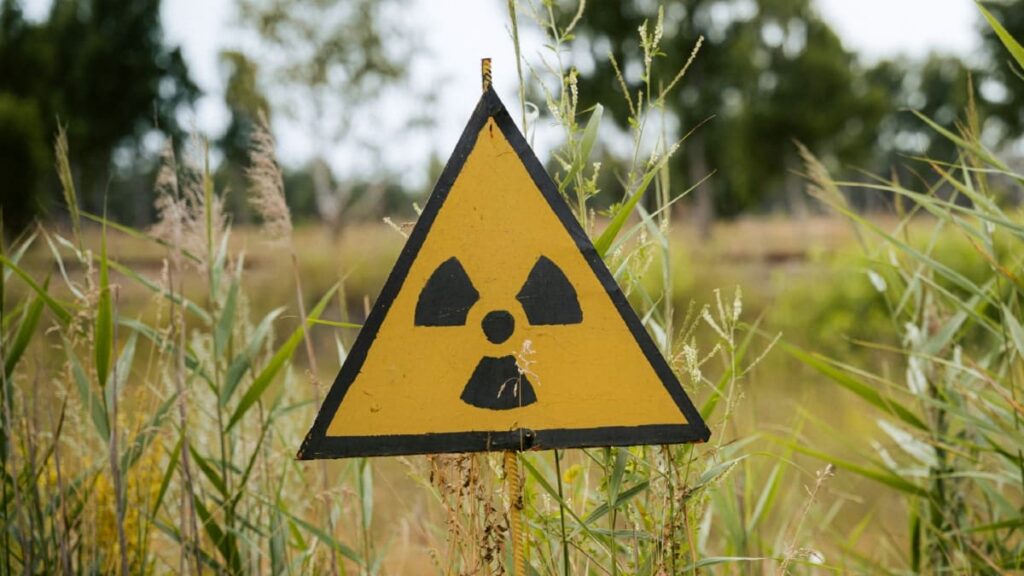
If you’ve ever stumbled upon your child engrossed in a sea of science project materials, envisioning themselves as the next groundbreaking inventor, it might be wise to sneak a peek at their plans before they spiral out of control. While many kids entertain themselves with makeshift parachutes for toys or “futuristic” gadgets, one 17-year-old had far more audacious aspirations—a nuclear reactor built right in his backyard.
The Unconventional 17-Year-Old Who Aimed to Build a Nuclear Reactor
Let’s be real: the notion of your teenager casually assembling a nuclear reactor in the backyard seems ripped from the pages of a sci-fi thriller. Yet, for David Hahn, a 17-year-old Boy Scout hailing from Michigan, this ambitious dream became a shocking reality. Back in 1994, Hahn embarked on a quest to construct a nuclear reactor using everyday household items, convinced this would earn him a place among real-world scientists. His materials included components from smoke detectors and camping lanterns, both of which contained trace amounts of radioactive elements such as americium 241, thorium 232, and tritium.
His ultimate goal was to create a breeder reactor that could transform thorium 232 into uranium 233, a more potent radioactive material. Although he never achieved the necessary critical mass for a fully operational reactor, his unconventional project eventually caught the attention of local authorities. The situation escalated significantly when police uncovered suspicious materials during a vehicle search, materials that Hahn himself had attributed as being radioactive.
Understanding the Fundamentals of a Nuclear Reactor
To comprehend how a nuclear reactor functions, whether through fission or fusion, one must manage the nuclear reactions at play. A fission reaction involves a heavy atom splitting into lighter atoms, while fusion merges two lighter atoms to form a heavier one. Although both phenomena could theoretically be replicated by amateurs with adequate materials, fission is more accessible, thanks to the presence of small quantities of radioactive elements in everyday items like smoke detectors and certain lamps.
However, while the concept of a DIY nuclear reactor may thrill budding scientists, the reality is far more complex. To construct a functional reactor that generates power, one must be able to slow down and control neutrons to sustain the fission reaction without it spiraling out of control. This process necessitates effective shielding and cooling systems to ensure safety—requirements that are simply unfeasible for a backyard endeavour.
The Realities of Constructing a Backyard Nuclear Reactor
Even with contemporary “microreactors”—compact reactors designed to deliver just a few megawatts of power—their size is still substantial. These reactors are roughly comparable to a shipping container and can produce up to 5 megawatts of electricity. This level of power is far beyond what any backyard setup could accommodate, and building such a reactor, even with advanced technology, demands expertise, infrastructure, and stringent safety protocols that dwarf the ambitions of any DIY project.
Implications for Aspiring Scientists
While David Hahn’s daring attempt didn’t culminate in a fully operational nuclear reactor, it highlights an intriguing aspect of youthful curiosity and ambition. The drive to build, create, and experiment is fundamental to the spirit of innovation and scientific discovery. Yet, Hahn’s story also underscores the critical importance of safety and ethics in scientific pursuits. Not every inventive idea, regardless of its brilliance, is attainable without the requisite knowledge and resources. It’s vital that budding scientists are encouraged to dream boldly, coupled with an understanding of the limits of what can be responsibly achieved without professional oversight.
Ultimately, building a nuclear reactor in one’s backyard is not merely a fantastical notion—it’s an outright peril. Nonetheless, it illuminates the remarkable lengths to which human curiosity may extend. Whether nurturing the next engineer or scientist, remember this: the most crucial lesson lies in learning how to pose the right questions and grasp the principles that govern our world, well before embarking on potentially hazardous experiments.