

If you’ve ever observed the astonishing long-distance flights of migratory birds, you’re likely aware of their status as some of nature’s finest athletes. Recent scientific findings have revealed even more extraordinary aspects of these avian voyagers—insights that not only showcase their remarkable physical prowess but also flag pressing concerns regarding their survival in an ever-changing climate.
The Hidden Abilities of Migratory Birds
Consider the tiny dunlin, a bird roughly the size of a sparrow, as it embarks on a migration from its Arctic breeding grounds to Africa—a journey stretching thousands of kilometres. Now, imagine the Arctic Tern, which travels from polar regions to the southern oceans, racking up an astonishing 80,000 kilometres annually—more than double the circumference of the Earth. These examples exemplify the breathtaking endurance demonstrated by migratory birds, capable of crossing continents and oceans with remarkable efficiency.
For years, ornithologists have been fascinated by these birds, yet much about their physical capabilities remained a mystery. Thanks to cutting-edge technology, researchers can now track these journeys in greater detail, unveiling incredible endurance feats. Birds like the bar-tailed godwit have been recorded flying non-stop for up to nine days, covering over 12,000 kilometres. Despite their modest size, they manage to achieve impressive speeds and distances without rest.
The Science Behind Their Exceptional Journeys
How do these birds undertake such incredible migrations? While researchers have long suspected they possess exceptional navigation skills, new discoveries have expanded this understanding. Developments in biomonitoring technology, including miniature GPS trackers and geolocators, have allowed scientists to gain deeper insights into how these birds navigate their extensive travels.
A critical factor lies in their ability to accumulate significant fat reserves. For birds such as the red knot, this fat acts as vital fuel for long-distance flights. During migration, these birds can increase their body weight by as much as 50% in fat, which is then metabolised for energy. Furthermore, many migratory species have evolved metabolic processes that enable them to burn fat more efficiently than humans, with minimal risk of dehydration.
Equally intriguing is how some species prepare for their lengthy journeys. Certain birds adapt by undergoing internal organ changes, such as shrinking their digestive and reproductive systems to conserve energy. Remarkably, some possess the ability to reabsorb muscle tissue temporarily, a survival adaptation that alleviates excess weight for sustained flight.
Harnessing Earth’s Magnetic Field
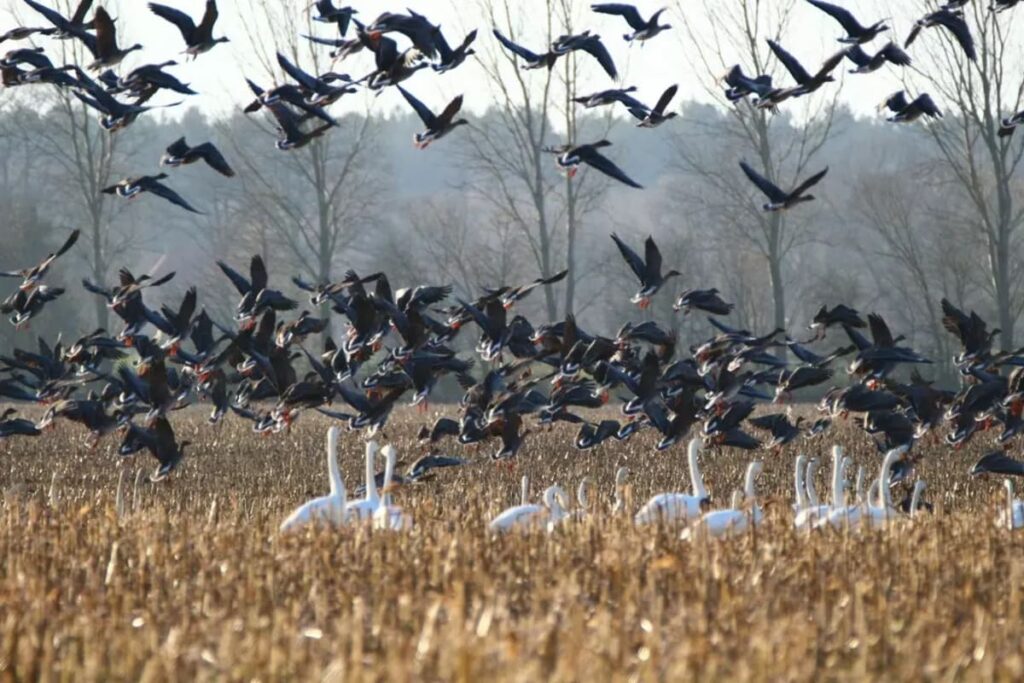
Alongside their impressive endurance, migratory birds utilise the Earth’s magnetic field like a natural compass. Studies reveal that numerous species possess a magnetic sense embedded in their eyes. This organic compass enables them to navigate even in the dark, guiding them across vast oceans and continents with unwavering precision.
For scientists, unraveling the navigation systems of these birds is akin to deciphering a hidden code. Not only does it elucidate how they traverse vast distances, but it may also inform new technologies for human navigation and space exploration.
Climate Change: An Urgent Threat
Despite their incredible adaptations, migratory birds face significant threats as a result of climate change. As global temperatures rise, the timing of insect hatches is shifting, leading to a disjunction between the arrival of migratory birds at their breeding sites and the availability of food for their young. This alteration in the food supply is contributing to population declines, especially in regions where birds arrive just as peak food sources dwindle.
Moreover, habitat destruction driven by urbanisation, pollution, and shifting land use patterns is placing immense strain on migratory bird populations. The Swainson’s hawk, once thriving in certain areas, has seen a dramatic fall in numbers due to changes in its migratory habitat in South America.
Taking Action: Protecting Our Skyward Superstars
Although these challenges are daunting, there are signs of hope. Initiatives aimed at safeguarding migratory paths and preserving essential habitats are beginning to yield positive results. For instance, conservation programs in the Bahamas have successfully protected vital breeding habitats for birds like the Kirtland’s warbler, bringing it back from the brink of extinction.
On a broader scale, international efforts are being made to protect crucial migratory bird habitats, particularly in wetlands and coastal ecosystems. In China, measures to conserve the Yellow Sea, a key stopover point for many migratory birds, have already led to encouraging changes in bird populations. If we sustain these efforts, we can help ensure the survival of these remarkable travelers for generations to come.
Conclusion: Nature’s Champions Deserve Our Support
The world of migratory birds is brimming with hidden superpowers and astonishing capabilities that continue to captivate researchers. However, with climate change and habitat loss threatening their existence, it’s imperative that we act decisively to help these aerial champions continue their remarkable journeys. Whether through protecting migration paths or addressing the impacts of climate change, every contribution matters in ensuring the preservation of these incredible creatures.
By enhancing our understanding of their extraordinary endurance, navigation skills, and adaptability, we can join forces to ensure that future generations will still have the opportunity to witness these awe-inspiring travelers soaring through the skies.