
In a remarkable feat, Chinese scientists have engineered a resistive magnet capable of producing a magnetic field 800,000 times stronger than that of Earth, signifying a potentially transformative step in magnetic research and an array of scientific disciplines.
Unlocking the Power of Magnetism
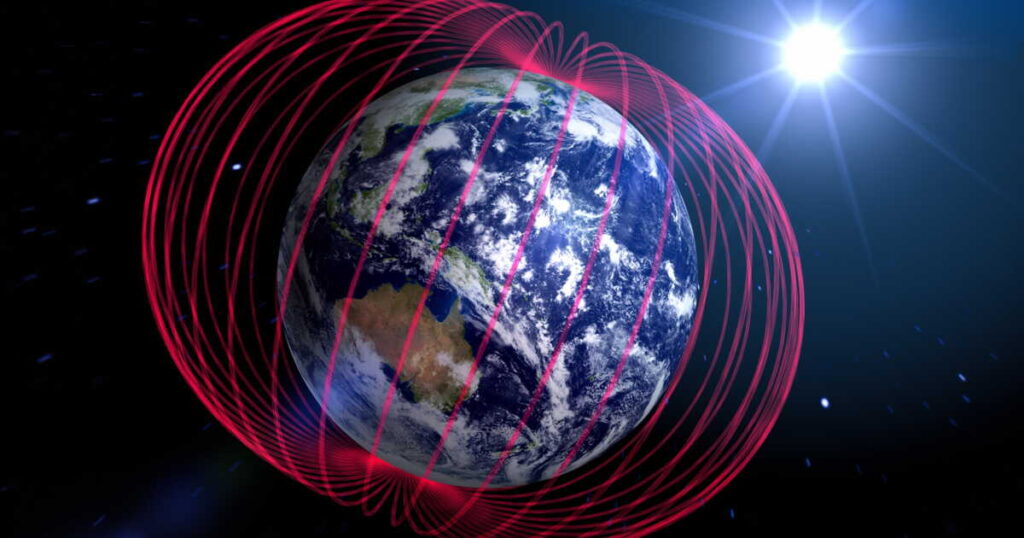
The Earth’s magnetic field serves as a vital barrier against the damaging influence of solar and stellar winds—streams of charged particles from the Sun and other celestial bodies. This natural magnetosphere protects our atmosphere and sustains life. However, Chinese researchers have taken a leap forward, surpassing this natural shield with a resistive magnet that generates an astonishing 42.02 teslas—a field strength 800,000 times that of Earth.
Achieved by the High Magnetic Field Laboratory under the Chinese Academy of Sciences, this groundbreaking innovation is the result of over four years of dedicated development. The team meticulously refined the magnet’s structure and design to optimize its performance, culminating in the impressive constant field strength of 42.02 teslas.
Expanding Horizons in Magnetic Research
Resistive magnets, such as this new creation, are fundamental tools in advanced scientific research, particularly in the realms of superconductivity and the exploration of material properties. This advancement paves the way for higher precision measurements and could lead to significant breakthroughs in physics.
Physicist Joachim Wosnitza from the Dresden High Magnetic Field Laboratory in Germany commended this achievement, indicating that it opens new avenues for creating highly reliable, high-powered magnets. These advances could facilitate the exploration of even stronger magnetic fields, enabling more sensitive experiments and discoveries. It exemplifies how the pursuit of scientific knowledge often requires pushing the boundaries of existing understanding.
Envisioning Applications of This Technology
One of the most intriguing possibilities arising from this advancement is its potential to revolutionize advanced research. Alexander Eaton, a condensed matter physicist at the University of Cambridge, suggests that this high-field magnet could allow scientists to manipulate states of matter in unprecedented ways. Such capabilities could uncover subtle phenomena previously impossible to observe, potentially transforming quantum physics and material science.
Furthermore, despite only exceeding the previous world record of 41.4 teslas held by the National High Magnetic Field Laboratory in the U.S. since 2017 by a fraction under a tesla, the precision this magnet offers is considerable. In scientific research, even small increments in tesla strength can dramatically enhance measurement accuracy, adding weight to this accomplishment.
Navigating Energy Challenges and Future Prospects
However, this achievement comes with its challenges. As potent as these magnets are, they demand significant energy. The Chinese magnet utilized an incredible 32.3 MW of power to reach its record—double what the world’s most powerful offshore wind turbine consumes. This raises questions about the sustainability of such technology.
In response to these energy demands, researchers are investigating hybrid magnets and superconducting magnets, which could achieve similar magnetic strengths while consuming less power. Nevertheless, these alternatives present their own set of challenges, including high manufacturing costs and complex cooling systems.
In summary, while this magnetic breakthrough stands as a significant landmark itself, it also indicates a future where high-powered magnets may evolve to become more sustainable and energy-efficient. The work of these Chinese scientists lays the groundwork for a new chapter in scientific exploration, showcasing the vast possibilities that powerful tools can unlock. From unraveling the mysteries of the universe to enhancing technological advancements, this discovery is poised to impact future generations of researchers remarkably.





