
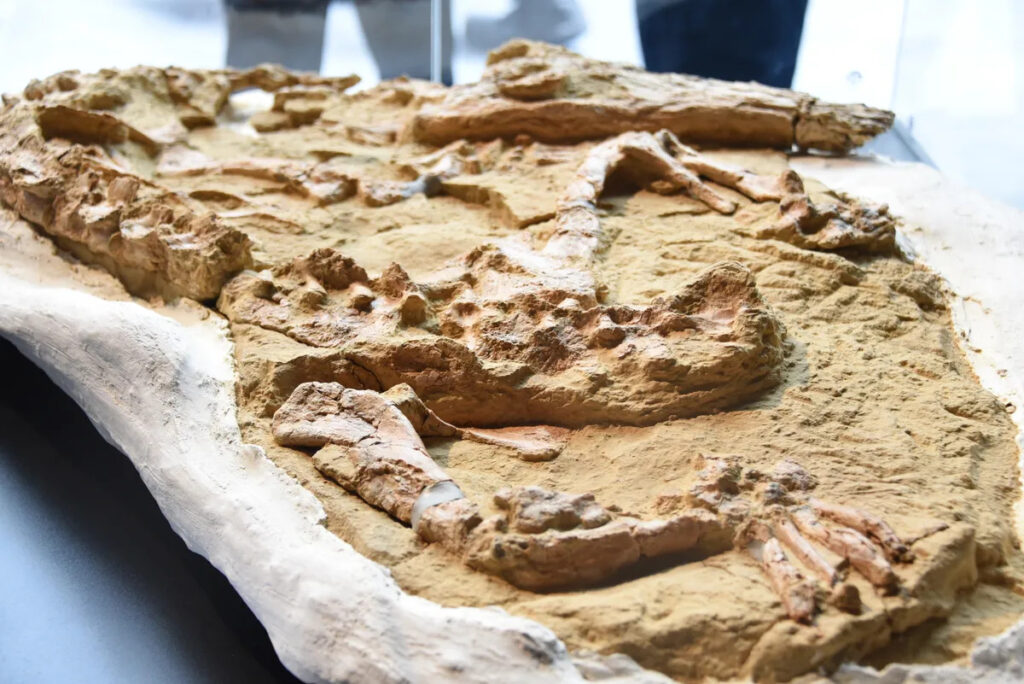
A team of paleontologists in the Ocucaje Desert, located in southern Peru, has made a stunning discovery that brings the ancient oceans to light. Excavations in this abundant fossil site have unearthed the remains of a marine gavial crocodile, believed to be over 12 million years old. This finding represents the youngest known specimen of its kind, providing invaluable insights into prehistoric reptilian life.
A Historical Find in the Ocucaje Desert
In 2023, a partnership between Peruvian scientists from the Geological, Mining, and Metallurgical Institute of Peru and the Colegio La Unión led to the discovery of a nearly complete and articulated skeleton of a juvenile gavial crocodile. This young reptile, measuring around 10 feet in length, thrived during the Miocene epoch when much of the region was submerged underwater.
The rarity of such a juvenile specimen makes this discovery especially significant. According to prominent paleontologist Mario Gamarra, adult gavial crocodiles were known to reach lengths of up to 30 feet, making them formidable predators in their time. The chance to study a juvenile opens exciting new avenues to understand its life cycle and developmental stages.
This species, much like its modern relative, the Indian gavial, possessed a long, narrow snout adapted for a fish-based diet. The fossilized remains provide researchers with a unique chance to delve into how these ancient creatures interacted with their surroundings and adapted over time. By examining the growth phases of this crocodile, scientists hope to gain insights into its development and how it navigated a continually changing environment.
The Ocucaje Desert: A Fossil Paradise
Renowned as one of Peru’s richest fossil sites, the Ocucaje Desert is located approximately 350 kilometers south of Lima, making it a prime spot for paleontologists on the hunt for ancient relics. Over the years, this area has yielded an impressive array of fossils, including ancient marine species such as whales, dolphins, and sharks.
One of the most striking finds in recent memory came in 2023 with the discovery of Perucetus colossus, a giant whale once thought to be the heaviest creature ever to inhabit Earth. However, subsequent analyses reaffirmed the blue whale as the largest, showcasing the dynamic nature of paleontological research. Such discoveries highlight the remarkable diversity of life that flourished long before this area transformed into a desert.
Exploring Prehistoric Marine Diversity
The Ocucaje Desert serves as a fascinating portal to a distant past, where ancient seas dominated much of the present-day terrain. The fossils found here create a vivid picture of rich marine biodiversity, inhabited by species long extinct. In addition to the gavial crocodiles and whales, researchers have also uncovered remains of giant turtles, fossilized fish, and ancient seabirds.
The remarkable accumulation of fossils in this relatively small area underscores the ecological significance of the ancient marine ecosystem and serves as a reminder of how rapidly entire ecosystems can disappear, leaving behind incredible snapshots of life. These findings are essential for enhancing our understanding of marine evolutionary processes throughout the geological periods and provide important insights into how climate and geological changes have influenced species that once swam in the Earth’s oceans.
Conclusion
The unearthing of an ancient gavial crocodile in the Ocucaje Desert is not just a scientific curiosity; it offers a rare glimpse into a bygone era. This discovery illuminates the diversity of life during the Miocene epoch and presents new opportunities to understand the intricate history of marine reptiles. As ongoing research unfolds, we may reveal even more astonishing insights into the creatures that once roamed our planet’s seas, deepening our connection to the distant past.





