
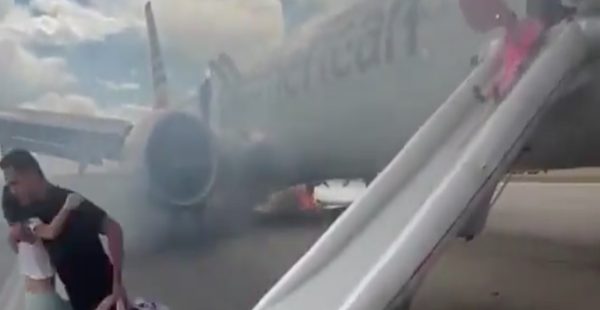
For seasoned flyers, the safety briefing may be second nature, yet when panic sets in, instinct often takes over. Aviation authorities are raising concerns about a persistent behaviour seen in emergencies that could have dire consequences. The latest initiative aims to remind passengers that during a crisis, every second counts more than personal belongings.
A Safety Message Often Overlooked
The core issue is straightforward: during an emergency evacuation, passengers must abandon their carry-on items. The Federal Aviation Administration (FAA) has highlighted that this fundamental rule is frequently ignored, despite being emphasized in safety pamphlets and onboard announcements.
In September 2025, the FAA issued a new safety alert urging US airlines to enhance their communication strategies regarding this critical message. Investigations have revealed recurrent instances of travellers reaching for their overhead bags as smoke fills the cabin and alarms blare. This behaviour can result in blocked aisles, damaged evacuation slides, and life-threatening delays.
Anyone who has navigated a crowded train knows how quickly progress can stall when people stop to grab their belongings. In the confined space of an aircraft, the stakes are drastically higher.
The Risks of Carry-On Bags During Emergencies
Aviation safety experts are forthright about the dangers posed by carry-on luggage. When passengers try to retrieve their bags from overhead compartments, injuries can occur from falling luggage. Additionally, wheeled suitcases can puncture inflatable slides, which could prevent others from escaping.
The International Civil Aviation Organization mandates that an aircraft must be evacuated within 90 seconds, even if only half the exits are functional. While this target may seem manageable during drills, the reality of panic, smoke, and chaos in an actual emergency makes it exponentially more challenging.
Investigations into past incidents worldwide reveal a concerning trend: when passengers take the time to collect personal items, evacuation times extend, and injury rates rise. A notable case from 2019 showed passengers clinging to their suitcases during an evacuation in Moscow, a sight since repeated across Europe, Asia, and North America, illustrating that this is a global safety concern, rather than just a cultural foible.
Airlines’ Role in Addressing This Issue
The FAA’s recent alert doesn’t introduce new regulations but carries significant weight. Inspectors use safety alerts in their evaluations of airline practices, making it an important message that can’t be overlooked.
Airlines are encouraged to revisit multiple aspects of their safety protocols. Enhancing cabin crew training to focus on assertive commands during evacuations is a priority. Safety demonstrations and briefing materials may also be revamped to make the message unmistakable. Additionally, simulation exercises should incorporate scenarios where passengers attempt to retrieve bags, allowing crews to practise interventions effectively.
Airports, too, can further this initiative. Implementing clear signage, brief video messages, and universally understood icons can help drive home the message before passengers even board their flights.
A Crucial Reminder for Passengers
From a passenger’s viewpoint, the psychological element is understandable. In moments of high stress, individuals may feel compelled to grab their passports, phones, and medications. I witnessed a fellow traveller hesitating at an exit during a minor onboard incident, torn between fleeing and fetching their laptop. It was a flight attendant’s firm command that swiftly redirected the situation and kept the evacuation moving.
Safety organisations consistently remind us that personal belongings can be replaced, but lives cannot. The National Transportation Safety Board has long emphasised that even minor delays can prove fatal in situations involving fire or smoke-filled cabins.
The renewed focus from regulatory bodies is fundamentally about clarity. When alarms sound and adrenaline surges, passengers should not be tasked with making judgment calls. The directive must already be ingrained in their minds.
Leave everything behind. Move quickly. Aid the flow. This may seem like a simple rule, but it can significantly influence the difference between chaos and survival.





