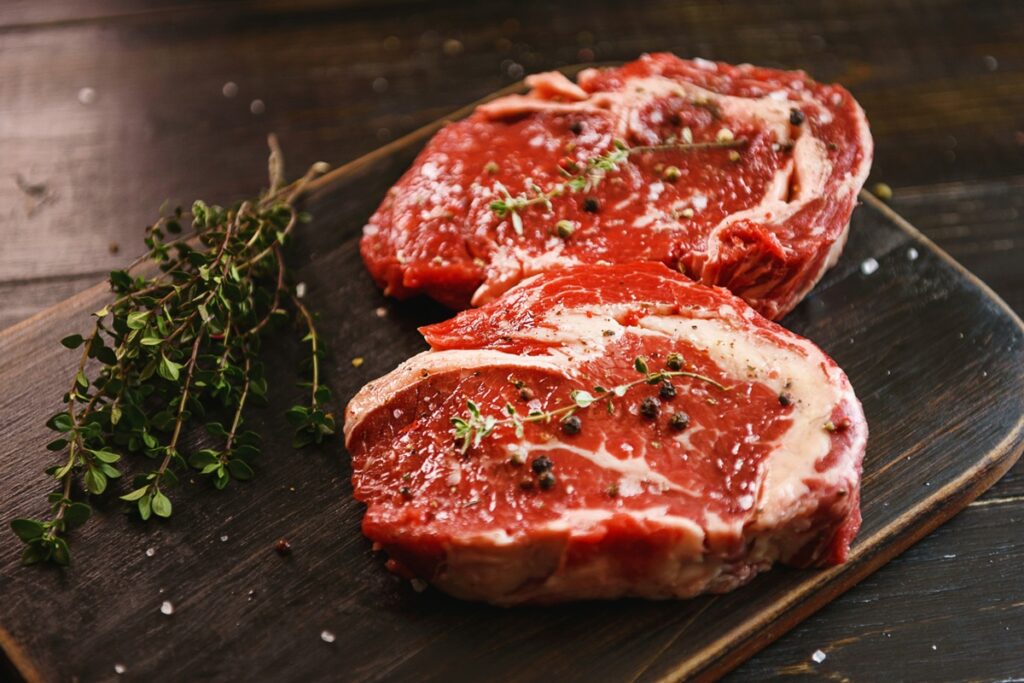
Think you’re doing the right thing by searing your meat quickly over high heat? It is a more common mistake than you might think. Cooking too fast is one of the easiest ways to end up with dry, tough meat.
Before you even turn on the stove, everything starts with the preparation. According to the pros, gently pounding your meat breaks down the muscle fibers and makes it much more tender.
This pre-cooking step makes a world of difference, and it is even a great way to blow off some steam!
Easy tricks for succulent, soft meat
If your meat often lacks that melt-in-the-mouth quality, a marinade can save the day. When it is slightly acidic, it works wonders. Marinades based on lemon juice, vinegar, or yogurt are excellent for tenderizing while boosting flavor. Just remember to let it sit for at least a few hours for the magic to happen.
Another surprising but effective technique is pre-salting. Salting your meat several hours before cooking helps soften the muscle fibers. The salt penetrates deeply, helps retain moisture, and makes the meat juicier. Just be sure to rinse it lightly before cooking to avoid excessive saltiness.
For those in a hurry, there is the ultimate kitchen staple: baking soda. It increases the pH level on the surface of the meat, making the proteins more soluble and therefore more tender. Fifteen minutes is enough, but rinsing is mandatory to avoid a strange aftertaste.
Slow cooking and resting: the game-changing details
For tougher cuts, forget the express cooking methods. A long, slow cook at low temperature is ideal. Whether using a Dutch oven, slow cooker, or a low oven, the fibers relax slowly, and the meat becomes tender and almost confit-like.
Once the cooking is done, don’t rush to the table just yet, even if the temptation is strong. Letting the meat rest for a few minutes is a strategic move. It allows the juices to redistribute properly throughout the cut for a much more flavorful bite. Use some foil, set a timer, and most importantly, resist the urge to taste it too soon!
In short, getting perfectly tender meat doesn’t require a culinary degree, just a few smart habits and a little bit of patience.