
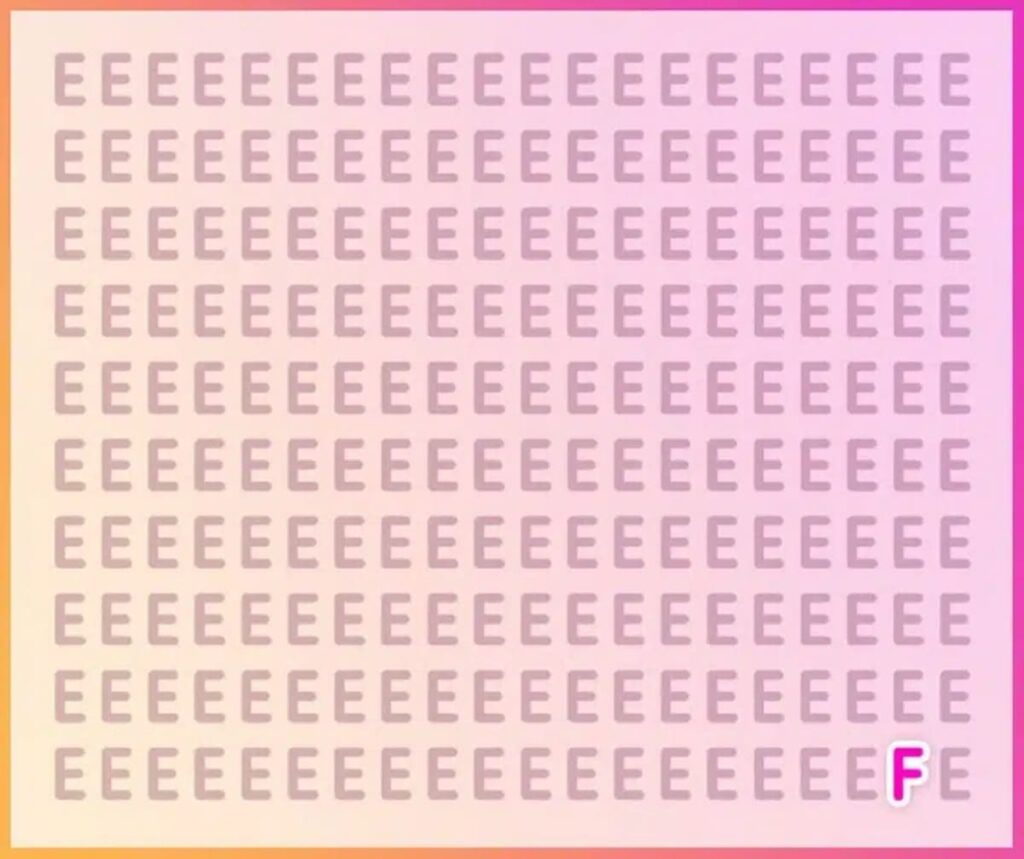
A single letter, camouflaged among a sea of others, has pushed puzzle enthusiasts to the brink of madness. This viral visual riddle appears deceptively simple at first glance, but don’t let that fool you. It’s the kind of challenge that draws you in, urging you to lean closer, squint harder, and question whether your eyes are playing tricks on you. Are you ready for a light brain workout?
Your mission, should you choose to accept it
The task is refreshingly straightforward: locate the hidden F hidden amongst a multitude of E’s. You have a mere 11 seconds to find it – just long enough to feel a bit too confident, yet short enough to induce a mild panic as the timer ticks down.
It harks back to those rainy afternoons of my childhood, racing my cousins to find the odd shape or misplaced letter. Someone would always defiantly shout they’d found it in record time, often before even glancing at the page.
This challenge, however, is a notch trickier. The layout is dense, with the letters closely resembling one another unless you focus intently. Cognitive specialists from the British Psychological Society assert that tasks like these compel the brain to activate selective attention – filtering out repetitive patterns to hunt for a singular anomaly. Essentially, this is more than a pastime; it’s a mini workout for your cognitive muscles.
So, take a deep breath, ready your eyes… and off you go.
Stuck? Here’s where the elusive F was hiding
If the seconds have slipped away and the F continues to elude you, you’re not alone. Many admit to scanning row after row only to later realise they’d been staring right through it.
For those still on the hunt, the crafty little letter found its home in the tenth row, quietly nestled in the nineteenth column. A tiny triumph for pattern creators worldwide.
There’s a definite thrill in finally spotting it – that rush you experience when your brain clicks into gear. It’s akin to the satisfaction of recalling the name of an actor you’ve been wracking your brain over, or locating those misplaced keys that had been staring right at you.
Why we embrace challenges like these
Puzzles like this are more than just delightful distractions. According to NHS health guidelines, brief moments of cognitive stimulation – through puzzles, quizzes, or visual challenges – sustain brain activity and can enhance concentration over time. Plus, there’s something undeniably comforting about these small victories sprinkled throughout your day.
They require no equipment, no prep, and no special knowledge – just your eyes, a dash of patience, and a willingness to laugh at yourself when you miss the obvious.
A small daily victory for your mind
If this challenge left you craving more, you’re certainly not alone. These brain teasers tap into a basic human pleasure: the joy of solving riddles. They remind us that even in the hustle and bustle of everyday life, it’s worthwhile to carve out a few seconds for a quick cognitive boost, a flicker of curiosity, or a playful break.
So keep your eyes sharp, your mind inquisitive, and your sense of humour intact. There’s always another puzzle just waiting to be solved – and who knows? Next time, you might spot that sneaky F in record time.





