
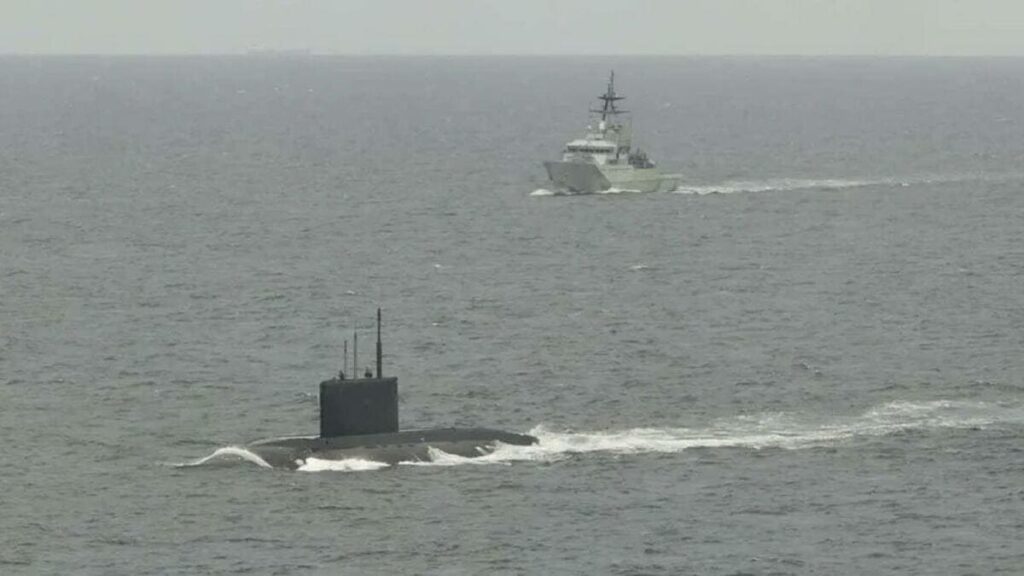
The news of a military vessel in distress drifting through international waters is concerning, and this week’s reports from the Atlantic have captured significant attention. A Russian submarine, recently photographed as it crossed the Strait of Gibraltar, is believed to be suffering from a serious technical malfunction — one that raises alarms for both its crew and the surrounding environment. Here’s what we know about this troubling situation.
A Major Breakdown at Sea
Reports circulating on Russian opposition channels indicate that the submarine B-261 Novorossiysk, part of the Black Sea Fleet, has encountered a significant malfunction while operating in the Mediterranean. The vessel reportedly faced a fuel-system failure, resulting in fuel leaking into the bilge — a compartment not designed to contain flammable liquids.
Compounding the peril of the situation, it is alleged that there are no spare parts or trained engineers onboard to effect repairs. As fuel accumulates in an enclosed area, the risk of a potential explosion is said to be substantial. The crew’s only course of action appears to be pumping out the fuel and disposing of it at sea, underlining the gravity of their predicament.
The International Maritime Organization has long cautioned against the environmental hazards associated with accidental or deliberate fuel spills at sea, highlighting that even minor discharges can have detrimental effects on marine life for years to come.
@Capt_Navy
Russian Submarine
RFS NOVOROSSIYSK B-261 🇷🇺
Strait of Gibraltar westbound Sep 26 2025 pic.twitter.com/rMMDvH6Mta— Peter Ferrary (@PeterFerrary) September 27, 2025
By the way the #RusNavy submarine “Novorossiysk” left the Mediterranean Sea yesterday evening and headed into the Atlantic, expected to be en route towards Kronstadt naval base, St Petersburg, Russia. pic.twitter.com/Tan6uIoyyf
— OSINT Military Tracker (@OSINTMilTracker) September 27, 2025
An Uncommon Passage Through Gibraltar
On 26 September, the submarine was captured in photographs transiting the Strait of Gibraltar on the surface—an unusual manoeuvre for a vessel meant to operate beneath the waves. While its official destination remains unconfirmed, naval analysts speculate that it may be heading north, possibly towards a Russian facility for necessary repairs. Submarines of this class frequently traverse the English Channel, making it a likely point of future observation.
Belonging to the Kilo class, the Novorossiysk is a diesel-electric submarine constructed between 1984 and 2016. At nearly 73 metres in length and displacing up to 3,100 tonnes when submerged, it is manned by a crew of 52, including 12 officers. The vessel’s dual diesel engines produce around 5,900 horsepower, a propulsion system that is now reportedly impaired.
Increasing Discontent in Russia
Beyond technical concerns, this incident has incited growing discontent within Russia. Many sources are frustrated that fewer operational vessels of strategic importance remain in the Black Sea Fleet. A number of ships have already faced damage or destruction amid the ongoing conflict, including the fleet’s flagship, the Moskva.
An insider within the navy has pointed out that vessels are returning to base covered with tarpaulins, hinting at widespread mechanical issues and a lack of seaworthy assets. Another source criticized the leadership and training practices, suggesting that young sailors are being unfairly held accountable for systemic problems they did not create.
Such sentiments reflect previous assessments from international defense analysts, who have underscored the deterioration in Russia’s naval capabilities in the region.
A Strained Fleet
If the reports regarding the Novorossiysk are accurate, this incident underscores a larger issue: a fleet strained by ongoing conflict, maintenance challenges, and aging infrastructure. With fuel leaking, repairs not an option at sea, and safety concerns escalating, the submarine’s journey through the Atlantic is being closely monitored by multiple nations.
For the time being, the vessel seems to be on a path toward a safe harbour — yet this situation stands as a stark reminder that even formidable navies can become vulnerable, not just to adversaries, but also to failures within their own ranks.





