
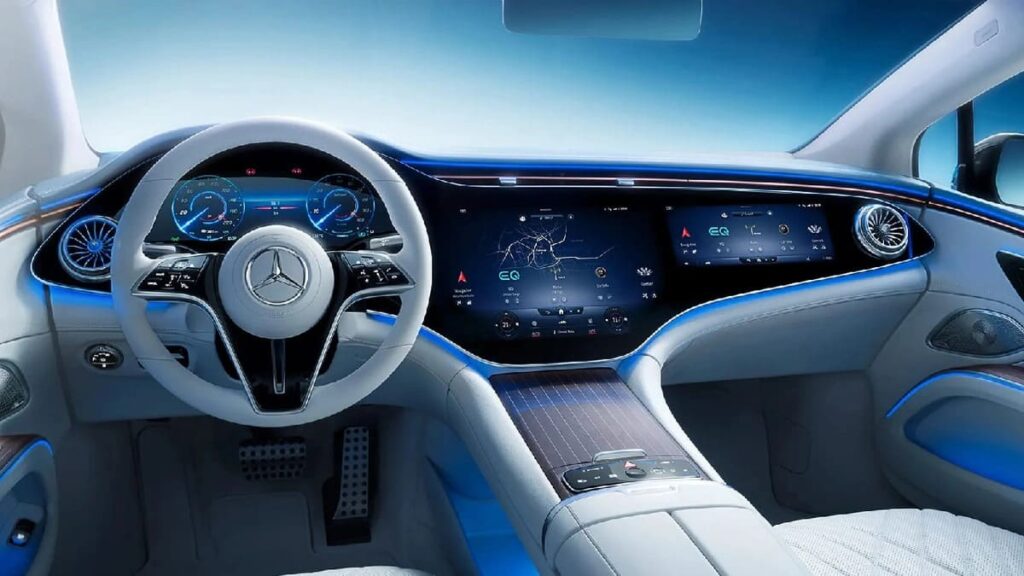
I vividly recall my first attempt to reduce the fan speed in a modern car, fumbling through menus while waiting at a red light. By the time I finally located the right icon, the light had turned green and I was still squinting at the screen. It seems I’m not the only one who has faced this dilemma – and even Mercedes appears to have taken notice.
The Comeback of Physical Controls
For quite some time, the automotive industry has confidently moved towards entirely digital dashboards. When Mercedes introduced its expansive MBUX Hyperscreen, which stretches across the full width of the dashboard, it sent a clear message: touchscreens were the future. Climate controls, navigation, seat adjustments – everything was destined to exist behind glass.
However, with the launch of newer models like the GLC and the CLA Shooting Brake, we’ve begun to see a surprising twist. Physical buttons are making a return, albeit selectively. Steering wheels have been redesigned to include tangible scroll wheels and switches, evoking a sense of nostalgia for many drivers.
Magnus Östberg, a prominent voice at Mercedes, reached this conclusion after analysing real-world data on user interactions. His findings were refreshingly candid: for certain tasks, buttons are simply more effective. A combination of tactile controls and touch surfaces provides better ergonomics and—crucially—enhances safety.

Prioritising Safety and Familiarity Over Hype
The allure of touchscreens is clear; they offer sleek designs and flexibility. However, driving requires a different approach than lounging on the couch with a phone. Muscle memory plays a significant role when behind the wheel. Unlike flat screens, physical buttons can typically be located by feel alone.
Safety organisations are also taking notice; Euro NCAP has indicated that achieving top safety ratings will increasingly involve maintaining physical controls for essential functions like indicators and ventilation. The reasoning is straightforward: reducing the time spent looking at screens means more time focused on the road.
Moreover, Mercedes recognises that preferences vary by region. European consumers generally lean towards tactile controls, while certain Asian markets exhibit a stronger preference for large displays and voice commands. This insight has pushed the brand towards a more adaptable approach, rejecting a one-size-fits-all strategy.
A Wider Industry Shift
Mercedes isn’t the only brand reassessing its digital fixation. Volkswagen has faced backlash over touch-sensitive controls that frustrated many drivers, particularly on steering wheels. In response, the company has announced plans to reintroduce traditional buttons in upcoming designs.
Interestingly, not every manufacturer is aligned with this shift. Mazda, known for its emphasis on physical knobs and smaller screens, is moving in the opposite direction, with its forthcoming CX-5 focusing more on a large central touchscreen. This divergence highlights how polarised opinions continue to be in the industry.

Screens Aren’t Going Anywhere, but They’ll Share the Stage
Despite this re-evaluation, Mercedes is not discarding screens entirely. Gordon Wagener continues to advocate for the importance of software, often citing Apple as a benchmark for user experience. The Hyperscreen will remain, but it will no longer be expected to handle everything.
For drivers, this shift feels like a pragmatic approach. Technology should enhance the driving experience, not distract from it. Sometimes, that means a visually stunning display; other times, it means a solid button within easy reach.
Especially when manoeuvring through traffic in challenging conditions, having a physical dial at your fingertips may just be the best solution.





