
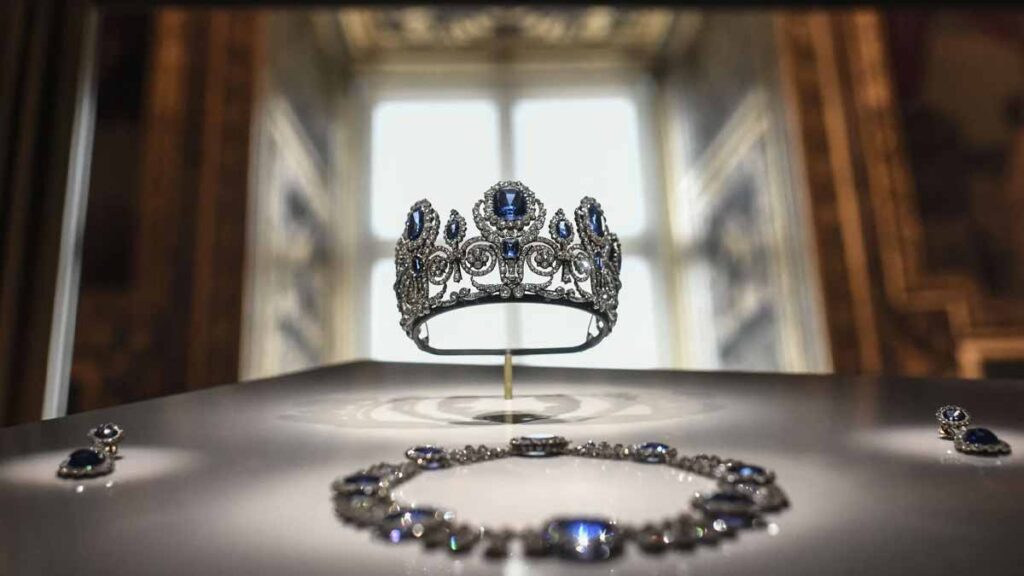
A bold jewel heist at one of the world’s most secure museums has raised critical concerns that extend beyond security protocols. Investigators now believe that the stolen treasures may not be intended for resale but rather used as high-value collateral within shadowy underground financial networks. Experts suggest that the jewels taken from the Louvre could already be circulating discreetly, a revelation that could significantly alter the direction of the investigation.
A Heist Revelatory of a Hidden Criminal Economy
Jewels as Shadow Currency
Security expert Claude Moniquet indicates that this robbery is characteristic of a trend within organized crime. He explained to various media that luxury jewels are often utilized as guarantees for illicit loans, effectively turning them into a form of shadow currency that eludes bank scrutiny. Unlike cash, which can be tracked through financial channels, stolen jewels slip silently across borders, exchanged hand to hand among criminal syndicates.
In these operations, stolen items aren’t simply resold but can be pledged, dismantled, or secreted away in private vaults, their worth recognized only by a network of trusted associates. This technique is not new; it has been documented in instances of global art trafficking, where valuable paintings and artifacts are used to secure debts, fund drug trafficking, or negotiate criminal alliances.
The Louvre theft, involving an astonishing €88 million in jewels stolen on October 19, 2025, appears to be another example of this discreet economy in action.
Investigators Mapping the Underground Network
The stolen jewels are likely already scattered, according to insiders involved in the investigation. Authorities are now examining communication patterns, travel routes, and known trafficking hubs to discern where the jewels may have infiltrated criminal channels. Their objective: to pinpoint individuals currently holding these stolen pieces and disrupt illicit financing opportunities leveraging such high-value items.
A Complex Network Slowly Revealed
Arrests Made, Yet Many Threads Still Untangled
Two weeks post-heist, the investigation is intensifying. Authorities have formally charged two additional suspects — a 37-year-old man thought to be part of the crew and a 38-year-old woman — raising the total to four detained individuals, all of whom deny any wrongdoing.
Earlier, two other suspects, aged 34 and 39, were apprehended soon after the theft — one at Roissy Airport trying to board a flight to Algeria, and the other in Aubervilliers. Investigators are actively analyzing DNA evidence, mobile data, and surveillance footage, with Prosecutor Laure Beccuau noting that some genetic material detected may indicate “transfer DNA,” suggesting indirect contact with the stolen jewels.
Three other individuals questioned this week have been released without charges. Officials believe at least one thief — along with those orchestrating the crime — remains at large. For now, authorities have dismissed any theories of foreign involvement.
Unpacking the Heist — Insights on Security Measures
A Stealthy Approach with Alarming Access
Culture Minister Rachida Dati has criticized what she terms a “chronic underestimation” of intrusion risks at top cultural sites. Investigators revealed that the criminals used a boom lift truck positioned strategically at the Louvre’s façade to access the prestigious Galerie d’Apollon.
This operation required meticulous planning, technical expertise, and likely — investigators suspect — inside assistance or at least awareness of security blind spots.
This incident has provoked urgent reassessments of:
- perimeter security
- access control measures
- technical protections
- and real-time alert systems
Experts caution that the global art market is increasingly vulnerable to organized crime, due to the difficulty of tracking cultural treasures once they breach officialdom.
Safeguarding National Treasures in an Era of Elevated Risk
Urgent Lessons and Future Measures
Recovering these stolen jewels could take months, if not years, and will require robust international cooperation. Authorities suggest that long-term solutions hinge on modernized security protocols, more visible protective measures, and systematic risk assessments across national museums.
As the investigation races against time to track down the stolen jewels before they become engrossed within criminal financial networks, each recovered item diminishes the strength of the underground market dependent on untraceable high-value assets.
This heist was not merely a theft — it revealed the contemporary dilemmas facing cultural institutions, where priceless artifacts may transform into tools of transnational crime, exchanged away from public scrutiny.





