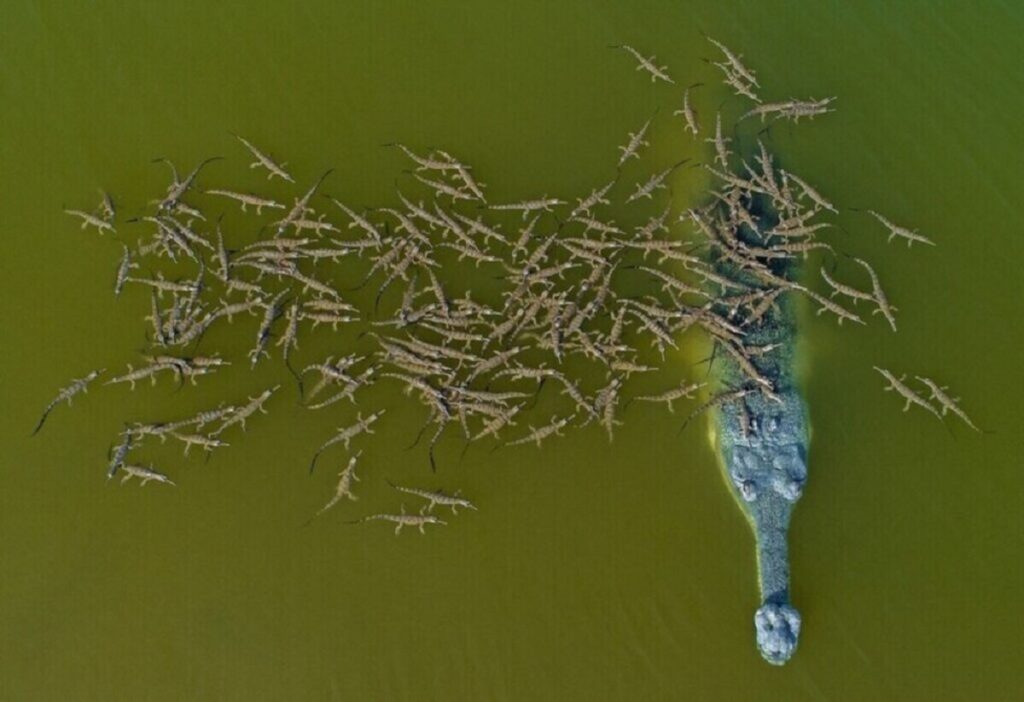
Occasionally, an image from nature captivates the internet, halting our scroll not out of fear or drama, but due to its sheer wonder—it offers a glimpse into a moment so remarkable it seems almost otherworldly. Such was the case with a stunning photograph featuring a massive male crocodile transporting nearly 100 hatchlings on his back—an image so incredible that it could be taken straight from the pages of a fantasy tale.
An Awe-Inspiring View at a Revered River
The remarkable scene took place along the Ganges, a river renowned for its ecological and cultural significance. This vital waterway is also home to one of the planet’s most endangered reptiles: the gharial, which is easily identifiable by its long, slender snout and a mouthful of razor-sharp teeth. Photographer Dhritiman Mukherjee dedicated weeks to seamlessly blending into the riverside landscape, waiting for just the right moment to capture the ongoing struggle of this species in the wild.
His diligence paid off spectacularly. Through Mukherjee’s lens, the impressive sight of a giant male gharial gracefully navigating the waters with dozens of tiny hatchlings securely nestled on his back came to life. This behavior is no mere coincidence; rather, it’s a strategic adaptation. Unlike other crocodilians, gharials can’t transport their young in their mouths due to their narrow jaws, so they utilize their broad backs as a safe haven for hatchlings as they traverse the currents of the river.
The Essential Role of a Father
The level of paternal care displayed here is not only heartwarming but also crucial for survival. Gharials are critically endangered, with estimates suggesting that around 650 adults survive in the wild, according to insights from conservation experts like Patrick Campbell of the Natural History Museum. Each young gharial reaching maturity is a significant conservation achievement.
The Chambal River, which houses the largest remaining gharial population—about 500 individuals—has become a sanctuary for this species. However, encroaching challenges such as habitat destruction, illegal sand mining, and dwindling fish stocks highlight the dire need for each newly hatched gharial to survive. The vigilant father, even one managing a nursery on his back, stands as a powerful symbol of resilience in this ongoing battle for existence.
Capturing the Essence of a River’s Life
Mukherjee’s photograph resonates on multiple levels—it transcends technical mastery. Having received prestigious accolades in a Natural History Museum competition and making it to the shortlist for Wildlife Photographer of the Year, it compels viewers to reflect on a species many may never encounter in real life.
What strikes the viewer is not just the astonishing visual, but the tranquility of the moment—a colossal reptile gliding purposefully through the water, with tiny heads peeking out from his broad back, embodying the gentle bond between parent and offspring amidst the serenity of a sacred waterway. It serves as an intimate portrait of resilience, depicting a father’s relentless efforts to protect the future generation.
For anyone concerned about the challenges facing wildlife, climate change, or conservation, this image conveys a powerful message of responsibility and hope. The plight of the gharial mirrors the broader global struggles faced by endangered species, serving as a stark reminder that even the most ancient of creatures depend on contemporary conservation efforts.
An Urgent Call to Action
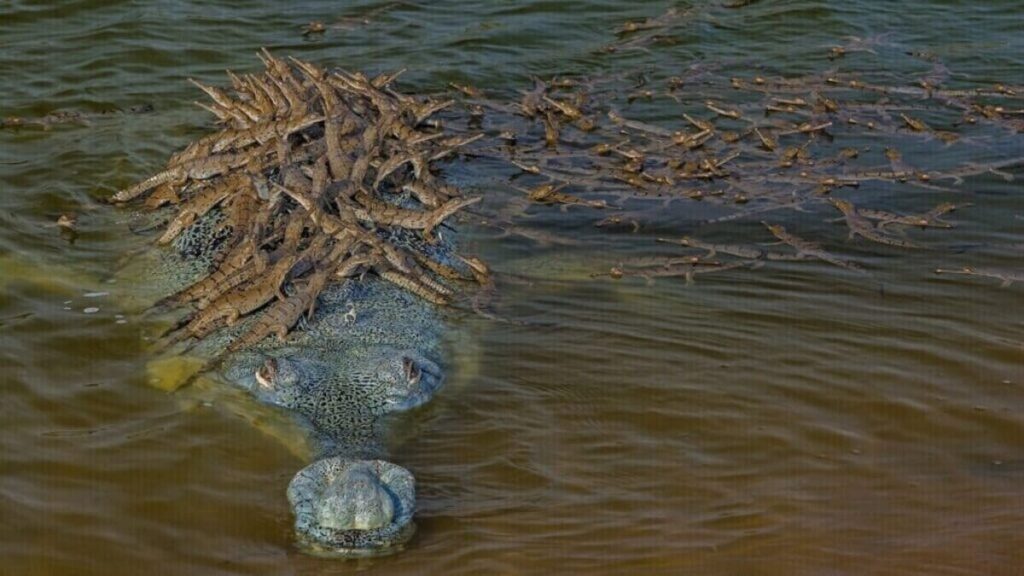
In our fast-paced world filled with distractions, images like this manage to resonate deeply, prompting us to pause and reflect. One photograph encapsulating a single reptile, a sacred river, and the weight of an entire brood becomes a poignant lens into the resilience of nature and the pressing need for conservation.
Mukherjee’s extraordinary image underscores the notion that parental love is not exclusive to humans, that survival is a collective effort, and that when afforded the opportunity, nature continues to craft the most remarkable narratives.
Sometimes, all it takes to awaken this awareness is to witness a devoted parent carrying his entire future on his back.