
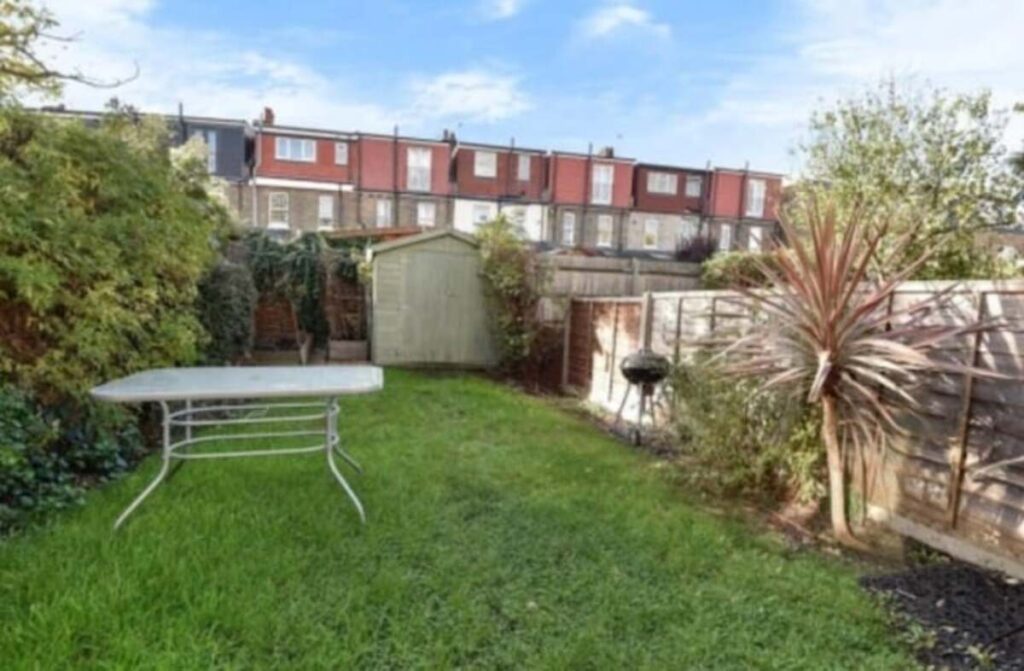
In 2018, young British designer Jonathan Downing was filled with dreams of tranquil mornings and nurturing a beautiful garden after purchasing his ideal home in London. However, he never anticipated that his blissful new chapter would lead to a protracted legal battle revolving around a single plant — a plant notorious for causing trouble across the UK: Japanese knotweed.
At first glance, Japanese knotweed might seem innocuous, boasting tall stems, heart-shaped leaves, and delicate white flowers. Yet, beneath this charming exterior lies one of the most damaging plants homeowners can encounter. With the ability to break through concrete and asphalt, it can significantly reduce property values and generate removal costs that can soar into the thousands. Thus, when Downing discovered the suspicious growth behind a bush in his backyard, his garden dream swiftly morphed into a nightmare.
The Reputation of a Troublemaker
Experts assert that Japanese knotweed can reach heights of up to four metres, with roots that penetrate deeply into the ground. Once established, it spreads quickly, outcompeting other plants and inflicting damage on structures. The Royal Horticultural Society identifies it as one of Britain’s most invasive species, prompting local councils to issue warnings regarding its proliferation.
For homeowners, the plant poses more than just a gardening nuisance; it represents a financial hazard. The cost of eradicating it can reach several thousand pounds, while mortgage lenders frequently refuse to finance properties affected by an infestation unless a professional treatment strategy is in place. As one London surveyor aptly noted, “It’s like finding out your garden has a hidden adversary.”
The Unfolding of the Truth

In Downing’s situation, the real shock emerged when he discovered that the plant was not newly sprouted. During the court proceedings, it became evident that the previous owner, Jeremy Henderson, had treated the knotweed with herbicide prior to the sale of the property, implying he was aware of its presence. Henderson maintained his innocence, stating that the plant had been obscured by shrubbery and that he hadn’t realised what it was.
The judge, however, was not swayed by his claims. Evidence indicated that the knotweed had already reached a height of two metres before it was treated, undermining the notion that it had been concealed. Ultimately, the court sided with Downing, ordering Henderson to pay £32,000 in damages and £95,000 in legal fees, a hefty sum for what was essentially a case of green deception.
What Homeowners Need to Know
Though this narrative may seem like the stuff of courtroom drama, it underscores a pressing reality. Under UK property law, sellers are legally obligated to disclose known issues that may impact the property’s value — and Japanese knotweed certainly falls within that category. Omitting such information can lead to dire legal and financial repercussions, as Henderson discovered.
For prospective homeowners, this serves as an important reminder to scrutinise not just the house itself but the garden as well. The Environment Agency advises obtaining professional surveys if there’s any suspicion of invasive plants, and there are specialized services capable of certifying properties as “knotweed-free” before sale.
A Cautionary Chronicle
In the end, Jonathan Downing received justice — and presumably a garden free of knotweed. Nonetheless, his experience acts as a cautionary tale for homeowners everywhere: what may appear benign in the garden could turn out to be a source of significant trouble.
Purchasing a home is generally regarded as one of life’s pivotal moments. Yet, as Downing’s encounter illustrates, a hidden plant issue can escalate into a far larger concern — legally, financially, and emotionally. This realization is likely to prompt any future buyer to take a thorough stroll around the garden before finalising the sale, ensuring that no unwelcome surprises are left to take root.





