
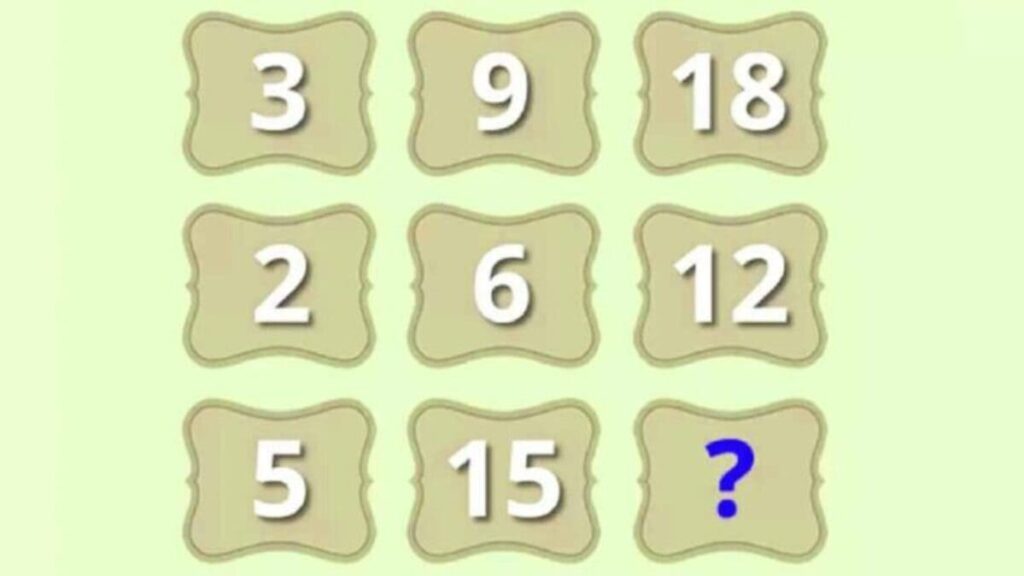
At first glance, the challenge may seem deceptively simple. Just a few numbers, a brief countdown, and a promise that feels almost cheeky. However, these rapid logic tests often unveil the intricacies of our thought processes when under pressure. Occasionally, all it takes is fifteen seconds to distinguish between instinctual reasoning and mere guesswork.
A Brief Challenge with Intriguing Implications
There’s something incredibly enticing about an intellectual challenge. When you tell someone they have a mere fifteen seconds to decipher a numerical pattern, the atmosphere in the room shifts dramatically. Pens freeze mid-air, brows tighten, and minds begin racing.
This kind of puzzle plays into our fascination with mental agility. It beckons us to validate our own capabilities, not for the sake of impressing others. I once attempted a similar puzzle on a busy train, confident I had it figured out, only to discover two stops later that I’d missed the clearly established rule. That moment of delayed understanding adds to the puzzle’s allure.
The challenge is straightforward in theory: you’re presented with a simple grid of numbers and tasked with identifying the missing one before time runs out. No calculators, no notes—just your brain and a ticking clock.
Testing Your Cognitive Abilities
IQ tests have long relied on logic puzzles like this to gauge our cognitive agility. They evaluate how swiftly we can identify patterns, process relationships, and apply rules consistently. Experts from organisations like Mensa assert that these tasks assess logical reasoning rather than rote knowledge.
This distinction holds significance. Success in this exercise doesn’t depend on advanced math skills; rather, it requires the ability to step back, observe clearly, and resist the temptation to overcomplicate matters.
It’s essential to remember that IQ is just one facet of intelligence. Creativity, emotional acuity, and social skills are equally vital in our daily lives. Even the creators of these tests repeatedly emphasise that they’re tools for understanding thought processes, not definitive judgments of ability.
Unpacking the Logic Behind the Pattern
Picture a simple setup: three vertical columns of numbers. In each column, two numbers sit atop a third. Your job? Determine how the bottom number is generated.
Initially, many might dive into complex calculations or search for hidden sequences. Under pressure, our minds often assume the answer must be intricate. Ironically, that very assumption can hinder our progress.
The real trick lies in examining the relationships within each column exclusively, rather than getting lost in the entire grid. Once you concentrate there, the rule reveals itself.
Deciphering the Solution
Time’s up! If you arrived at the answer of 30, well done—you discerned the pattern accurately.
The logic is refreshingly straightforward: in every column, the bottom number is simply the sum of the two numbers above it.
In the first column, 3 plus 2 gives you 5.
In the second, 9 plus 6 results in 15.
In the third, 18 added to 12 equals 30.
That’s all there is to it.
Those who swiftly find the answer often excel in pattern recognition, a skill crucial to problem-solving in various fields, from engineering to everyday decision-making. Cognitive scientists assert that recognising a solution’s simplicity, rather than complexity, is indicative of efficient thinking.
Interpreting Your Results
If you managed to solve it in under fifteen seconds, congratulations! This suggests robust numerical reasoning and a knack for maintaining composure under pressure. Some studies link this speed and accuracy to IQ scores above the average, often cited around the 120 mark or higher.
If you didn’t solve it in time, don’t stress. These puzzles are highly sensitive to the context in which you engage with them. Distractions, anxiety, or even overthinking can trip up a sharp mind. I’ve witnessed experienced analysts overlook straightforward patterns simply because they anticipated something more complex.
The real insight lies in self-reflection. Did you rush your answer? Did you second-guess your gut feeling? These tendencies reveal just as much about your thought processes as the final result.
Final Thoughts on Intelligence
Puzzles like this serve as engaging exercises that lie at the intersection of challenge and self-discovery. They offer a brief window into our cognitive processes, but they are not definitive measures of our worth.
Whether you solved it quickly or only recognised the rule after the clock ran out, the exercise achieved its purpose. It prompted you to pause, reflect, and engage your cognitive skills. In an age rife with distractions, that alone is a notable intellectual triumph.





