
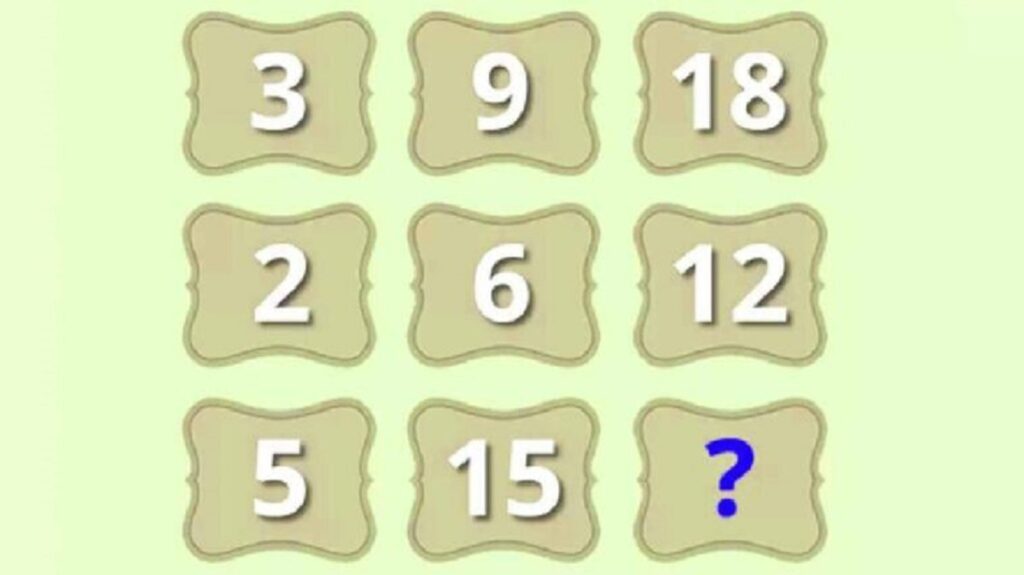
There’s an undeniable thrill that accompanies the moment a puzzle clicks into place. You can almost feel your brain gears whirring away. This brain teaser guarantees just that—a sudden flash of insight followed by the satisfying pride of solving something that eludes most. The challenge is straightforward: identify the next number in the sequence in less than 15 seconds. If you’re successful, you’ll join the ranks of sharp thinkers, likely with an IQ over 124. Interested in giving it a shot?
Grab your metaphorical magnifying glass, and let’s dive right in.
Why logic puzzles enhance mental agility
Engaging with IQ-style challenges is akin to warming up before a run—it kick-starts your mental muscles. Research from University College London reveals that logic-driven puzzles can enhance problem-solving speed and improve working memory by activating both hemispheres of the brain. It’s not merely about numbers; it’s about uncovering patterns, recognising relationships, and juggling multiple concepts simultaneously.
When you grapple with puzzles like this, you’re essentially training your brain for efficiency. This facet of your intellect is what helps you identify shortcuts in daily tasks or recognise when a colleague’s “innovative idea” feels strangely familiar.
So yes, these puzzles might seem like harmless fun, but they are surprisingly effective workouts for the mind.
The puzzle: can you uncover the hidden logic?
Here’s the challenge: three columns of numbers. Each column contains two figures, stacked vertically, and your job is to find the missing number in the third row. It might appear straightforward, but here’s the twist—you have only 15 seconds.
Before you scroll down, take a moment to reflect on the connection between the figures. Are they doubling, halving, or forming a pattern? The key lies in the relationships between columns, not just within them.
The clock’s ticking… have you got your answer?
The solution—and the logic behind it
If your answer was 30, give yourself a well-deserved mental fist bump. The logic is rooted in basic addition: each bottom number equals the sum of the two numbers above it.
- In the first column, 3 + 2 = 5
- In the second, 9 + 6 = 15
- So in the third, 18 + 12 = 30
This kind of rule appears obvious once revealed—a classic element of puzzle psychology. Often, your brain searches for complexity, missing the straightforward pattern hiding right in front of you.
What your performance reveals about you
If you solved it in under 15 seconds, congratulations—you possess above-average analytical thinking and a keen eye for structure. Psychologists commonly link these skills to higher performance in pattern recognition tasks, a fundamental aspect of IQ tests utilized by organisations like Mensa.
If you didn’t quite make it, don’t sweat it. This doesn’t define your intelligence; it’s more about your approach. Sometimes, our minds become so preoccupied searching for clever solutions that we overlook the obvious ones. The silver lining? Like any muscle, your cognitive agility can improve with consistent practice.
Challenge your mates—and your own limits
The next time you find yourself with a coffee break or on a long train ride, try challenging a friend with this riddle. It’s fascinating to observe how differently people’s minds operate when faced with the same conundrum. Some jump into algebra, others see geometry where there isn’t any—and a select few simply smile and instantly spot the answer.
Continue to test yourself with small mental challenges like this one. They not only sharpen your mind but also remind you how rewarding it is to think deeply, even if just for a few minutes each day. After all, every detective, scientist, and innovator shares one common trait: an inquisitive mind that relentlessly asks, what comes next?





