
It all started with a simple piece of paper, a distant memory, and a promise passed down from father to son. Eight decades after war forced his family into exile, one man traced a hand-drawn map to uncover a long-buried part of his family’s history.
A legacy buried as chaos unfolded
As Europe teetered on the brink of the Second World War, countless families faced harrowing decisions. In what is now eastern Poland, the Glazewski family found themselves confronted by advancing Soviet troops and made a heart-wrenching choice: they buried their most treasured possessions near their home, clinging to the hope that one day they would return.
That return never came. Boundaries shifted, homes were obliterated, and the family was scattered. The valuables remained interred in the soil near present-day Lviv, Ukraine, known only to those who buried them. With time, the surroundings became overgrown, their once-vibrant estate vanished, and the tale gradually faded into family memory.
Revisiting the past through a hand-drawn map
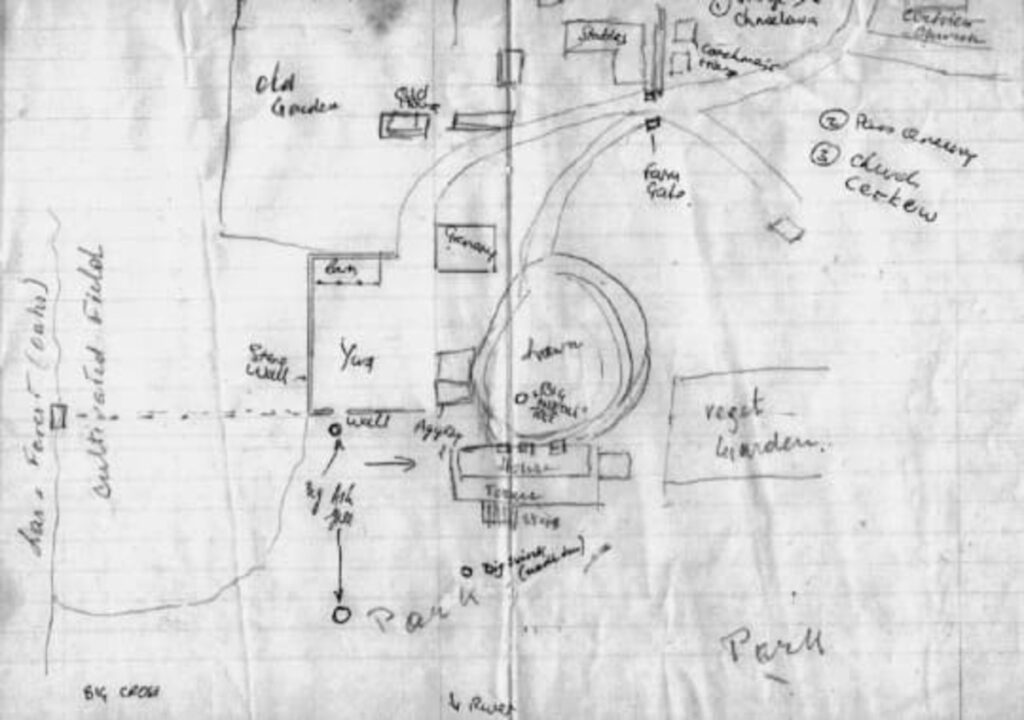
Decades later, memories began to resurface. Jan Glazewski, approaching his seventies, received an astonishing gift from his father. Half a century after they had fled their homeland, his father sat down and sketched a hand-drawn map, relying solely on his fading recollection.
‘He handed me the map along with a few pointers,’ Jan recalled. ‘Everything was purely from memory—fields, a slope, and the edge of a forest. That was all.’
The map wasn’t precise or orderly, but it carried immense emotional weight. It marked the location of the old family estate, now long gone, and hinted at where their hidden treasures might still lie. For Jan, it felt less like a suggestion and more like a family mission he felt compelled to undertake.
Retracing the steps of the past
Armed with the map and a metal detector, Jan ventured into the region. What greeted him was a far cry from the tales he had grown up hearing. Once cultivated fields had become overrun with wild growth, and the landmarks he sought had all but disappeared.
Yet, the map provided direction. He descended a gentle slope and made his way towards the trees. At the forest’s edge, his detector finally reacted to something concealed beneath the earth.
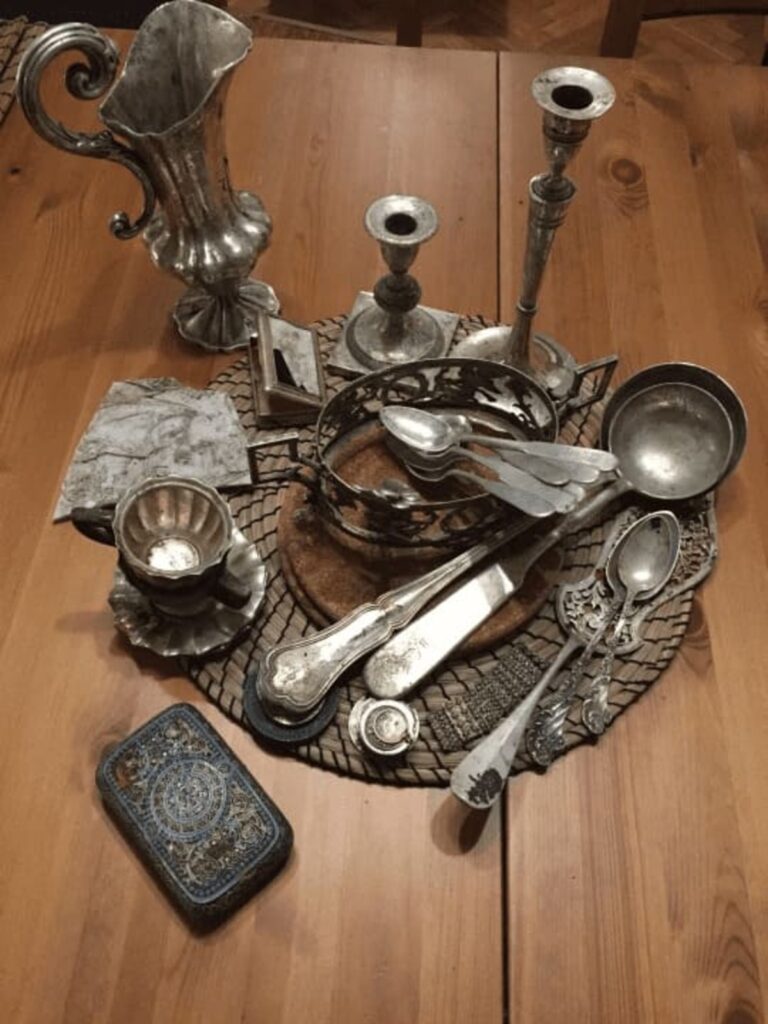
What he unearthed was a small box, untouched for eighty years, containing items meticulously preserved by his mother before they fled. Given that she had passed away when Jan was just seven, the discovery took on an even deeper significance.
Revealing more than mere possessions
‘Experiencing those objects was overwhelming,’ Jan shared. ‘These were the very things my mother chose to safeguard. Locating them felt like fulfilling a promise my father had made to me.’
The box held jewellery, an engraved baptismal spoon, and several personal items. While the monetary worth of the items is significant, Jan insists that this journey was never about financial gain. It was about heritage, continuity, and paying homage to his ancestors.
One particular item, a spoon engraved with a child’s name, struck a profound chord with him. ‘It made everything feel tangible,’ he reflected. ‘It connected me to a crucial moment in my family’s history that predated my own existence.’
Closing a chapter left open
Jan intends to preserve and display some of these artifacts as a tribute to his parents and grandparents. For him, this discovery epitomises resilience rather than loss.
According to organisations like UNESCO, family artifacts are essential in preserving cultural and personal memory, particularly in regions ravaged by conflict and upheaval. Jan’s narrative is a living embodiment of this principle, a testament to the idea that history isn’t solely found in museums; at times, it patiently awaits discovery beneath the surface.
Ultimately, the most precious treasure was not what emerged from the earth, but the closure it provided. By following a delicate map drawn decades prior, Jan didn’t simply reclaim items; he reclaimed a story, fulfilled a promise, and brought an 80-year-old chapter of his family’s history to a close.





