
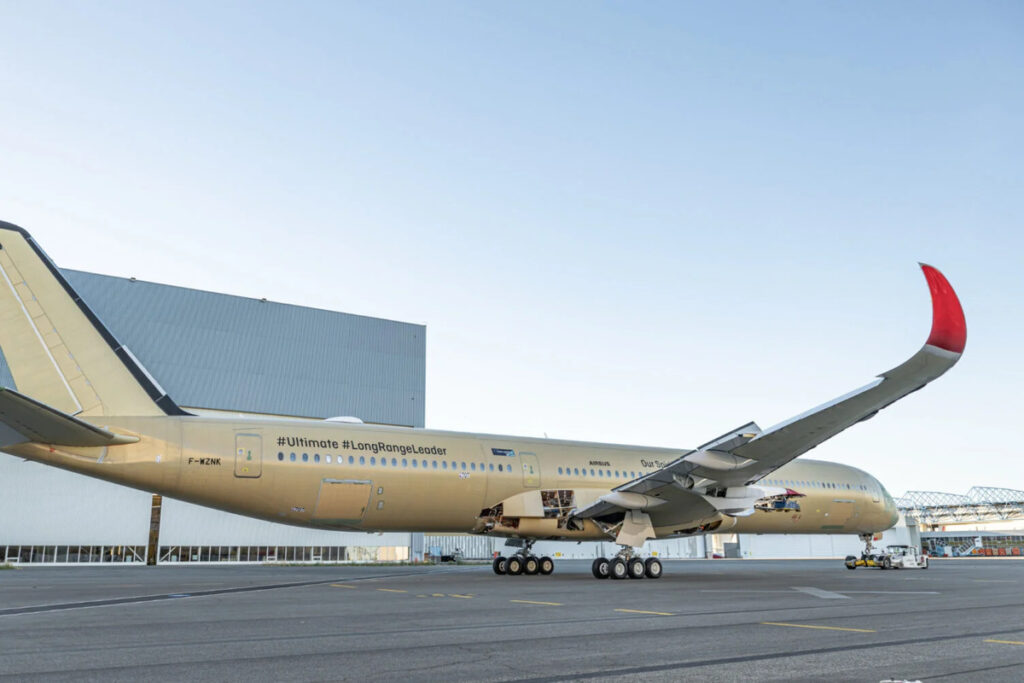
Picture this: boarding a flight in Sydney as the sun rises and stepping off directly in New York or London, without any layovers. That dream is on the verge of becoming a reality with the Airbus A350-1000ULR, a game-changing aircraft being developed by Airbus and Qantas to redefine modern air travel.
A New Era of Ultra-Long Flights
In the Airbus assembly halls of Toulouse, engineers are at the forefront of what could be one of the most groundbreaking commercial aircraft to date. The A350-1000ULR—short for Ultra Long Range—is being engineered to sustain flights that can exceed 22 hours, linking Australia with destinations nearly 18,000 kilometres away in a single, uninterrupted journey.
These extraordinary routes are part of Project Sunrise, Qantas’s ambitious initiative aimed at establishing direct flights from Sydney, Melbourne, and Brisbane to major international hubs like New York and London. This isn’t merely an attempt to break records; it represents a paradigm shift in our approach to long-haul aviation.
Designed for Endurance and Efficiency
While the A350-1000ULR shares many components with the standard A350-1000, it has undergone significant modifications. An enlarged rear central fuel tank, now capable of holding 20,000 litres more fuel, enables the aircraft to cover these vast distances without needing to refuel. Enhanced aerodynamics and advanced onboard systems allow it to cruise at a speed of approximately 900 km/h, all while maximising fuel efficiency for long-distance travel.
However, this advancement comes at a cost. To accommodate the additional fuel and maintain optimal performance, the seating capacity has been reduced to just 238 passengers, down from over 300 in standard configurations. While this means fewer passengers, it translates into more space, increased comfort, and a level of in-flight service that rivals many first-class experiences.
Comfort Meets Science at 35,000 Feet
Spending nearly a full day in the air may sound overwhelming, but Qantas and Airbus are committed to transforming this experience into a comfortable one. Collaborating with researchers from the Charles Perkins Centre at the University of Sydney and designer David Caon, they have meticulously designed the cabin to enhance passengers’ physical and mental wellbeing during their journeys.
One standout feature is the “Wellbeing Zone”, an area between the Premium Economy and Economy sections designed to promote movement and relaxation. Featuring stretching bars, hydration stations, light snacks, and guided exercise videos, this zone encourages passengers to stay active during the flight, enhancing circulation and mitigating jet lag.
Additionally, lighting and meal schedules will be aligned with passengers’ circadian rhythms, aiding in the transition across time zones and helping travelers arrive feeling revitalised rather than exhausted.
The Next Leap Forward
Airbus has announced that the main fuselage sections—the front, centre, and rear—are already in assembly. Components such as engines and flight testing equipment will soon follow, with test flights anticipated to commence in 2026. If all goes as planned, Qantas expects to have its first aircraft by late 2026, launching commercial operations by early 2027.
The airline aims to operate twelve of these state-of-the-art aircraft on its longest routes, solidifying its position as a leader in non-stop intercontinental travel.
Redefining the Skies
Beyond the impressive feats of distance and innovation, the A350-1000ULR signifies a pivotal moment for global aviation. As we increasingly prioritise energy efficiency, passenger comfort, and sustainability, this aircraft shows that long-haul travel can be both pleasant and eco-conscious.
This initiative boldly asserts that technological advancements and thoughtful design can transform even a 22-hour flight into an experience worth looking forward to. For those who have endured long layovers on the way from Australia to Europe or America, the Airbus A350-1000ULR promises to redefine what it means to fly direct—and what can be achieved at an altitude of 35,000 feet.





