Cutting an avocado, drizzling it with lemon, and sliding it into the fridge seems reassuring. Yet, this common habit, if poorly managed, could turn the fruit into a breeding ground for bacteria.
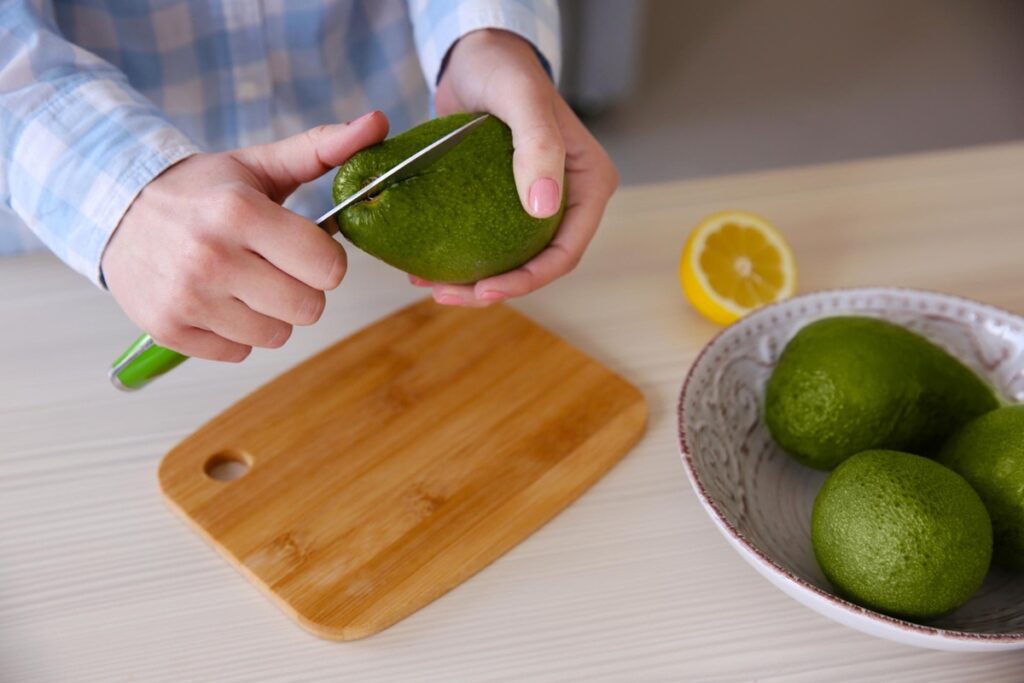
You have cut a beautiful avocado for toast or guacamole, you only eat half, and you think you are doing the right thing by generously splashing it with lemon juice before leaving it in the fridge. It is a reassuring gesture, the green color is preserved… and yet, this reflex can prepare a perfect environment for bacteria.
Behind the simple browning of the flesh lies a real hygiene issue. The avocado oxidizes quickly, but this color change does not tell the whole story.
A widespread storage error when trying to keep a cut avocado mainly modifies humidity and temperature, two key parameters for microbes. And that changes everything.
Why the avocado browns without becoming toxic
Once the avocado is opened, its flesh comes into contact with oxygen. An enzymatic reaction begins, leading to the production of melanin, the pigment that makes it brown, just like a banana or an apple exposed to air.
This unappetizing appearance does not automatically mean the fruit is unfit for consumption: if eaten within 24 to 48 hours and kept well chilled, it remains edible.
The problem appears when time stretches on and storage is handled poorly. Beyond two days, especially without an airtight container, bacteria can colonize the surface.
The avocado is rich in water, which makes it sensitive to contamination. In the famous “danger zone” around 40 to 140 °f, these microorganisms multiply quickly, especially if the flesh is damp.
The mistake with lemon that encourages bacteria
In many kitchens, the scenario is the same: the avocado is cut, covered in lemon juice to keep its color, and then left on a plate, sometimes at room temperature before being vaguely slid into the refrigerator. Lemon does slow down oxidation, but this acidic bath mainly makes the surface very wet, which changes the game for hygiene.
If this avocado half remains for a while outside a closed container, or in a fridge that is too warm or in the door, it spends several hours in the zone where bacteria develop fastest.
The cold of the refrigerator, when it is above 40 °f, only slows them down; it does not eliminate them. The possible result: an avocado that still looks green thanks to the lemon, but on which the microbial load has increased.
Best practices for safely storing a cut avocado
To limit oxidation without turning your avocado half into an ideal environment for microbes, the key is to focus on a thin protective layer and containment:
- Apply a very thin film of lemon juice or apple cider vinegar, without soaking the flesh.
- Or lightly brush with olive oil, which forms a barrier against air without adding water.
- Immediately place the avocado in an airtight container or under plastic wrap pressed directly against the surface.
- Slide it into the coldest part of the refrigerator, around 35 to 40 °f, rather than in the door.
- Consume it within 24 to 48 hours, removing the thin browned layer with a knife if necessary.
You can also place the avocado in a box with a few onion slices, flesh against the onion: its sulfur compounds help slow down the browning. For longer storage, it is better to freeze the avocado as a puree or guacamole, always in an airtight container.