We are sharing with you the best practices for egg storage, especially during heatwaves, to avoid any health risks.
Eggs are the ultimate allies for many cooks. Even if you are not a culinary expert, this protein source proves to be practical, versatile, and tasty.
With a little practice, you can master all ways of cooking eggs and even create delicious sauces that easily outshine industrial options.
Having eggs at home is always a good option. Even for a quick meal, eggs are there for you. Of course, these are fresh products that must be handled with care. First, there is their natural fragility, which requires attentive transport and storage.
Eggs and temperatures
In the united states, eggs undergo a cleaning process (almost a stripping) that destroys their natural protection. You can keep eggs in the kitchen, but you must be wary of fluctuating temperatures.
High heat can represent a serious threat to our health. As temperatures rise, the physical properties of the egg, particularly the shell, are altered. Porosity increases, and bacterial penetration can become easier.
Finding the middle ground
The internal membrane of the egg, as well as its structure, can also be modified by water loss if temperatures become extreme.
During episodes of very high heat, eggs kept outside are put to the test and can more easily fall prey to bacterial growth, which causes foodborne illnesses.
Furthermore, a higher average temperature is generally favorable to bacteria. They can multiply more quickly, increasing their potential for contamination. It is therefore necessary, in these cases, to preserve eggs by putting them in the refrigerator.
Cold is an asset, but stability is what truly helps eggs protect themselves. A moderate temperature without variations is the best option.
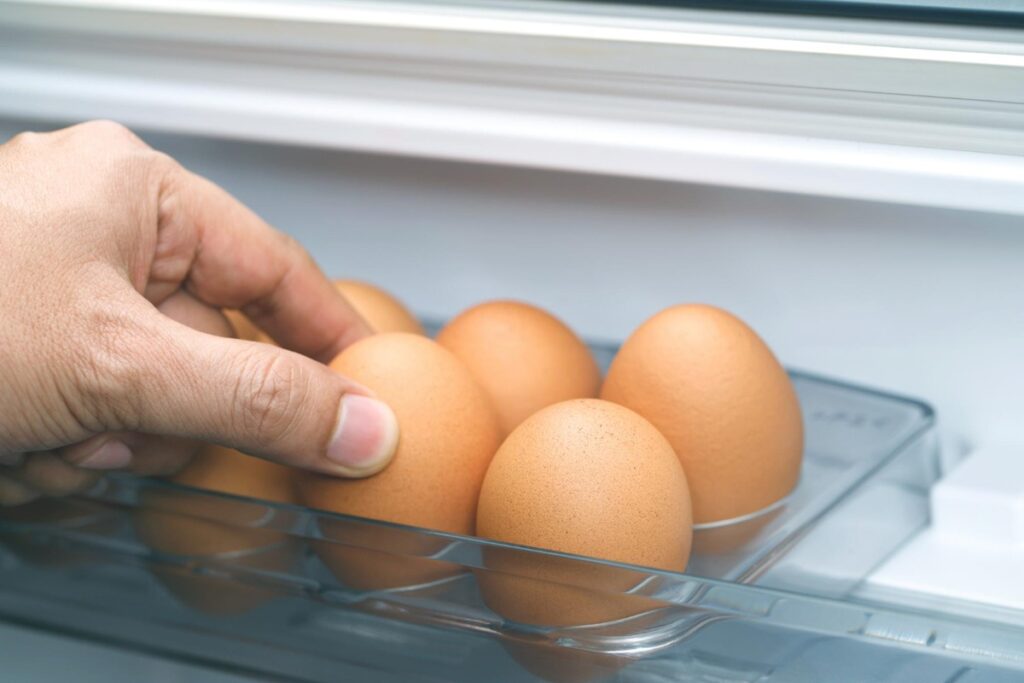
This is why it is actually discouraged to put eggs in the refrigerator door, as it is the area most subject to significant temperature changes.
If you are lucky enough to have a cellar, it can be perfectly sufficient for storing eggs. When in doubt, the refrigerator remains the most reliable solution to reduce the risk of contamination.
However, you must ensure it is kept clean and avoid opening the door too often, especially if it is very hot outside.