Every day, home cooks rinse their pasta after cooking, convinced they are preventing it from sticking. What if this harmless habit is sabotaging both sauce and texture?
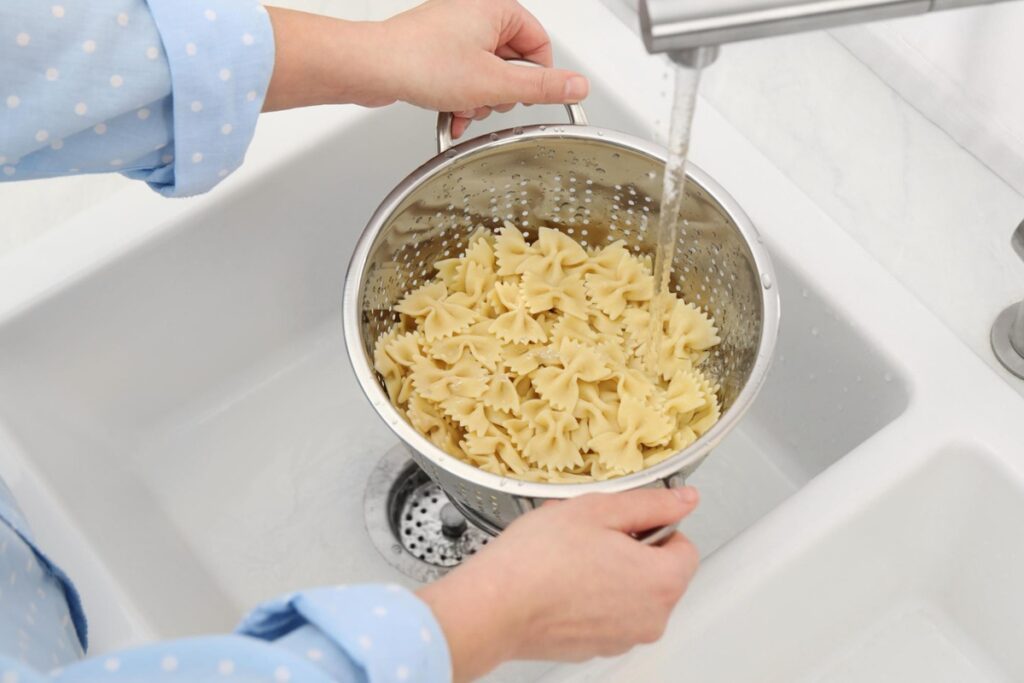
You drain your pasta, reach for the colander… and the reflex kicks in: a quick spray of cold water so they don’t stick. This gesture seems reassuring, almost automatic, especially when cooking for the whole family or when short on time. However, behind this trip to the faucet, a large part of your dish’s success is at stake.
The ultimate everyday meal, pasta finds its way into every kitchen, from busy weeknights to big dinners with friends. Yet, the famous question “Should you rinse pasta?” continues to be passed down from generation to generation like an unspoken rule.
The key, however, is found neither in the colander nor under the tap, but in a discreet component of the pasta: starch.
Rinsing pasta after cooking: What is really happening
For a hot dish, rinsing pasta after cooking is almost always a “false good idea.” During cooking, starch granules swell, migrate to the surface, and form a light film that provides that supple texture we associate with al dente pasta. This film stays on the pasta when you drain it, and it is exactly what allows the sauce to grip and coat it properly.
When you run your pasta under cold water, you wash away this starch film with the draining water. The result: the sauce no longer sticks; it slides to the bottom of the plate, while the pasta becomes smooth and shiny but much blander. Even an excellent bolognese or a carefully crafted mushroom sauce loses its impact simply because the bond with the pasta vanished during the rinse.
Pasta that doesn’t stick, without the faucet
To avoid sticky pasta, everything happens long before the colander. A large pot filled with about 1 quart of water for every 3.5 oz of pasta, brought to a rolling boil, gives them the space they need to move freely. Generous salting seasons the pasta at its core.
Stirring during the first few minutes prevents the pasta from sticking to each other and forming a block when drained.
Marmiton points out that leaving pasta sitting in the colander is the real trap: it continues to cook and the surface starch sets, which increases the risk of sticking.
The ideal method is to transfer them immediately to a warm dish, or better yet, toss them directly into the sauce with a small ladle of cooking water. This slightly starchy water creates a silkier, glossier texture without weighing down the sauce.
- Drain the pasta as soon as it is al dente.
- Pour it immediately into the pan containing the hot sauce.
- Add a bit of cooking water if needed to bind everything.
- Let them cook together for a few moments while stirring.
Rinsing pasta: The cold salad exception
There is, however, one case where rinsing your pasta is helpful: pasta salad. A quick pass under cold water stops the cooking process instantly, prevents it from getting mushy, and removes the excess starch responsible for those large sticky clumps once the salad is chilled.
You also save precious time by cooling the pasta before adding tomatoes, cubed cheese, tuna, or crunchy vegetables.
After this specific rinse, a drizzle of olive oil is enough to coat the pasta and limit its tendency to clump together, even after a few hours in the refrigerator. If you leave it out, it continues to absorb the remaining starch and eventually sticks, making it harder to mix with other ingredients.
Whether or not to adapt this rinse to your recipe simply depends on the format: a hot meal or a cold salad.