
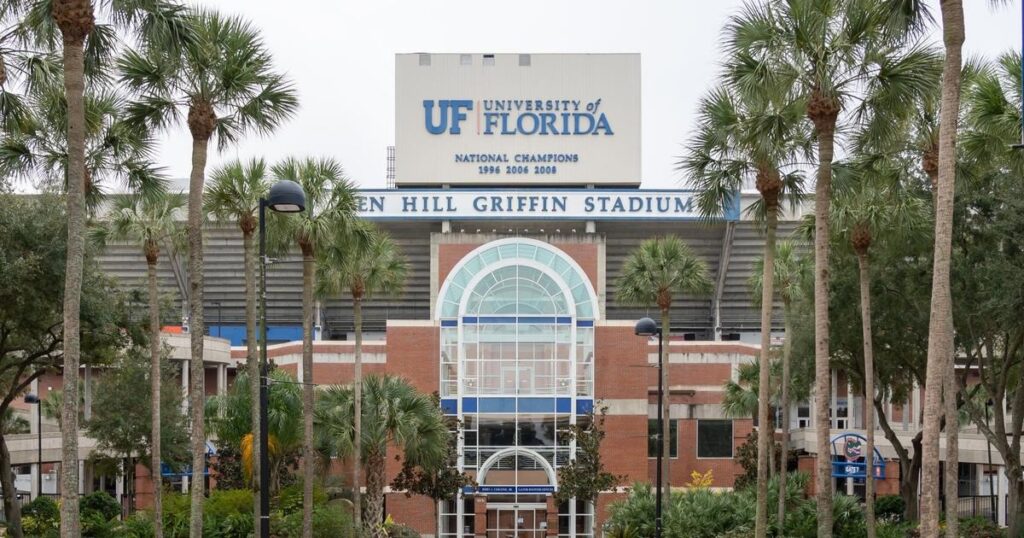
A recent political move in Florida is creating waves that extend far beyond university campuses. This situation touches on employment, research initiatives, and the crucial role of international talent in the landscape of American higher education. While it may appear to be a local issue, it is part of a broader national dialogue.
A Movement to Prioritise American Jobs
Florida Governor Ron DeSantis has directed state education officials to cease the use of H-1B visas for recruiting foreign staff at public universities. His aim is to ensure that academic positions are filled exclusively by American citizens, rather than overseas candidates.
During a recent visit to the University of South Florida in Tampa, DeSantis highlighted several roles he believes do not warrant international recruitment. He mentioned examples such as a Spanish swimming coach, a Chinese public policy professor, and a Canadian graphic designer, questioning the inability to fill such positions domestically.
The underlying message is unmistakable. DeSantis advocates for universities to prioritise training and employing Americans first, reflecting the broader ‘America first’ ideology popularised by Donald Trump.
Understanding H-1B Visas in Academia
The H-1B visa programme was initially established to attract highly skilled individuals to the United States in specialised fields. In the realm of academia, these visas are frequently used to employ researchers, lecturers, and technical experts who possess unique knowledge that may not be available locally.
Having collaborated with international scholars myself, I’ve observed how this visa system enriches university life. A former colleague from India led a research endeavour that would not have been possible without his expertise. His contributions benefited students, enhanced departmental prestige, and attracted international funding.
This is why many within the higher education sector regard the Florida initiative as a potential threat to academic freedom and research excellence.
State Policy Reflecting Federal Pressure
The decision in Florida isn’t occurring in a vacuum. Under the Trump administration, the costs associated with H-1B visas skyrocketed, with reports of fees reaching as high as $100,000 per applicant. This move aimed to discourage employers from seeking foreign talent and to incentivise hiring American graduates.
At that time, then-Secretary of Commerce Howard Lutnick argued that companies should focus on ‘training Americans’ instead of bringing in foreign workers. Supporters claimed this policy would safeguard domestic jobs, while critics warned it could jeopardise competitiveness and innovation.
Voices of Concern from Universities
President Lynn Pasquerella has cautioned that enforcing limits on H-1B visas could hinder the ability to attract and retain top-notch professors, researchers, and students. Similarly, Charles Lee Isbell Jr., Chancellor of the University of Illinois at Urbana-Champaign, has stressed that selecting less qualified candidates negatively impacts merit-based selection and academic quality.
Limits to State Authority
Despite the strong rhetoric, the governor’s powers are not boundless. H-1B visas are issued by the federal government, meaning Florida lacks authority to eliminate or revoke them outright.
What the state can control is its decision not to sponsor these visas for university roles. However, legal experts suggest that such a move would likely face significant legal challenges, raising questions about the balance of power between state and federal governments.
Data from the US Department of Homeland Security indicates that about 400 H-1B visas were granted this year for Florida’s twelve public universities. In comparison, Washington University in St. Louis reports over 700 staff on H-1B visas, many of whom are engaged in teaching, cutting-edge research, and patient care.
Beyond Staffing Decisions
This discussion extends beyond mere staffing; it intersects with immigration policy, higher education, talent acquisition, and America’s global reputation. Universities function as dynamic environments, and their strength often lies in the diversity of thought, background, and experience.
Whether Florida’s approach will serve as a model for other states remains uncertain. However, what is clear is that the choices made today will significantly influence who teaches, researches, and studies within American universities for years to come.





