
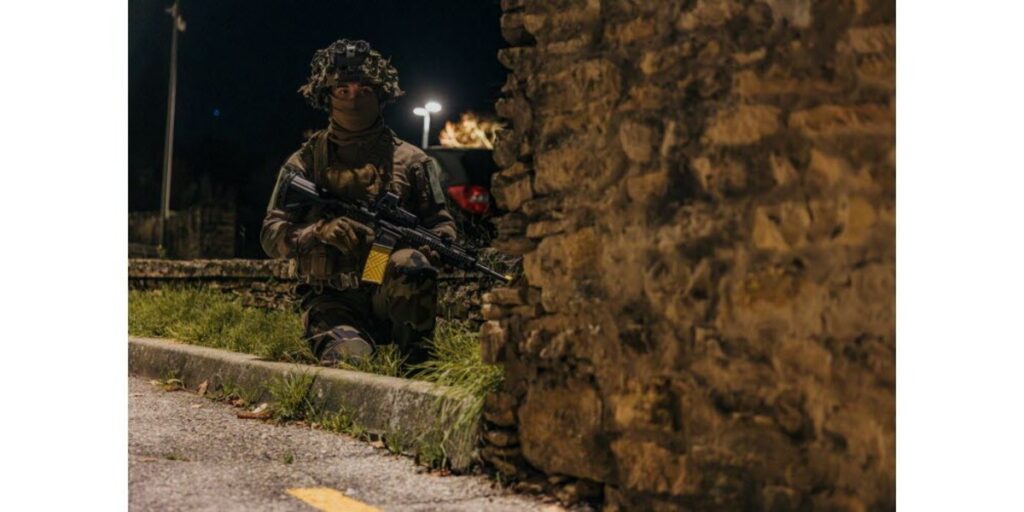
What began as a routine training exercise turned into a heartwarming tale of humanity. This week, a mission involving French mountain troops sparked a wave of emotional connection across the region, particularly due to the actions of a local grandmother who sheltered two soldiers in her barn—a poignant reminder of the Vercors area’s storied past of resistance.
Merging Training with Historical Echoes
For three days, approximately thirty members of the 27th Mountain Infantry Battalion participated in an intense survival and evasion exercise in southeastern France. Their objective? To test their ability to fend for themselves, evade capture by gendarmerie teams, and navigate to a designated extraction point. By Friday morning, the soldiers arrived at Belley airfield—exhausted, muddy, but moved by the solidarity of the local community.
One particular story defined the exercise: an elderly woman who selflessly took in two soldiers, concealing them in her barn until it was safe for them to continue. Though this act was part of a training scenario, it resonated deeply, evoking memories of the area’s history during wartime when locals risked their lives to protect resistance fighters in similarly perilous situations.
Remembering the Vercors Resistance
The Vercors plateau holds a significant position in French history. It emerged as a stronghold of defiance during World War II, where residents and freedom fighters united to oppose occupation. Ordinary citizens—teachers, farmers, and even children—took on extraordinary roles, providing food, vital information, and refuge to those fighting for liberation.
Among those heroic figures were individuals like Pierre Rangheard, a logistics officer who supplied the local maquis with weapons, and Claude Falck, a young engineer from the École Polytechnique who became a fearless resistance leader. Their bravery came at a steep price, and their legacies continue to be honored in the very mountains they helped defend.
The grandmother’s action during this week’s training served as a touching tribute to that legacy. As one officer observed, “Training can bridge generations. We were enacting a mission, but she was reliving her history.”
Everyday Heroes and Lasting Memories
The emotional weight of this story lies not only in its historical context but also in the reminder that courage often manifests in the mundane. Be it a soldier navigating through the wilderness or a villager providing sanctuary, true bravery is often quiet and unassuming. It’s found in the simple act of lending a hand, standing firm in one’s convictions, and doing what is right even when no one is looking.
Many of the barns and mountain paths that once offered refuge to resistance fighters still stand today. Some have been transformed into memorials; others remain as silent witnesses to the past. School groups frequently visit these sites to learn about the sacrifices made during those dark times—how ordinary families faced heart-wrenching decisions and how some paid the ultimate price for their bravery in protecting strangers.
Continuing the Legacy
For the soldiers of the 27th Battalion, this exercise transcended mere tactical training; it was about building connections. They realised that the essence of being a soldier extends beyond military skills—it encompasses a profound understanding of the human element of resilience.
Similarly, for the people of the Vercors, it served as a reminder that their valleys once stood for ideals greater than fear. The grandmother who opened her barn doors may not have set out to create history, yet she epitomised the spirit of those who did.
Ultimately, whether in wartime or during training, resistance begins the same way—with individuals who refuse to turn a blind eye, who quietly choose to say, “I can help.”





