
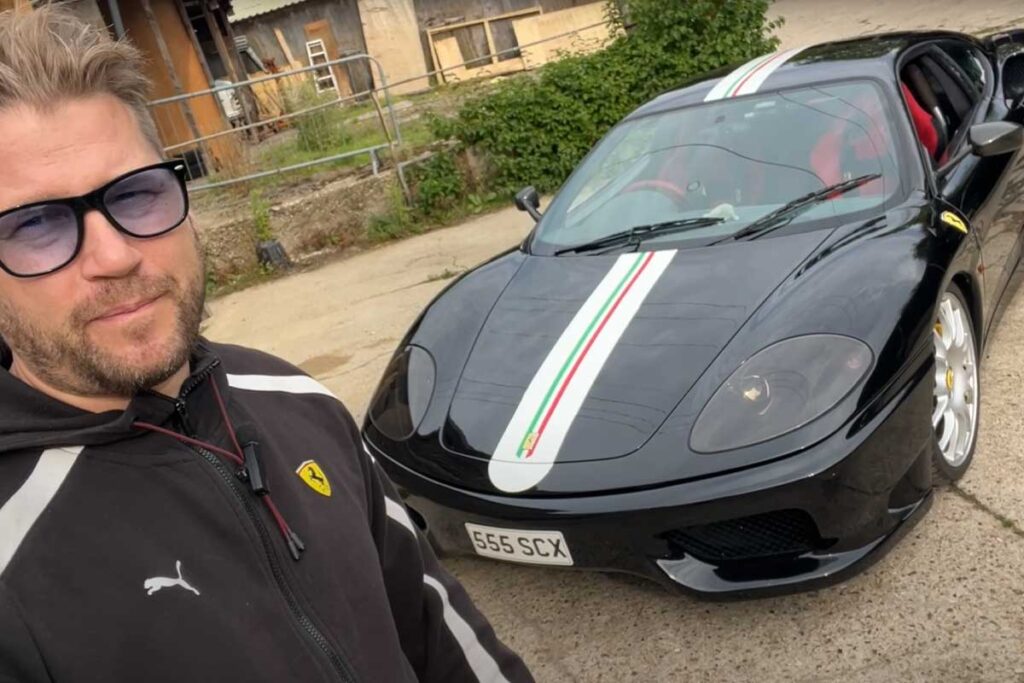
After dedicating nine months to a detailed restoration, a British car enthusiast believed he had reached perfection with his Ferrari 360 Modena. However, a seemingly innocuous vinyl stripe—meant to enhance its aesthetic and authenticity—turned his dream into a costly disaster.
A Passion Project Years in the Making
Car enthusiasts, particularly those invested in vintage restoration, will likely be familiar with Ratarossa. Over the past fifteen years, this British YouTuber has been on a mission to salvage Ferraris that many would have deemed irreparable. From iconic models like the 308 and 328 to the legendary 512 BB, his workshop has become a veritable temple to the prancing horse.
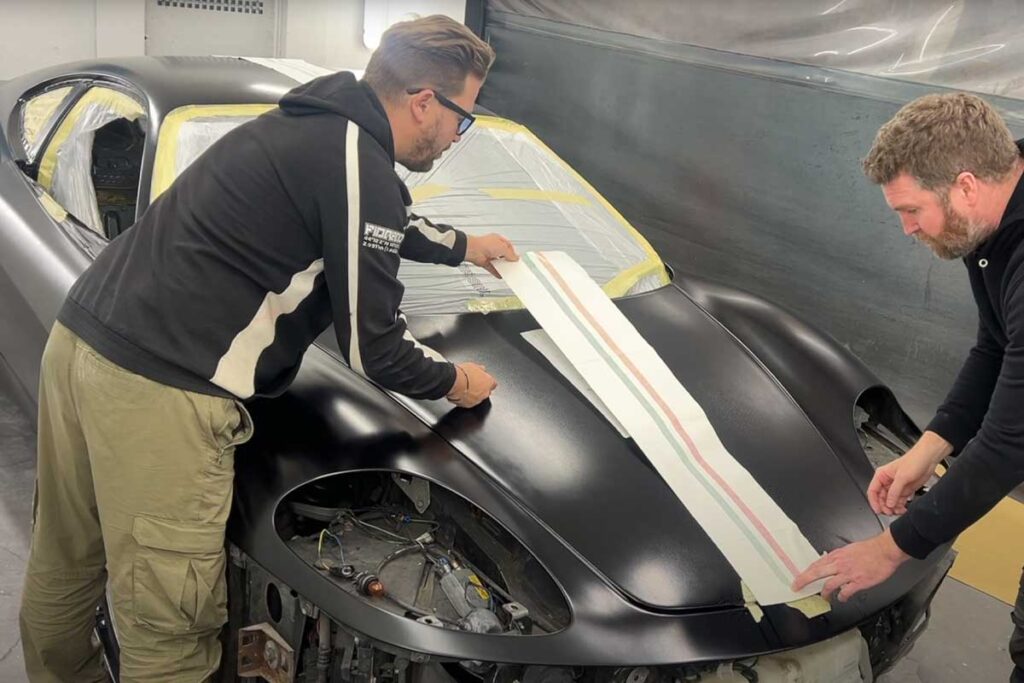
The Ferrari 360 Modena, which he uses on a daily basis, was intended to be the pinnacle of his collection. He meticulously stripped it down, giving it a fresh coat of paint, rebuilt brakes, a reupholstered interior, and even revamping the engine bay. In those few weeks, the car appeared to have freshly emerged from Maranello. Yet, this illusion of perfection would soon unravel due to a minor cosmetic touch—a vinyl stripe that spiralled into a significant ordeal.
When a Detail Becomes a Disaster
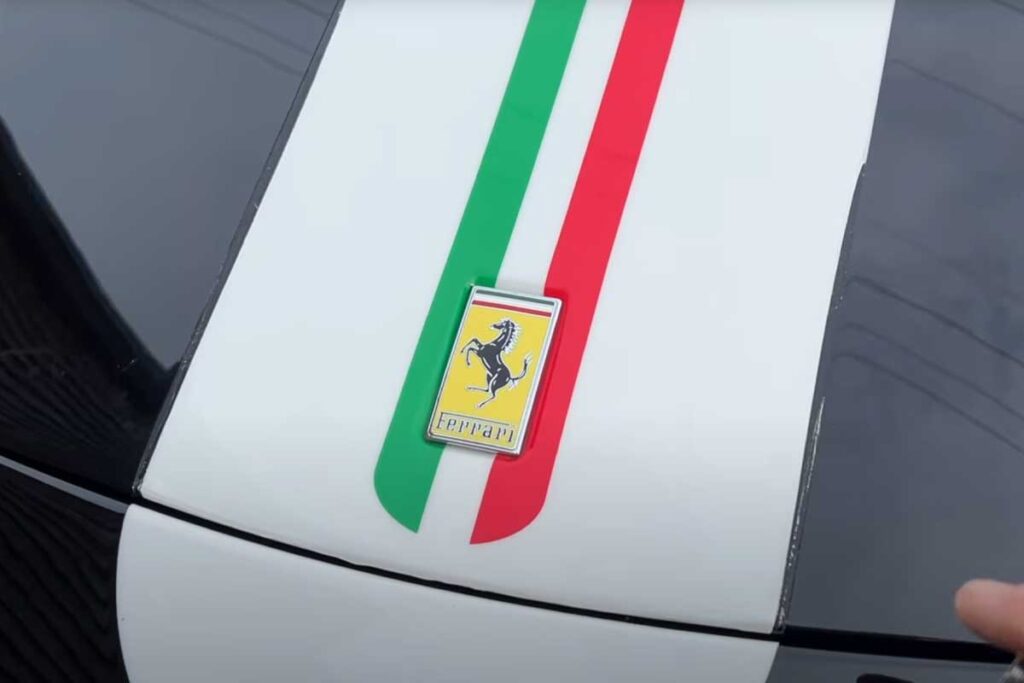
Taking inspiration from the bold racing aesthetics of the Ferrari Challenge Stradale, Ratarossa opted to add a tricolour stripe across the vehicle’s hood, intending it as a tasteful homage to Italian racing heritage. However, weeks after the application, small ripples began to emerge, followed by cracks. Before long, that once-pristine stripe bore the scars of what appeared to be a botched carving across the paint surface.
“It’s a nightmare,” he confessed in a video to his followers. “We spent nine months perfecting everything, and now the stripe is deteriorating daily.”
The verdict was tough to swallow: the vinyl material had contracted beneath the clear coat, resulting in visible ridges and distortions. This mishap affected nearly two-thirds of the car, necessitating extensive sanding and repainting.
The Science Behind the Shrinkage
An industry expert with four decades of experience in vehicle wraps shared insights into this unfortunate situation. He pointed to the use of calendered vinyl—a budget-friendly yet less reliable material compared to cast vinyl, which is better suited for intricate, heat-exposed surfaces.
On a black car, the problems can intensify. Dark paint absorbs heat, causing the vinyl to expand and contract drastically. “On a hot day, I’ve observed vinyl stripes shrink by nearly two centimetres,” he noted. His straightforward advice? The only lasting remedy would be to repaint the affected panels and apply a high-grade cast vinyl, skipping the topcoat of varnish this time.
This nuanced approach could be the difference between preserving or destroying months of painstaking restoration efforts.
Other Imperfections Emerge
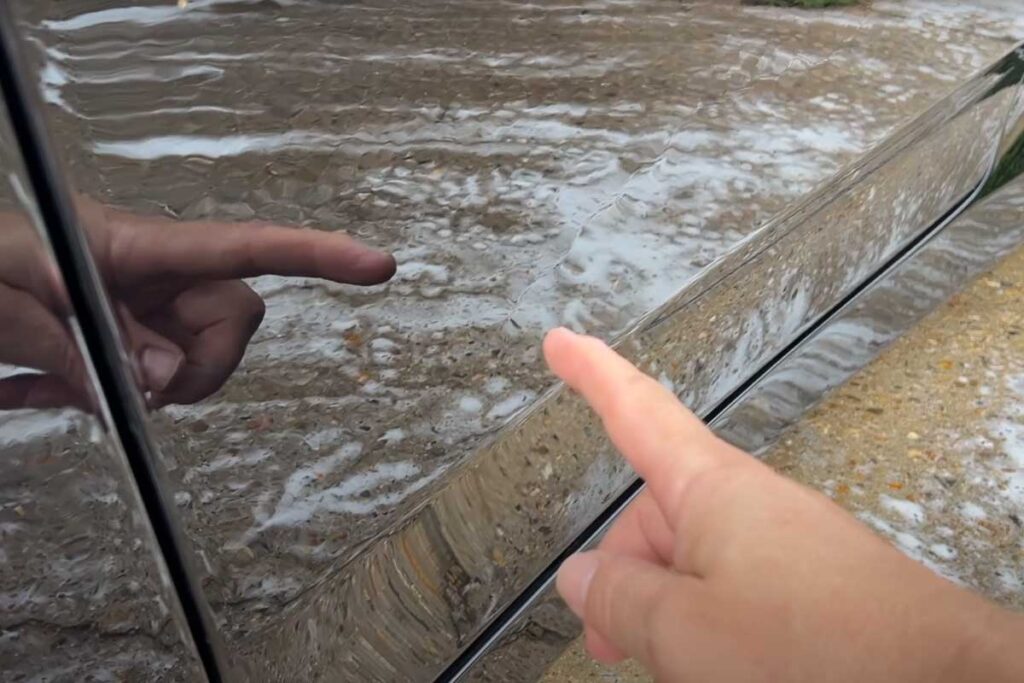
Upon further examination, Ratarossa discovered additional flaws on his Modena. Tiny paint defects marred the doors and fenders—areas that hadn’t even been touched by the vinyl. Small drips, dry patches, and micro-bubbles signalled that the paint application had been compromised, possibly by uneven drying conditions or the colder winter temperatures.
While these imperfections might not be catastrophic, they are frustrating for any detail-oriented car lover. As anyone who has tackled a classic car project knows, paintwork is both a source of pride and a potential heartbreak in the restoration journey.
A Costly but Valuable Lesson
Confronted with another hefty repainting bill, Ratarossa managed to retain his sense of humour. “I’m not a perfectionist,” he quipped, “but when my ten-year-old daughter asks what those blemishes are, I know they’re too conspicuous to overlook.”
The silver lining? The car still performs beautifully. Its V8 engine roars eagerly, the brakes are responsive, and the cabin remains immaculate. For the moment, he plans to enjoy the Modena as it stands, potentially springing for a bold new colour like metallic purple down the track.
Ultimately, Ratarossa has learned that restoration involves more than just technical expertise; it’s also a test of patience, humility, and resilience. In the realm of vintage cars, even the smallest detail can unravel months of meticulous efforts—a lesson poignantly etched across the rippled hood of one unfortunate Ferrari 360.





