
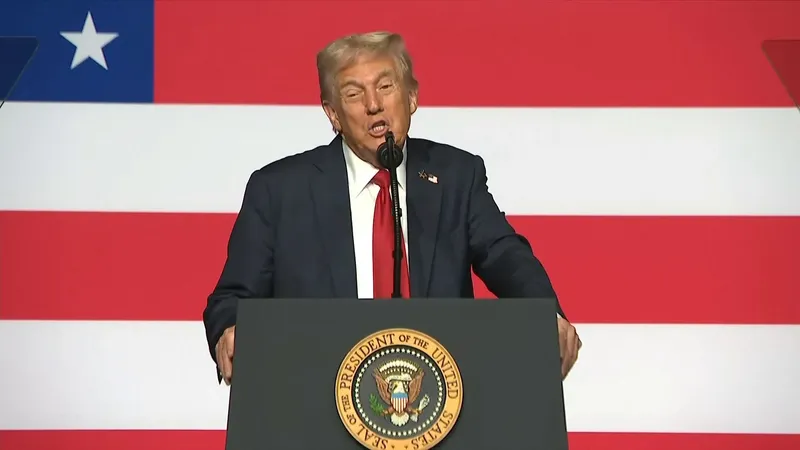
In the United States, immigration discussions are seldom subdued, but a new issue has sparked a potent mix of legal, ethical, and technological scrutiny. A policy initiated during Donald Trump’s administration put visa holders in jeopardy of losing their legal status based on their online comments or interactions. Civil liberties advocates contend that this fusion of surveillance and subjective interpretation not only expands government authority but also undermines the fundamental principle of free speech. As scrutiny of digital behaviour ramps up, the conflict over what qualifies as a “dangerous” post has landed firmly in the judiciary arena.
A policy that alarmed human rights advocates
Contention arose when immigration officials broadened their surveillance of social media, utilising AI-driven analysis. The policy stipulates that remarks or posts seen as endorsing designated extremist groups could endanger one’s visa status. The term “support” was interpreted widely, creating apprehension about the potential for misinterpretation.
Civil liberties organisations responded rapidly. The Electronic Frontier Foundation, a prominent critic, has initiated a lawsuit challenging the policy on the grounds that it violates free expression for both citizens and non-citizens. The group asserts that the mere threat of such intense scrutiny has already stifled immigrants’ willingness to express themselves online. Reportedly, several plaintiffs have chosen to avoid political or sensitive subjects entirely, fearing that their comments may be misconstrued by an algorithm rather than a human being.
Concerns over algorithmic policing
Many experts express concern over the extensive and opaque nature of the surveillance. Posts are analysed for language or imagery deemed suspicious by AI systems, which can erroneously associate individuals with extremist movements. Civil rights advocates warn that the criteria used in these assessments can be expansive and subjective. Trump’s classification of movements like Antifa as domestic terrorist organisations has further broadened what kinds of content could be problematic.
Organisations like the American Civil Liberties Union have cautioned that algorithmic tools can misinterpret satire, critique, or even benign political dialogue. When an individual’s visa status is at stake, the implications are significant. As one advocate highlighted, the mere risk of retribution creates a chilling effect, dissuading free expression even before any formal action occurs.
An increasing net of digital oversight
This controversy unfolds against a backdrop of rising tensions surrounding immigration enforcement. Recent incidents have seen major tech firms complying with government directives to restrict tools that assist individuals in tracking immigration enforcement agents. For example, Meta shut down a Facebook page designed for this purpose, while Apple and Google blocked downloads of widely used apps that provided similar notifications. Although these companies cited security as a concern, such actions have heightened fears that vital digital resources for navigating perilous environments are dwindling.
Concurrently, immigration authorities are proposing the establishment of a continuous team dedicated to mining public social media content for actionable intelligence. Planning documents indicate that numerous private contractors would scrutinise photos, videos, and messages across platforms like TikTok, YouTube, and Instagram. Critics argue this raises serious questions about the extent to which the government may transform publicly available digital activities into investigative leads.
Why civil liberties advocates continue to fight
The crux of the legal battle focuses on safeguarding fundamental freedoms. Organisations linked to the lawsuit emphasise that such extensive online surveillance extends beyond immigration matters. Family members, friends, and entire communities might come under scrutiny merely due to digital associations.
The United Nations Human Rights Council has repeatedly alerted governments to the risks of overbroad surveillance, underlining that privacy and free speech are foundational elements of democratic societies. Critics of this policy argue that, once speech is subject to monitoring with the risk of censure or punishment, it cannot be considered truly free.
Currently, the courts are set to decide whether the government may continue to interpret social media activity as grounds for deportation. However, the wider debate is unlikely to dissipate. As long as algorithms mediate the relationship between individuals and their freedoms, civil liberties advocates assert that the balance between public safety and governmental overreach must be closely monitored.





