
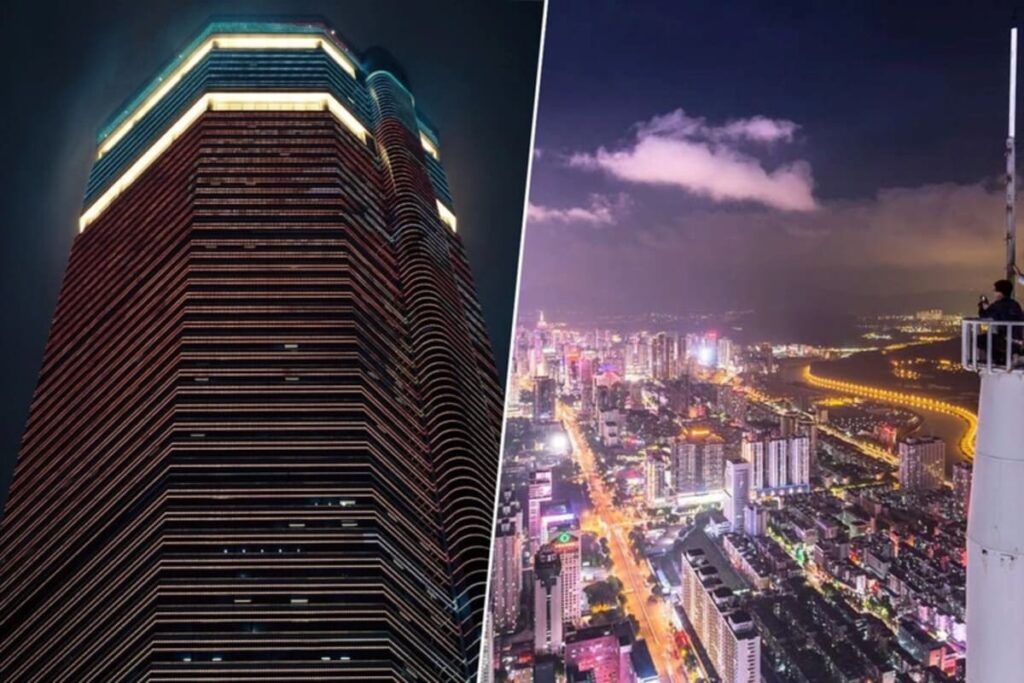
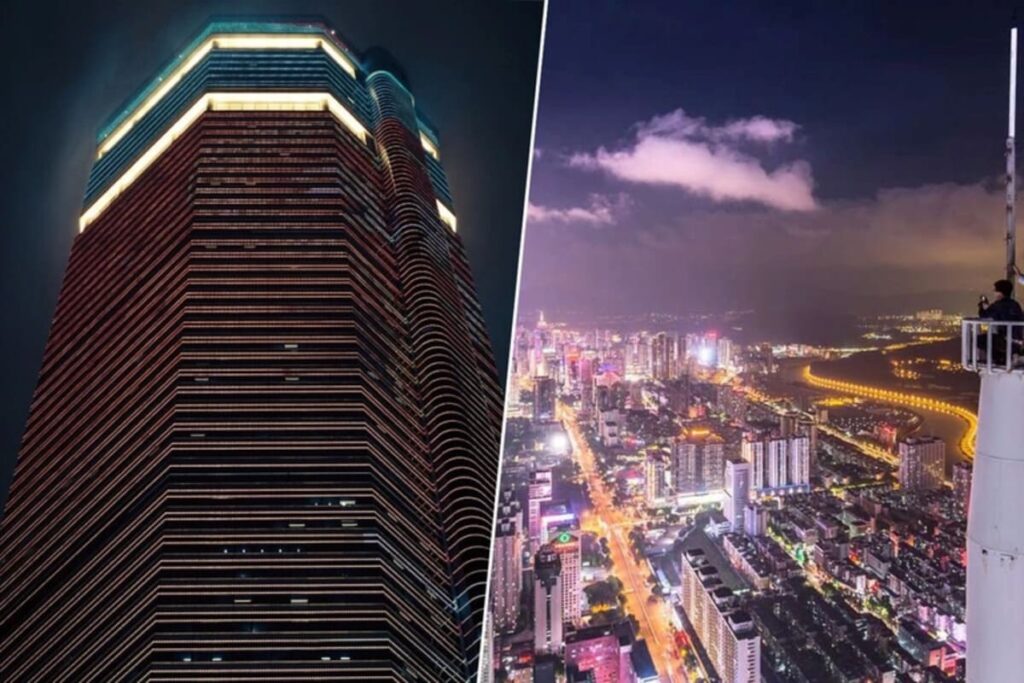
Shenzhen’s skyline embodies aspiration—towering glass structures that pierce the clouds and shimmer long into the evening. Yet, life within these vertical giants presents its own unique set of challenges, some so surprising that entirely new niche jobs have sprung up almost overnight. One of the most peculiar? Individuals who scale skyscrapers, not for the thrill, but to deliver takeaway orders to the final few floors.
A gig economy within a gig economy
Shenzhen, home to over 18 million residents and a technological powerhouse, has experienced rapid growth. This expansion, however, has introduced day-to-day complications that were difficult to foresee. For instance, in some of the city’s tallest buildings, such as the impressive 70-storey SEG Plaza, simply waiting for an elevator during peak hours can take as long as 30 minutes. For traditional delivery riders, this wait translates into lost income, as every minute stuck in a lobby equates to fewer deliveries and diminished earnings.
Thus, an unexpected solution emerged: delivery climbers. These individuals are not athletes or professionals; they are often teenagers, retirees, or anyone grappling to make ends meet. Their task is straightforward: they stand at the skyscraper entrances, receive food from regular couriers, and make the arduous final ascent themselves, floor by floor, earning a small commission in the process.
A job born from urgency – and instability
Take Li Linxing, a 16-year-old who spends his days outside SEG Plaza. Earning roughly 100 yuan a day—about 13 euros—he navigates up and down the building’s hallways for around 28 cents per order. He competes against scores of other climbers, each vying to be the chosen one by incoming delivery drivers.
The International Labour Organization highlights how informal gig work often emerges to fill the gaps left by unstable formal employment. Shenzhen’s so-called “building runners” epitomise this reality, with students on breaks, retirees relying on limited pensions, and migrants with scant options, all congregating at tower entrances in hopes of earning just enough to survive.
Remarkably, the process appears well-structured. A delivery rider zooms up on a scooter, hands over the meal, scans a QR code to record the transaction, and dashes off to the next job. The climber then undertakes the more laborious part—waiting for slow elevators, traversing unending corridors, and deciphering complex apartment numbers.
Some individuals have even transformed this model into a small business. One pioneer, locally known as Shao Ziyou, has built a team of subcontracted climbers. On busy days, he manages between 600 and 700 deliveries, taking a small commission from each. In a city fixated on speed and efficiency, he has inadvertently become an unlikely entrepreneur.
An intense competition existing on the edge of legality
Where there are opportunities, rivalry invariably follows. The increasing number of delivery climbers has resulted in fierce competition, often escalating into verbal confrontations in the streets. A single misstep—delivering to the wrong door or a delayed arrival—can result in fines from delivery apps, which are then passed down to the climbers by official couriers. Disputes over misdirected orders are now a common sight, although most arguments resolve just as quickly as they ignite.
This work exists in a legal grey area. There are no contracts, no insurance, and no safety nets. The UN Human Rights Office has cautioned that informal labour without safeguards poses significant risks for workers, particularly minors. Indeed, Shenzhen’s situation garnered attention when even children below secondary school age began trying their luck after being inspired by viral videos online.
Authorities have since stepped in, restricting participation to those aged 16 and older—yet the precarious nature of the work remains intact.
A glimpse into a city in flux
What unfolds outside SEG Plaza encapsulates the broader narrative of China’s megacities. It is a juxtaposition of high-tech aspirations against the everyday struggles of millions striving for stability. In a landscape where innovation reigns supreme and inequality is front and centre, individuals are compelled to devise new survival strategies—even if that means racing through skyscrapers for modest commissions.
This unusual micro-economy, born from necessity, reveals something vital about contemporary urban life: when cities grow taller faster than they grow fairer, entire worlds emerge in the shadows of the skyscrapers.





