
When we think of cutting energy costs or lowering our dependence on the main grid, many of us typically picture switching to LED bulbs or unplugging our appliances. However, occasionally, one individual makes a bold and imaginative leap that makes the rest of us feel decidedly traditional. Take, for example, a clever innovator who’s been powering his entire home for nearly a decade using nothing more than sunlight and hundreds of repurposed laptop batteries.
The Genesis of an Innovative Energy Project
Back in late 2016, driven by curiosity and an ever-growing stash of discarded laptop batteries, this enthusiastic DIYer embarked on a mission to create his own off-grid energy system. The premise was straightforward: if each laptop cell still had some charge left, why not combine them into a larger, more functional unit?
He set up the system in a shed about 50 metres from his house, transforming it into the epicentre of his renewable energy efforts. There, the salvaged batteries connected to solar panels created a steady stream of clean energy. What many find astonishing is how seamlessly the system operates. Despite skeptics raising concerns about fire hazards and battery swelling, he’s encountered none of these problems – a testament to his careful design and considerable technical know-how.
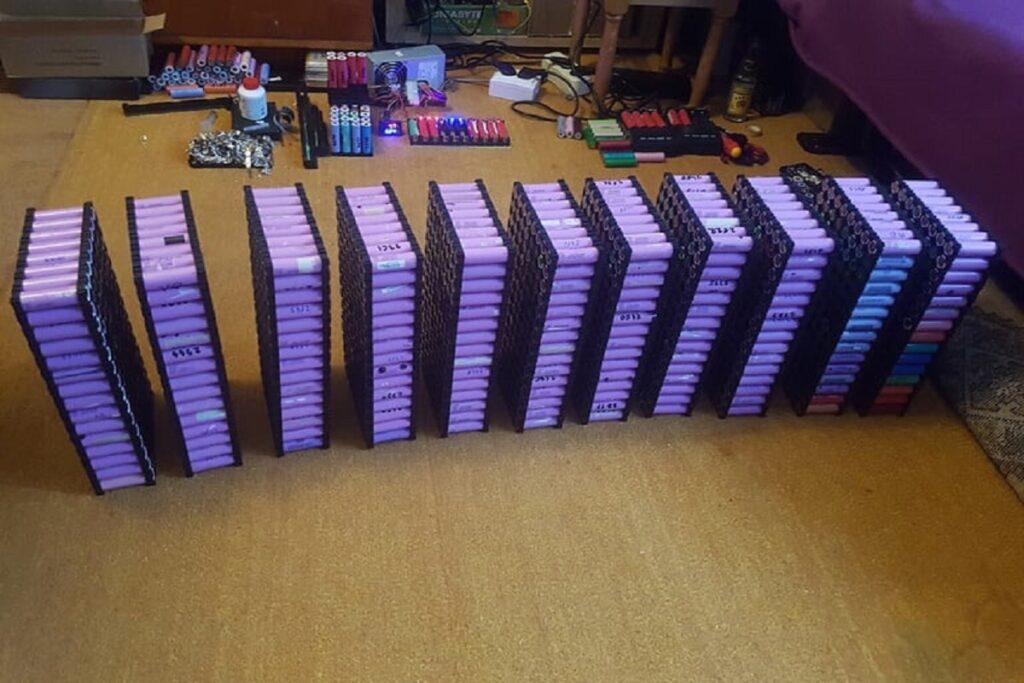
In the early stages, he assembled around 650 laptop batteries into packs of approximately 100 Ah each. To enhance durability, he opted for copper cabling rather than cheaper alternatives – a decision likely contributing to the system’s long lifespan.
Tackling Technical Hurdles
As with any ambitious undertaking, challenges arose along the way. One significant obstacle was the uneven discharge between old battery cells. Instead of surrendering to frustration, he took matters into his own hands, dissecting the batteries into individual cells and reconstructing them into custom racks. This approach allowed him to balance the system more effectively, maximizing the utility of each salvaged component.
As time has progressed, the setup has expanded to include 24 solar panels, each capable of generating 440 W, providing a significant power boost. Remarkably, since 2016, not a single battery pack has required replacement. This project stands as an exceptional example of electronic waste not just being reused, but thriving well beyond its anticipated lifespan.
The International Energy Agency has recognised electronic waste as one of the fastest-growing waste streams globally. His project underscores, on a small but impactful scale, the potential trapped within components that typically find their way into landfills.
Exploring Energy Independence
This narrative extends beyond technical triumph; it taps into a wider movement. With escalating energy prices and growing concerns over climate change, an increasing number of people are searching for ways to reduce their reliance on conventional power sources. From home solar installations to battery banks and heat pumps, the quest for energy independence is gaining momentum.
What distinguishes this project is its simplicity. It eschews cutting-edge technology or costly proprietary systems, instead repurposing items many deem worthless – discarded laptop cells – and transforming them into a sustainable power source. It serves as a potent reminder that innovation doesn’t always hinge on the latest gadget; often, it’s about recognising potential where others see waste.
This success story could inspire a new wave of community-driven experiments, particularly in regions facing frequent power outages or burdened by high energy expenses.
A Vision for Sustainable Living
This long-standing experiment goes beyond a simple engineering feat. It illustrates the power of creativity, determination, and a commitment to sustainability. He has shown that a home can be reliably powered by reclaimed technology for years, all while minimizing waste and alleviating environmental stress.
As society shifts towards greener solutions, narratives like his provide insight into the possibilities that arise when we think beyond conventional waste. With a bit of imagination – and a commitment to safety – even a collection of old laptop batteries can serve as the backbone for a resilient, eco-friendly energy system.
In an era where many seek guidance on navigating the future of energy, this project stands as a quiet yet brilliant example: the solutions we need might already be lying in our drawers, just waiting to be redefined.





