
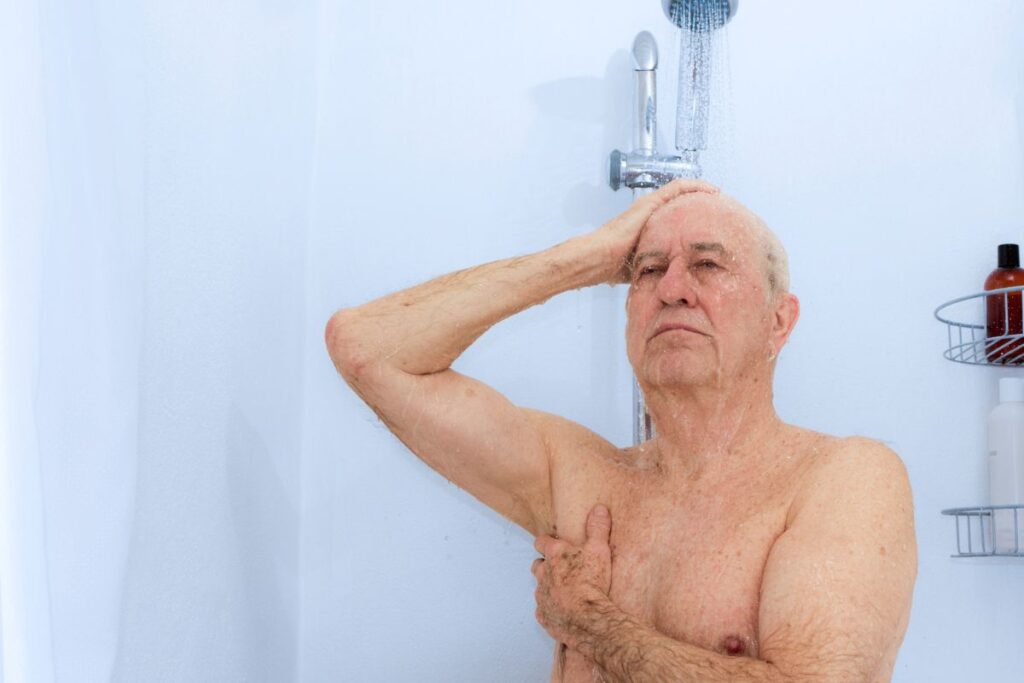
For many Australians, the daily shower has long been regarded as the benchmark of cleanliness—a refreshing ritual that kickstarts the day or washes away its stresses. However, as we age, our skin undergoes significant changes that may render this daily indulgence less beneficial than we once believed. Dermatologists now advocate for a gentler approach, particularly for those over 65.
Time to Rethink Daily Showers
In countries like Australia, the practice of showering daily has become almost second nature, a quick routine that signifies morning or evening rituals. Yet, hot water and frequent washing can be harsher on our skin than we realize. Experts from Santé Magazine highlight that constant exposure to heat and cleansing products can strip natural oils from the skin, resulting in dryness, itching, and irritation.
This issue is exacerbated as we grow older. Dermatologist Marie Estelle Roux notes that the epidermis thickens with age, leading to a rougher skin texture, while the underlying dermis—responsible for firmness and elasticity—becomes thinner. Consequently, there’s less hydration, reduced flexibility, and a compromised skin barrier. Factor in daily showers, and the cycle of dryness and discomfort can quickly spiral out of control.
How Often Should You Shower After 65?
Reducing shower frequency doesn’t equate to ignoring hygiene. The aim is to adjust routines to cater to the unique needs of aging skin. Dermatologist Sylvie Meaume recommends a balanced strategy: rinse daily, but reserve soap for use every second or third day. This translates to roughly two thorough showers per week, concentrating on essential areas.
Dermatologist Marie Jourdan emphasizes the importance of targeted hygiene. Key areas that require regular attention include those prone to sweat and bacterial accumulation—like the underarms, groin, between the toes, and other folds. By focusing on these regions, you can maintain cleanliness while avoiding the drying effects that come with full-body scrubbing.
Revamping Shower Techniques: Quick, Gentle, and Skin-Friendly
Beyond frequency, how you shower matters significantly. Water temperature plays a crucial role. While hot showers may feel comforting, they can accelerate moisture loss. Researchers at Harvard Medical School suggest limiting showers to three or four minutes—significantly shorter than many are accustomed to. Though it may feel rushed, the benefits to your skin can be substantial.
Selecting the right products can also make a notable difference. Dermatologists recommend using cleansing oils, pH-balanced gels, and nourishing soaps rather than the harsh, lathering varieties that can dry out the skin. After showering, the technique for drying off is equally vital: gently pat your skin with a towel instead of rubbing, as this can irritate sensitive areas.
Perhaps the most crucial step follows: moisturising. According to the NHS, mature skin loses its capacity to retain moisture, underscoring the importance of daily hydration. A nourishing body lotion or lipid-replenishing cream helps maintain skin elasticity, reduces itching, and can even ward off more serious issues like eczema or pressure sores. Dedicating just a few minutes each day can dramatically enhance comfort.
Embracing Change: Listening to Your Skin as You Age
At first, showering less frequently may feel foreign, especially for those who have adhered to similar routines for decades. However, as our skin matures, its needs evolve, and acknowledging this shift is crucial to ageing well. A gentler approach doesn’t compromise hygiene; rather, it safeguards the natural skin barrier that becomes increasingly precious with time.
In essence, adjusting your showering routine is a form of self-care—a daily affirmation that you’re attuned to your skin’s changes. Ultimately, this mindfulness is the bedrock of healthy, comfortable ageing.





