
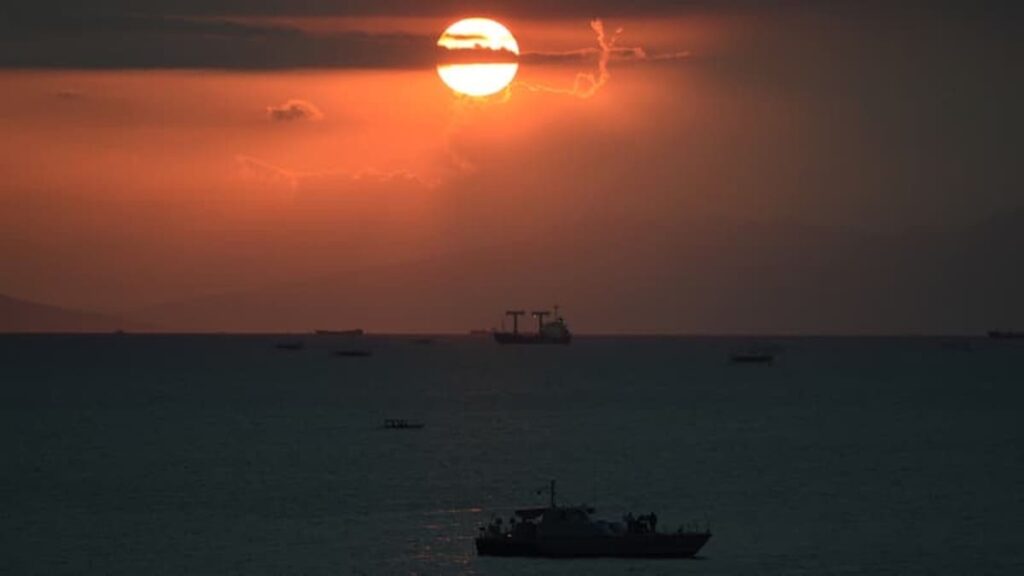
For over a week now, an unclaimed shipment has been bobbing just off Manila Bay—23 containers flagged for radioactive contamination. What started as a routine industrial export has escalated into a diplomatic standoff between the Philippines and Indonesia, raising pressing concerns about safety, accountability, and the proper disposal of hazardous materials.
A Shipment No One Wants
The impasse began when Indonesian authorities detected trace amounts of Cesium-137, a radioactive isotope, in zinc dust containers shipped from the Philippines. Jakarta promptly rejected the cargo and attempted to return it, igniting a complex tug-of-war between the two nations over accountability for the contaminated shipment.
The containers have been anchored off the coast of Manila since October 20. Philippine officials contend that the shipment originated from a private entity, Zannwann International Trading Corp., while their Indonesian counterparts insist that the Philippines is responsible for its return. As a result, the containers are caught in limbo, pending directives that neither side appears willing to issue.
Carlo Arcilla, director of the Philippine Nuclear Research Institute (PNRI), described the situation as “a puzzle” but reassured the public that the radiation levels detected thus far are low. “This is not a national emergency,” he stated, highlighting the urgent need for “a proper disposal site.”
Tracing the Contamination
The zinc dust, usually a by-product of steel manufacturing, was exported by Zannwann after being sourced from the steel recycler SteelAsia. However, SteelAsia has fiercely contested the claims, labeling the PNRI’s conclusions as “unfounded and unscientific.” The company has even temporarily halted operations at its scrap-processing facility while investigations unfold.
Efforts to reach Zannwann for comments have been unsuccessful.
The situation has been further complicated by a recent scandal in Indonesia, concerning radioactive contamination found in food products sold domestically. Authorities suspect that certain imported scrap metal shipments may be the contaminating factor.
A Broader Food Safety Alarm
The concerns surrounding Cesium-137 extend beyond industrial by-products. The U.S. Food and Drug Administration (FDA) recently recalled frozen shrimp and cloves imported from Indonesia after discovering the same isotope. According to the FDA, prolonged exposure to Cesium-137, even at low levels, can elevate cancer risk.
Cesium-137 is common in medical instruments and industrial gauges, implying that contamination can inadvertently occur if such equipment enters the recycling stream.
Looking Ahead
Currently, the containers remain in a state of suspension at sea, emblematic of a bureaucratic deadlock. Both nations acknowledge the necessity for safe management of the waste, yet neither wishes to bear the financial and political burden of taking it on.
The PNRI indicates that the next critical step involves identifying a secure burial site, but time is running out—and each passing day heightens public anxiety.
This radioactive standoff underscores a growing international concern: as the trade in recycled materials expands, so do the risks of contamination slipping through the cracks. Unless monitoring systems, transparency, and accountability improve, we may face more such incidents on the horizon.





