
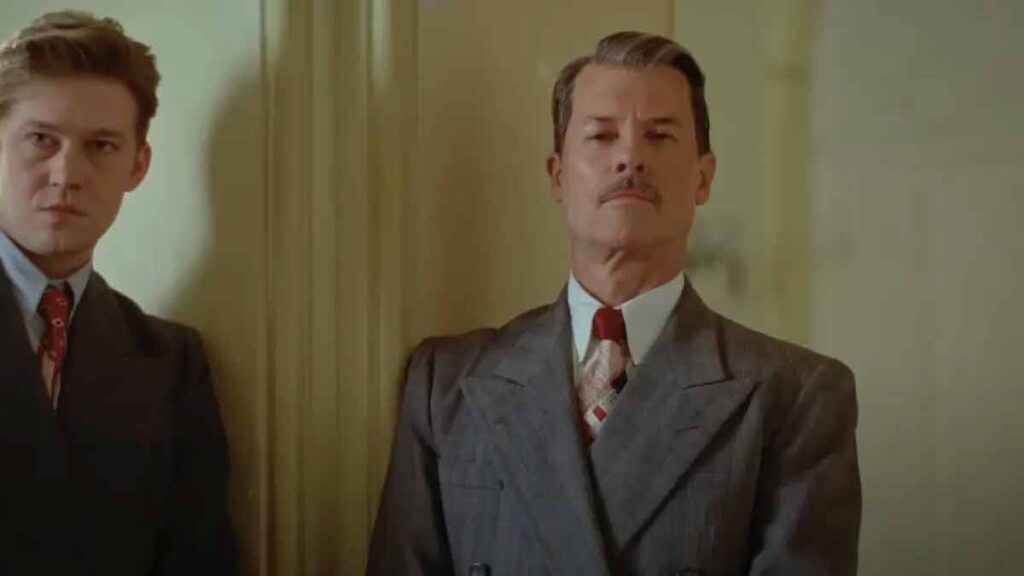
Every iconic career has to start somewhere, but few beginnings are as understated as that of a teenage boy who briefly scratched a car in the background of a 1971 film. No close-up shots, no dialogue, and not even a credit. Just a passing moment that, unbeknownst to anyone at the time, set one of cinema’s most revered actors on a path defined by meticulousness, patience, and an almost monk-like dedication to his craft.
The journey that followed was not meteoric. Instead, it was an evolution marked by discipline, long periods of silence between projects, and an unwavering obsession with authenticity on screen. Today, many regard that boy as the most accomplished actor of his generation.
A blink-and-you’ll-miss-it debut that changed everything
According to cultural records, he made his first appearance at the tender age of 13 or 14 in Sunday Bloody Sunday, a film that would earn four Academy Award nominations. His screen time? Mere seconds — a young delinquent scratching a car. Yet this experience ignited a passion for performance that would influence his entire life.
Rather than hastily returning to the silver screen, he delved into the world of theatre. It was an arduous training ground: voice work, physical conditioning, unwavering discipline — an education that rewards resilience over ego. When he finally re-entered the film industry, his minor roles were infused with a remarkable sensitivity and an increasingly honed instinct for characterisation.
Throughout the 1980s, he appeared in notable films like Gandhi (1982) and The Bounty (1984), but it was 1985 that catalyzed his breakthrough with My Beautiful Laundrette and A Room With a View — two vastly different roles that simultaneously showcased his undeniable intensity. Suddenly, critics began to take notice.
The rise of a master — slow, deliberate, unstoppable
Amidst the whirlwind of fame, he remained grounded, thoughtfully choosing his projects with a deliberate sense of scarcity. There was no frantic race for relevance; each film was a deliberate step, each step a solid foundation. His method of acting, admired by many, was often seen as daunting: immersive, consuming, sometimes grueling — yet always precise.
Then came the role that transformed his career: My Left Foot (1989). To embody Christy Brown, he committed fully, remaining in character throughout filming and even using a wheelchair between takes, pushing his physical limits. The performance earned him his first Oscar and redefined the boundaries of “method acting.”
His next transformative moment emerged in 2007 with There Will Be Blood. His portrayal of Daniel Plainview was explosive: raw, magnetic, and chillingly alive. Five years later, Lincoln showcased the polar opposite spectrum of his talent — embodying stillness, warmth, and emotional weight. With this role, he earned a third Oscar, a record unmatched by any other male actor.
How one actor reshaped the idea of excellence
His process is renowned for its depth but never preposterous. He doesn’t just study voice and movements; he delves into social contexts, psychology, rhythm, and silence. The goal isn’t transformation merely for the sake of being different, but to achieve seamless alignment with the character — making everything feel inevitable.
Awards followed: three Oscars for Best Actor, alongside numerous nominations for impactful films like In the Name of the Father, Gangs of New York, and Phantom Thread. Yet these accolades only affirm what his extensive filmography already illustrates: quality over quantity, depth over distraction, longevity over oversaturation. His reluctance to rush has become a defining aspect of his narrative.
A surprise return, years after a “retirement”
In 2017, he proclaimed his retirement from acting after Phantom Thread, leading many to believe the curtain had truly closed. Yet that silence proved misleading. He later admitted that this so-called retirement wasn’t as definitive as it appeared — more a temporary hiatus than a goodbye.
Now, he is set to return with Anemone, a film directed by his son, Ronan Day-Lewis. He co-wrote the script and stars alongside Sean Bean and Samantha Morton, with Focus Features and Plan B supporting the project. Early buzz describes it as intimate, restrained, and filled with electrifying tension — precisely the kind of environment where his artistry flourishes.
The film is slated for a 2025 release in the U.S. and U.K., with festivals already getting in line.
What his journey really teaches us
His career, which began with an uncredited cameo, illustrates that greatness seldom rushes. It is cultivated — role by role, choice by choice — through consistency, craftsmanship, and an unwavering respect for the artistic process.
His journey serves as a poignant reminder that:
- Rarity can be a strength, not a gamble.
- Silence can be a strategy, not an absence.
- Precision can endure beyond fleeting fame.
- And the most memorable performances stem from artists pursuing truth rather than applause.
If Anemone signifies the dawn of a new chapter, it will likely adhere to the same principles that have shaped his illustrious career: one extraordinary role outweighs a dozen forgettable ones.
From an uncredited extra to a three-time Oscar winner — though his journey may have been subtle, its reverberations are nothing short of monumental.





