
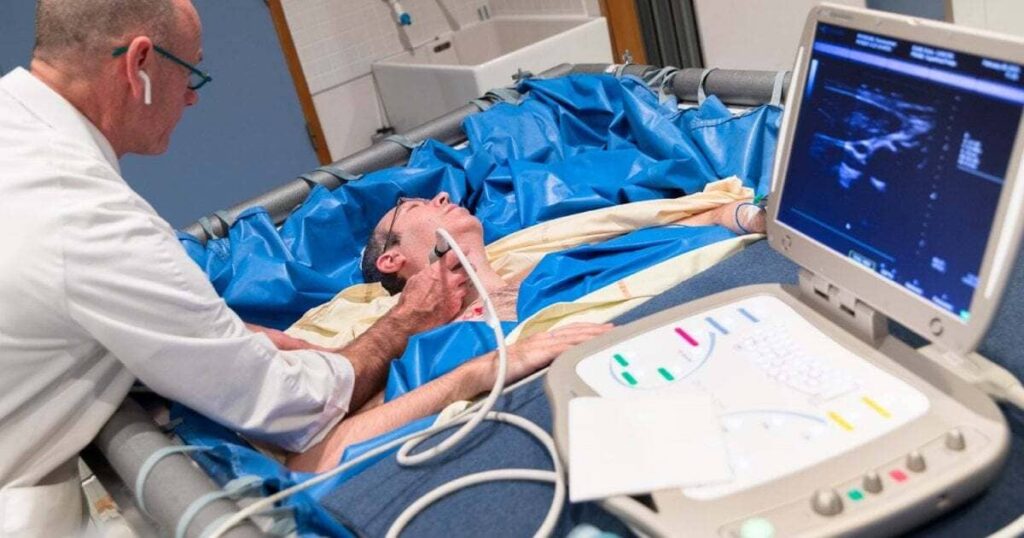
Consider the unusual prospect of earning thousands of euros all while remaining in the comfort of your own bed. Picture a life void of early alarms and tedious commutes, where you can enjoy sixty days of relaxation — all in the name of scientific research. It may sound like a dream job catered to the laziest among us, but this opportunity is part of a serious study designed to ensure astronauts maintain their health during extended space missions.
An enticing opportunity for the right candidates
Occasionally, a job offer arises that seems almost too fantastic to be true—like getting paid to care for an island or sample chocolates for a living. Yet this particular opportunity has solid scientific backing. The Space Clinic in Toulouse is seeking twelve volunteers for a research project that will require participants to spend 60 consecutive days confined to bed, with a generous total pay of €18,000.
The objective? To deepen our understanding of how weightlessness impacts the human body. When in space, astronauts face a loss of muscle and bone mass due to the lack of gravitational force. Even the fittest astronauts, like French space hero Thomas Pesquet, must exercise for over two hours daily aboard the International Space Station to maintain their fitness levels.
The Toulouse clinic is collaborating with the European Space Agency (ESA) and the French space agency CNES to replicate these weightless conditions here on Earth — enlisting volunteers instead of actual astronauts.
Understanding the experiment’s mechanics
However, there’s a significant caveat: participants must remain in bed without getting up for two entire months, specifically positioned with their heads slightly lower than their feet to simulate the effects of microgravity. This means no walking, no upright sitting, and certainly no short walks to shake off any stiffness. Every aspect of daily life, including meals and showers, will occur from the confines of the bed.
But not all participants will experience idle time. The twelve volunteers will be divided into three groups: one group will engage in lying down cycling exercises, a second group will perform similar exercises inside a centrifuge—a device designed to mimic the force of artificial gravity—and the final group will serve as a control sample, undertaking no additional activity.
Dr. Arnaud Beck, one of the lead physicians coordinating the study, explains, ‘We’re assessing how physical activity alongside artificial gravity might mitigate the adverse effects of weightlessness on the body.’ The centrifuge uses rotation to create a gravity-like environment, redistributing blood and bodily fluids just as they would be in space — although participants should not book a spot if they are prone to motion sickness.
During the study period, participants will receive routine medical assessments, with data monitored by fourteen different research teams focusing on elements such as muscle tone, heart function, and bone density.

Eligibility criteria for potential applicants
This unique venture isn’t open to everyone. The ideal candidate is a healthy, athletic male aged between 20 and 45 with a body mass index ranging from 20 to 27. Applicants must also be non-smokers, free from allergies, and not on restrictive diets.
Before officially beginning the experiment, selected volunteers will undergo an extensive medical evaluation lasting two weeks. After completing the two-month bed rest, participants will remain under monitoring for an additional two weeks to help them regain their physical strength — as it’s no surprise that two months of immobility can significantly impact the body.
The rewards: €18,000 and contributions to scientific advancement

For their compliance (or lack of), each volunteer will receive €18,000 in exchange for approximately three months of their valuable time. But this isn’t merely a cushy paycheck — it’s an opportunity to participate in pioneering research with potential implications for the future of astronaut safety on Mars missions and long-term space habitation.
Of course, this isn’t a luxury holiday. Spending weeks lying down has ramifications—affecting circulation, sleep, and mood. But for those with a keen interest in science or who are simply seeking a unique experience, this project offers an unparalleled look into the field of space medicine.
So, if you consider yourself fit, resilient, and ready for an unusual form of income generation — without ever stepping outside your bedroom — this could be a once-in-a-lifetime opportunity to not just earn money but also contribute to history.





