
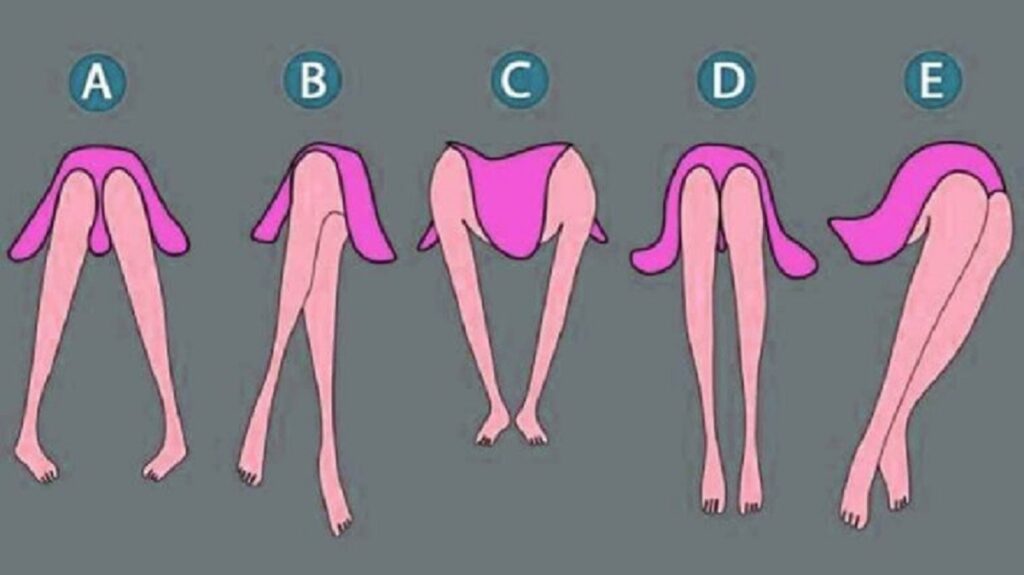
Remarkably, a person’s demeanor can reveal a lot before any words are exchanged. Forget about the firm handshake or stylish footwear — it all comes down to how they settle into a chair. The way one occupies their seat, whether by crossing legs or angling knees, may seem like a subconscious choice, yet psychologists argue that posture serves as a profound indicator of personality.
According to insights from the British Psychological Society, body language constitutes as much as 70% of our non-verbal communication, often betraying our thoughts and feelings even before we’ve articulated them. From boardrooms to coffee catch-ups, our sitting style subtly conveys our identity — or at least our self-perception.
Let’s dive into the meanings behind these postures.
Knees Apart: A Sign of Confidence or Hidden Nervousness?
Sitting with your knees apart can project an air of authority — often unconsciously. This open stance, typically more prevalent among men due to societal norms, conveys a sense of confidence and control over one’s space. It suggests you’re comfortable in your own skin and accustomed to being heard.
However, psychologists caution that there’s often more beneath the surface. Research from the University of Cambridge indicates that such expansive postures can also be a front for underlying anxiety or self-doubt. It’s the body’s method of claiming space in what can be a chaotic world. So, before jumping to conclusions about someone’s bravado, remember: what seems like arrogance might actually be a protective shield.
Ankles Crossed: Poised, Polished, and Calmly in Control
If you tend to cross your ankles neatly under your chair, you belong to the “calm composure” crowd. This posture typically signals self-assuredness with a hint of elegance. You come off as open-minded but not reckless, confident yet not overbearing.
This sitting posture is particularly favoured by individuals who prioritise social cohesion. Research published in the Journal of Nonverbal Behavior identifies these posture bearers as thoughtful decision-makers — those who choose their words with care and favour diplomacy over drama. Think of it as the body language equivalent of a warm smile: approachable, considerate, and just a touch sophisticated.
Straight Knees, Straight Talk
Sitting with both feet firmly on the ground and knees aligned forward often points to a direct and dependable personality. You’re the organizer, the punctual friend, the one who is always there to lend a hand when chaos ensues.
This posture emanates a sense of order and tranquillity. It also suggests a level of emotional stability — as noted by psychologists at King’s College London, upright posture can reflect and strengthen mental resilience. When you sit tall, not only do you project confidence, you genuinely begin to feel it.
Legs Crossed: Empathy with a Dash of Mystery
The classic leg cross — stylish, comfortable, and often misinterpreted. If this is your go-to stance, you’re likely empathetic, creative, and a tad introspective. You easily forge connections with others, yet you also treasure your personal space.
Those who gravitate towards this posture often possess rich inner worlds and a vivid imagination. But there’s a flip side. Spending too much time in this position, either literally or metaphorically, can sometimes make you appear aloof or overly cautious, particularly in professional contexts. One life coach once observed, “Leg-crossers are frequently dreamers — open-hearted individuals, but with an exit strategy in mind.”
What Your Seat Says Before You Speak
In the end, posture isn’t set in stone. It’s a snapshot — a fleeting signal shaped by mood, comfort, or even the chair itself. Nevertheless, being mindful of our posture can enhance our awareness of the stories we relay without uttering a word.
Whether you identify as the confident sprawler, the poised perfectionist, or the reflective dreamer, your posture communicates a version of yourself to the world long before you even open your mouth. And in many instances, this silent language can convey more than a thousand carefully selected words ever could.





