
When Elon Musk first articulated his vision of linking the globe through a network of satellites, it sounded like something ripped from the pages of a sci-fi novel. Fast forward to the present day, and that vision has become a reality—largely due to Starlink, the satellite constellation that has extended global connectivity to the most isolated regions. Yet Musk’s aspirations reach far beyond our planet, as he embarks on an ambitious mission: to make humanity multiplanetary.
Starlink: Bridging the Connectivity Gap
Back in 2003, during a speech at Stanford University, Musk laid out his ambitious plan for a global internet network powered by low Earth orbit satellites. At the time, it felt like a distant fantasy. However, by 2015, SpaceX set this vision in motion with the announcement of the Starlink project, aiming to deliver fast, reliable internet access to even the most hard-to-reach areas of the world.
May 2019 marked a turning point when SpaceX launched its inaugural batch of 60 Starlink satellites, a significant leap for both space exploration and telecommunications. Today, Starlink comprises over 4,000 satellites orbiting the Earth, connecting millions of households globally, particularly in rural or underprivileged regions. Notably, in 2023, Starlink achieved a groundbreaking milestone by enabling direct smartphone connectivity through 4G, allowing users to bypass traditional land-based networks—a move that has shaken up telecom markets in regions such as Africa and Asia, with countries like Kenya turning to Starlink as a viable alternative to existing providers.
21 years ago https://t.co/HVg82XyJcW
— Elon Musk (@elonmusk) December 7, 2024
SpaceX: Transforming Space Travel
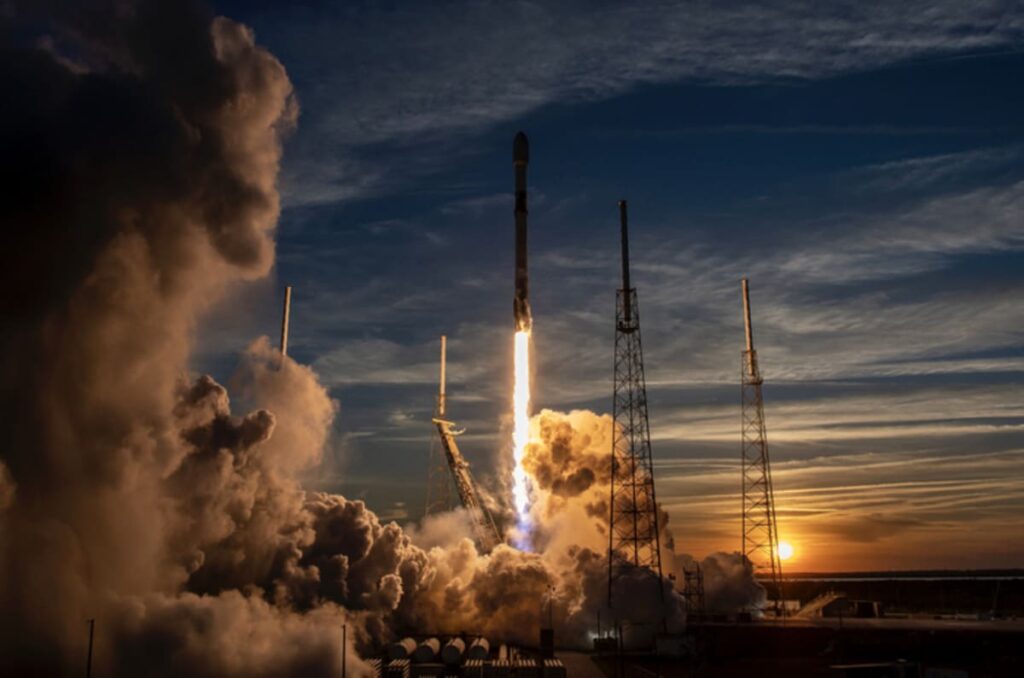
While Starlink is reshaping the internet landscape, it’s merely one facet of SpaceX’s groundbreaking initiatives. Established in 2002, SpaceX reimagined the space industry with a focus on reusable rockets, substantially lowering the costs of space missions. The Falcon 9 rocket, which can land post-launch, was a revolutionary step that made commercial space flights far more accessible.
But that’s just the beginning. The Starship project aims to facilitate transporting substantial payloads and crew members to the Moon, Mars, and beyond, marking another monumental progression for the company. In October 2024, SpaceX made headlines by successfully recovering the “Super Heavy” booster from Starship, employing the innovative capture system dubbed “Mechazilla.” This achievement pulls SpaceX closer to realizing more frequent, affordable space travel.
Add to this SpaceX’s collaboration with NASA on the Artemis program, which aims to return astronauts to the Moon by 2026, where a modified version of Starship will serve as the lunar lander, further entrenching SpaceX’s role in space exploration. Looking ahead, in January 2025, SpaceX plans to trial an electrodynamic dust shield on the Moon, potentially pivotal for upcoming lunar expeditions.
A Vision for Multiplanetary Existence
Musk’s aspirations soar well beyond the confines of Earth. With SpaceX and Starlink, he envisions a future where humanity is multiplanetary. The global connectivity Starlink provides is essential for establishing settlements on Mars and sustaining communication between Earth and other celestial bodies. Starship is envisioned as the vehicle that could actualize this dream, facilitating transport to the Red Planet.
On our home planet, Musk envisions extending the Starlink network to offer comprehensive coverage, while also investigating applications like space-based 5G and military communications. Yet, such expansive plans come with significant obstacles, including navigating complex international regulations, managing space debris, and evaluating the environmental impact of a multitude of satellites in low Earth orbit. Nevertheless, Musk remains undeterred in his pursuit of this ambitious vision—one he keenly articulated more than two decades ago.

Navigating Political Waters: A New Challenge for SpaceX and Starlink
Recently, Musk has taken on the role of heading a newly established government department, the Department of Government Efficiency (DOGE), under the Trump administration. This position could have significant ramifications for SpaceX and Starlink’s influence in space policy and telecommunications. With this new appointment, Musk is in a unique position to streamline government contracts, relax regulations, and expedite the rollout of his advanced technologies.
While some view this political alignment as potentially granting Musk further reach over the tech industry, others see it as an opportunity for enhanced innovation. However, merging the private sector with governmental interests might introduce conflicts, particularly as SpaceX and Starlink pursue their bold objectives. Musk’s skill in maneuvering through this intricate balance between business and politics will likely define the future direction of both his enterprises.
A Bright Horizon Ahead
In the span of just two decades, Elon Musk and SpaceX have fundamentally altered the landscape of space and telecommunications with their innovative breakthroughs and relentless ambition. From Starlink’s mission to bridge the global digital divide to Starship’s aspirations for accessible space travel, SpaceX is consistently pushing the boundaries of what’s achievable in both fields.
However, Musk’s newfound involvement in American politics introduces a layer of complexity for the future of SpaceX and Starlink. As Musk continues to challenge the limits of science and technology, his political role raises critical questions about the intersection of innovation, regulation, and ethics. One certainty remains: the saga of SpaceX and Starlink is far from conclusion. Regardless of one’s stance on Musk, he is undoubtedly a pivotal figure in shaping the future of technology and humanity, especially as we set our sights on the stars for the generations to come.