
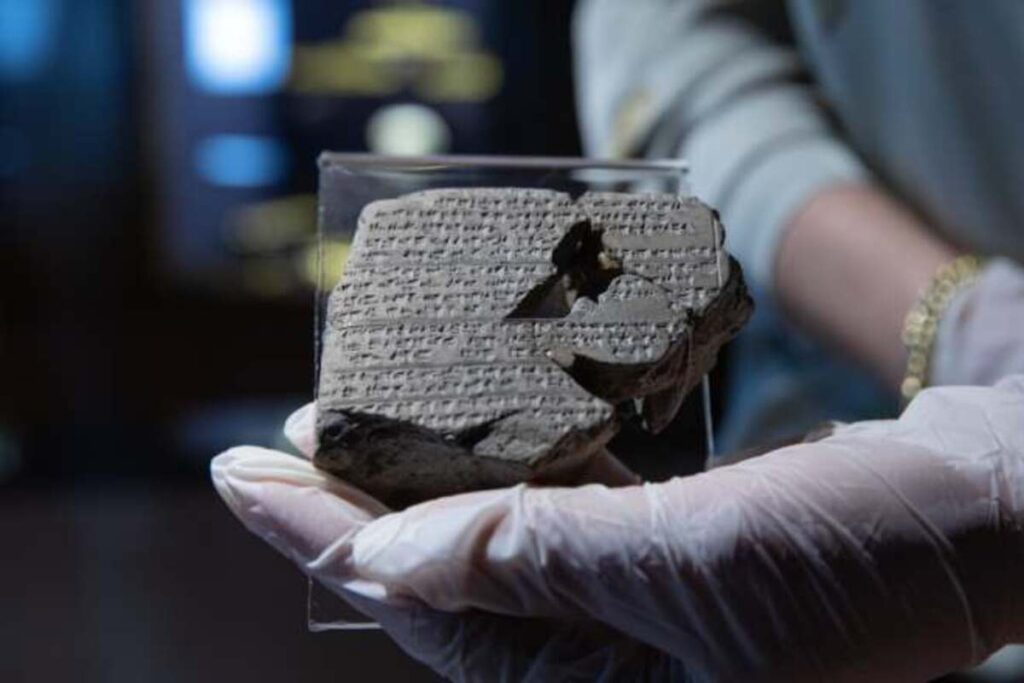
In the heart of central northern Turkey resides the ancient Hittite capital, a site that has captivated archaeologists for over a century. Recently, an incredible discovery surfaced from the excavation of 30,000 clay tablets, fundamentally altering our perspective on ancient languages and cultures.
New Discoveries from a Century of Excavation
The area known as Boğazkale-Hattuša has been at the forefront of archaeological exploration for more than a hundred years. Even after vast excavations, researchers continue to uncover new treasures. The latest find—a collection of cuneiform tablets, including many inscribed in Hittite-Nesite—the earliest known Indo-European language—has surprised scholars. Instead of the anticipated ritual texts, they encountered passages in a previously unidentified Indo-European language.
An Unforeseen Language Emerges
This remarkable discovery came to light when researchers set about decoding what they thought was a straightforward ritual text, only to uncover fragments in an unrecognized language. This finding was highlighted by a German university, which emphasized its importance. While the words from this enigmatic language remain undeciphered, the surrounding Hittite text provided context, helping to refine potential interpretations.
One expert in cuneiform script speculated that the language might originate from Kalašma, a region that corresponds to today’s Bolu and Gerede in Turkey. Another scholar postulated that it could be tied to Luwian, an ancient tongue used in Troy—this refers to the Bronze Age settlement, distinct from the famed Greek city. These hypotheses are bolstered by structural and phonetic similarities between the newfound language and established ancient tongues.
The Implications of This Discovery
The unveiling of a new language is not only an exhilarating moment for historians and linguists but is also pivotal in enhancing our grasp of the Hittites’ cultural and linguistic diversity. Known for their fascination with foreign cultures, the Hittites frequently preserved rituals and texts in multiple languages. This linguistic diversity, etched onto thousands of clay tablets, reflects the rich cultural exchanges that prevailed in the ancient world.
This discovery raises the enticing possibility that even more languages lie dormant within Hittite archives. As excavations persist in Turkey, enthusiasm grows for delineating the extensive linguistic networks that linked ancient civilisations. Each newly unearthed tablet has the potential to provide deeper insights into the intricate dynamics of the ancient Near East.
A Broader Perspective
With every deciphered tablet, archaeologists are piecing together not just isolated events or forgotten lexicons but a vast, interconnected narrative. The identification of a 3,500-year-old language could reshape our understanding of the ancient world and its inhabitants. It serves as a crucial reminder of how much we still have to discover about the languages, narratives, and peoples of yesteryear. As research advances, the storied soil of Turkey continues to disclose its secrets, revealing that every fragment of clay conceals a realm of untold tales.
The enigma surrounding the Hittite tablets is far from resolved. As more tablets are excavated and translated, the narrative of these ancient societies will only get richer. The excitement surrounding this discovery extends beyond merely unveiling a new language; it encompasses broadening our understanding of how ancient civilizations communicated, interacted, and flourished. With each revelation, we unlock a little more of the past—an unfolding story that deserves our attention.





