
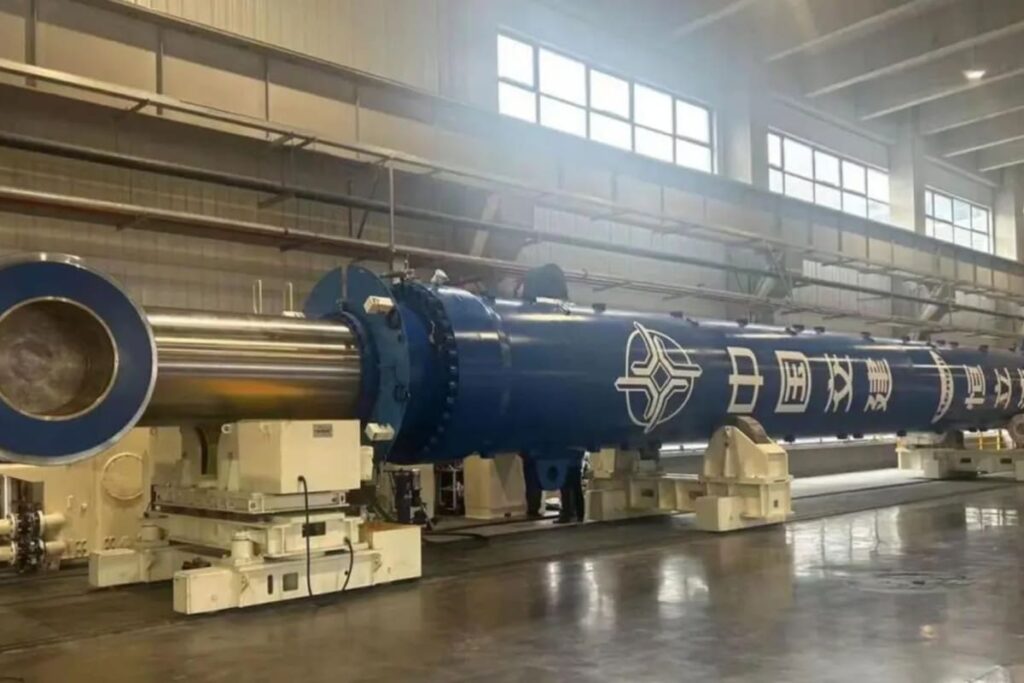
In a significant announcement from Changzhou, China, a remarkable hydraulic cylinder has been introduced, capable of delivering an astonishing 5,000 tons of force—roughly the weight of 1,000 elephants. This engineering marvel marks a pivotal moment in maritime engineering and is poised to transform construction projects, particularly in the offshore and infrastructure domains.
A Monumental Hydraulic Cylinder for a Behemoth of a Ship
Developed by the China Communications Construction Company (CCCC), this innovative hydraulic system is designed to power a massive pile-driving vessel currently being constructed. Standing at 28 meters tall and measuring 2 meters in diameter, it is as imposing as a ten-story building. This cylinder will act as the “heart” of the vessel, geared towards driving piles for extensive maritime projects such as offshore platforms and bridges.
The scale and ambition of this vessel, combined with the integration of such a powerful hydraulic cylinder, are expected to raise the bar for construction standards in the maritime and energy industries.
China’s Path to Technological Independence and Global Aspirations
What stands out in this project is China’s ability to produce such advanced technology independently. Traditionally reliant on foreign suppliers for high-tech components, the introduction of this hydraulic cylinder signifies a major step towards self-sufficiency. This pivotal development enhances China’s capacity to engineer essential equipment for monumental projects, such as the Hangzhou Bay Railway Bridge, currently the world’s longest sea-spanning bridge.
This focus on creating homegrown technology marks substantial progress for China’s economic landscape and provides a strategic edge. Reducing reliance on imports not only strengthens domestic production capabilities in maritime and energy sectors but also boosts competitiveness against established players like Bosch Rexroth and Parker Hannifin, who have dominated the hydraulic market for years.
The global hydraulic technology market, valued at $15 billion in 2023 with a forecasted growth rate of 4.6%, positions China as a formidable contender moving forward.
China’s Maritime Ambitions and Geopolitical Consequences
The revelation of this hydraulic cylinder is indicative of broader trends. Earlier this month, SANY, another trailblazing Chinese company, showcased a machine capable of testing 35 MW wind turbines. Utilizing cutting-edge simulation technology, this system can emulate 20 years of wind farm operations within just one year, further highlighting China’s burgeoning technological prowess in the renewable energy sphere.
However, this rapid advancement hasn’t gone unnoticed globally, stirring concerns among various international observers. Amidst ongoing trade tensions with the West, China’s control over critical maritime technologies could heighten geopolitical rivalries, particularly regarding international trade and military strategies.
While the ability to lift the weight of 1,000 elephants may seem like an impressive figure, it underscores China’s ambition to solidify its status as a global leader in maritime technology. As the nation ramps up investment in its maritime economy—outpacing its national GDP growth in 2024—the ramifications of these technological advancements are just beginning to emerge. This hydraulic cylinder not only signifies a key technological achievement for China, but also reflects its escalating influence in the maritime and energy sectors.





