
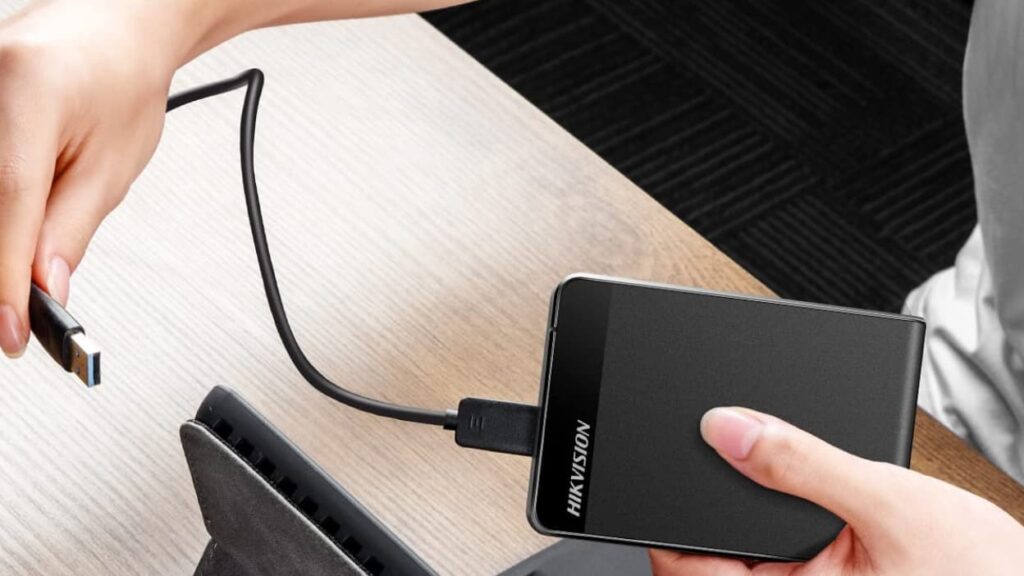
What happens if the government mistakenly destroys a hard drive that supposedly contains a fortune in cryptocurrency? For one American man, that’s not just a hypothetical scenario. His claim — over $345 million in missing Bitcoin — has recently been tossed out by the courts, leaving behind a peculiar saga of timing, technology, and trust.
A misplaced hard drive and a disputed fortune
It all traces back to 2019 when Michael Prime faced sentencing for counterfeiting and identity theft. During his prison intake, he disclosed his assets, which included two boats, two cars, and, as he described, “a bit of Bitcoin” — valued at around $200 to $1,500 at the time.
The authorities packed away his possessions, including an external orange hard drive. However, as his asset list didn’t suggest it contained significant value, officials ultimately disposed of the device alongside other seized items.
Fast forward four years: after his release, Prime suddenly asserted that this same orange hard drive held 3,443 Bitcoin, now worth approximately $345 million. He sought compensation from the U.S. government for what he termed the destruction of his digital fortune.
An appeal that fell flat
Prime escalated his case to the U.S. Court of Appeals, contending that the government was responsible for the loss of his property. However, judges were not persuaded. They flagged multiple inconsistencies, including his initial statement claiming ownership of only a small sum of Bitcoin.
The court ultimately ruled that there was no acceptable reason to believe the hard drive contained a vast cryptocurrency fortune at the time of its disposal. “We have no difficulty determining that the government would not have disposed of the hard drive had it believed it held millions of dollars in Bitcoin,” the judges clarified.
They also remarked that Prime’s evidence was speculative at best and that too much time had elapsed for his claim to be valid. In essence, the hard drive was no longer in existence — and neither was his case.
Timing is crucial
Back in 2019, Bitcoin was priced around $10,000 per coin. Today, it hovers near $100,000, transforming Prime’s claimed holdings into a potentially life-altering amount. This dramatic price surge likely spurred his resolve to reclaim what he asserted was lost.
However, as digital asset experts frequently caution, the volatility of cryptocurrencies can precipitate extraordinary — and at times desperate — disputes. “We’re observing a trend where individuals suddenly ‘remember’ old wallets once Bitcoin prices soar,” declares a cybersecurity analyst from the Blockchain Research Institute. “Without verifiable proof or backups, there’s no avenue to access those funds.”
The challenges of digital ownership
This case highlights one of the foremost challenges of the crypto era: ownership hinges entirely on access. Lacking a wallet key or recovery phrase means that even millions in Bitcoin can become irretrievable. In Prime’s circumstance, the storage device itself has vanished.
Ironically, the court did not dispute that Prime may have once owned Bitcoin — only that he neglected to declare it accurately when it truly mattered. The gap between $1,000 in cryptocurrency and $345 million was merely a few years and one discarded hard drive apart.
A cautionary tale for the cryptocurrency generation
Regardless of whether Michael Prime ever possessed the fortune he claimed, his narrative serves as a contemporary parable about digital wealth and the tenuous nature of proof. The court’s final judgement was unequivocal: no evidence, no restitution.
For those navigating the realm of digital currencies, this serves as a stark reminder that your fortunes are only as secure as the hardware — and integrity — that shelters them. Ultimately, while the government may have crushed a hard drive, for Prime, the dream of immense wealth has vanished far beyond that.





